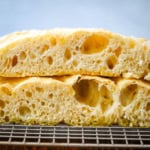
No-Knead Focaccia Bread
This no-knead focaccia bread is soft, fluffy on the inside, and perfectly golden and crisp on the outside with minimal effort.
Servings: 12
Ingredients
- 2 cups (470 grams) Lukewarm Water (85-100 degrees)
- 2 1/4 teaspoons (7 grams) Instant Yeast
- 4 cups (560 grams) Bread Flour (Italian 00 Flour)
- 2 teaspoons Salt
- 1 Tablespoon Extra-Virgin Olive Oil (plus 4 Tablespoons for baking)
- Sea Salt Flakes (optional)
- Optional Toppings
Instructions
- If you have a food scale, I suggest weighing the ingredients. In a large mixing bowl, combine the flour and salt. In a separate small bowl, stir the yeast into warm water until dissolved. Let sit for 10 minutes to make sure yeast is bubbling and foaming. Pour the liquid into the dry ingredients and mix until a rough dough forms and no dry flour remains.The dough should look very soft and sticky — almost too wet to handle. If it feels firm or dry instead, add a small splash of water and mix again until you reach a loose, tacky consistency.
- Cover the bowl and let the dough sit for about 20–30 minutes. This resting period allows the flour to fully hydrate and begins developing structure.
- Stretch and Fold. Because the dough is very sticky, lightly wet your hands with water or coat them with a bit of olive oil before handling it — this prevents sticking and makes the process much easier.Gently lift one side of the dough and fold it over itself. Rotate the bowl and repeat a few times until you’ve worked your way around the dough. Repeat for 1 minute.
- Repeat this stretch and folding step every 30 minutes for several rounds (3-4). You’ll notice the dough becoming smoother and more elastic over time.
- Once you’ve completed the folds, cover the bowl and let the dough rise until it looks puffy and expanded. This usually takes 1-2 hours at room temperature, depending on the warmth of your kitchen.
- OPTIONAL CHILL OVERNIGHT. For more developed flavor, transfer the covered dough to the refrigerator and let it rest overnight or up to 6-18 hours. This is a slow fermentation. Once you are ready to bake, the dough needs to come to room temperature after removing it from the refrigerator — about 1-2 hours. Drizzle olive oil into a baking pan and transfer the dough. Gently stretch it to fit the pan. For same day baking, see below...
- SAME DAY BAKING: Generously coat a baking pan with 3 Tablespoons of olive oil. Gently transfer the dough into the pan, taking care not to deflate it. Stretch it slightly toward the edges — it may not fill the pan right away.
- Let the dough rest in the pan until it relaxes, spreads out, and becomes light and airy again. Preheat oven to 400 degrees.
- Drizzle 1 Tablespoon of olive oil over the top, then press your fingertips into the dough to create deep dimples across the surface.
- Finish with flaky salt and any toppings you like, pressing them lightly into the dough.
- Bake in a preheated oven for 20-25 minutes until the top is golden and the edges are crisp. The bottom should be lightly crisped from the olive oil.
- Allow the focaccia to cool for a few minutes before slicing. Serve warm for the best texture and flavor. Sprinkle with flaky salt and serve with olive oil, balsamic vinegar, and herbs or pesto.
Notes
WEIGHED INGREDIENTS:
For accuracy, I do suggest weighing ingredients 470 grams lukewarm water (85-100 degrees)
7 grams instant yeast
560 grams Italian 00 flour or bread flour
2 teaspoons salt
1 Tablespoon Extra-virgin olive oil (plus 3-4 Tablespoons for baking focaccia)
Maldon sea salt flakes (optional) This recipe is adapted from Emma Fontanella's focaccia recipe. I like to use Molino Grassi Italian 00 flour. I find it at Whole Foods. The dough should look wet and too sticky to touch without water or olive oil on your hands. If not, add a small amount of water to your dough.
For accuracy, I do suggest weighing ingredients 470 grams lukewarm water (85-100 degrees)
7 grams instant yeast
560 grams Italian 00 flour or bread flour
2 teaspoons salt
1 Tablespoon Extra-virgin olive oil (plus 3-4 Tablespoons for baking focaccia)
Maldon sea salt flakes (optional) This recipe is adapted from Emma Fontanella's focaccia recipe. I like to use Molino Grassi Italian 00 flour. I find it at Whole Foods. The dough should look wet and too sticky to touch without water or olive oil on your hands. If not, add a small amount of water to your dough.
Nutrition
Calories: 298kcal | Carbohydrates: 58g | Protein: 10g | Fat: 3g | Saturated Fat: 0.4g | Polyunsaturated Fat: 1g | Monounsaturated Fat: 1g | Sodium: 390mg | Potassium: 88mg | Fiber: 2g | Sugar: 0.2g | Vitamin A: 2IU | Vitamin C: 0.003mg | Calcium: 12mg | Iron: 1mg
