
This post may contain affiliate links. Please read our disclosure policy.
This no-knead focaccia bread is soft, fluffy on the inside, and perfectly golden and crisp on the outside with minimal effort. Made with simple pantry staples, this easy focaccia recipe uses a stretch-and-fold method instead of kneading, making it perfect for beginners. If you’re looking for an easy homemade focaccia bread recipe, this one delivers bakery-quality results every time.
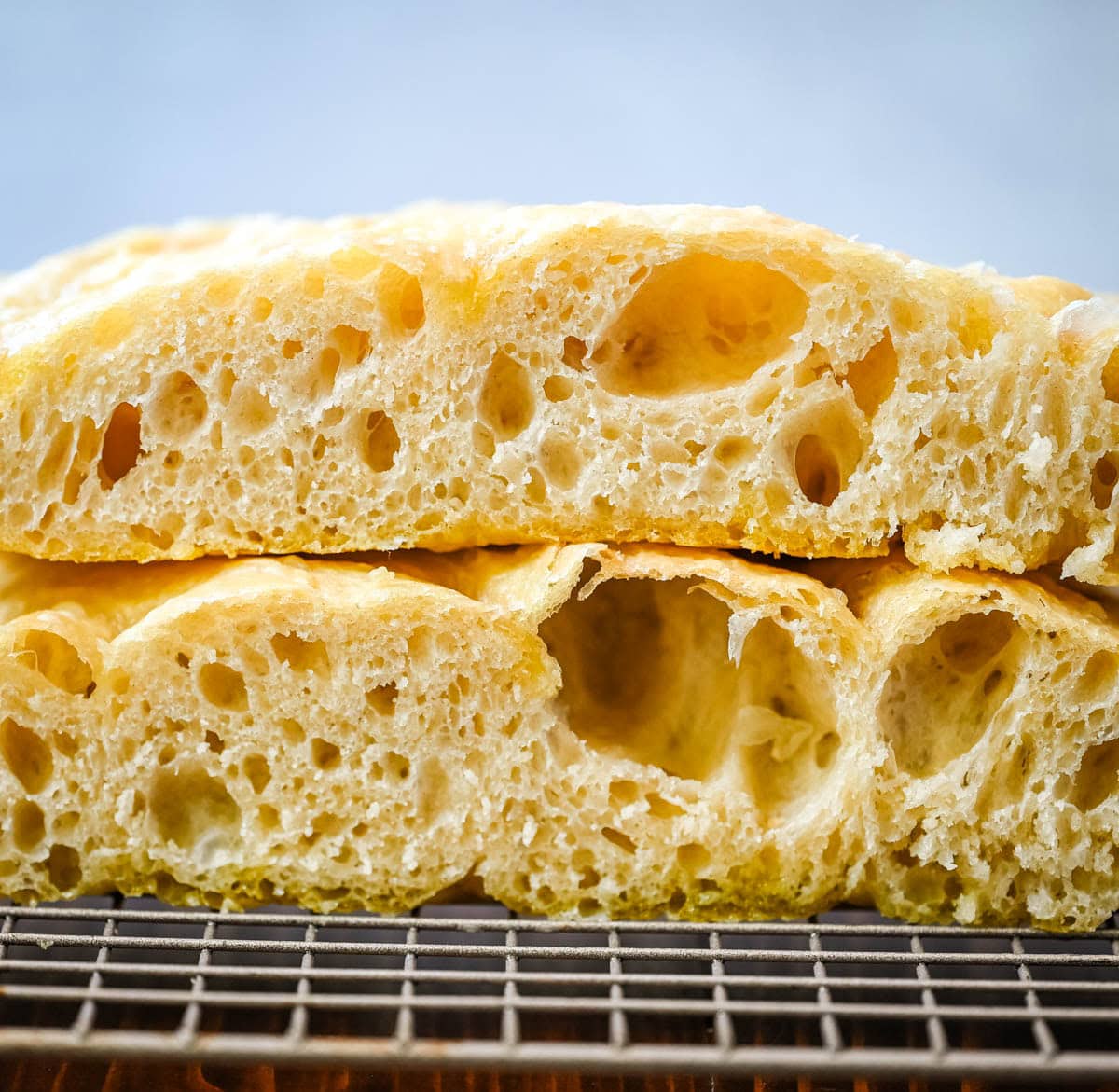
I have been recipe testing focaccia for a very, very long time. I have studied focaccia because it has always intrigued me how many different methods there are. Should you let it rise overnight in the refrigerator? What type of flour should you use? Knead or no-knead? Does the stretch and pull method do the same thing? Should the dough be sticky? What temperature should the water be? How long should you let it rise? How to get the focaccia fluffy inside?
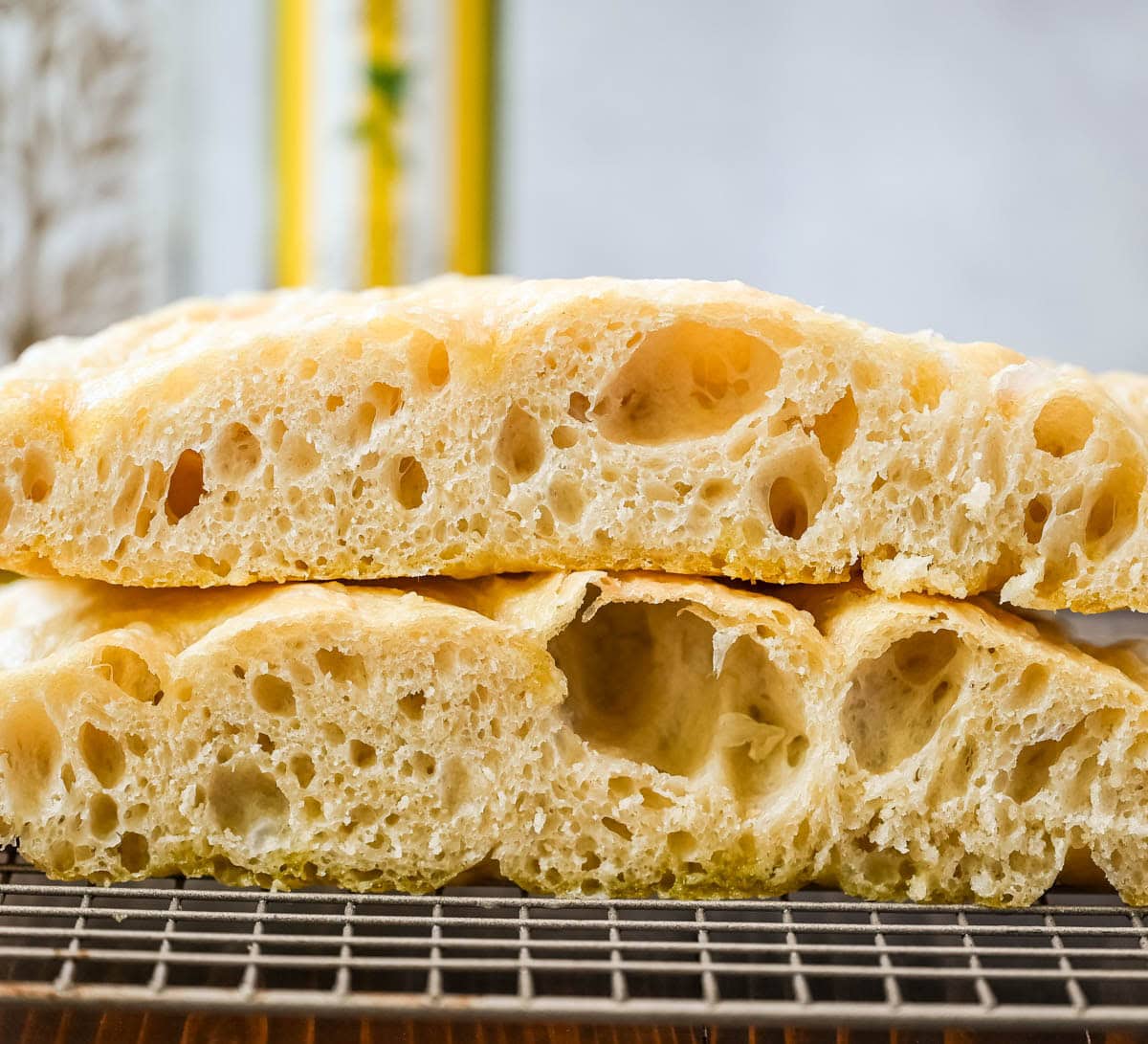
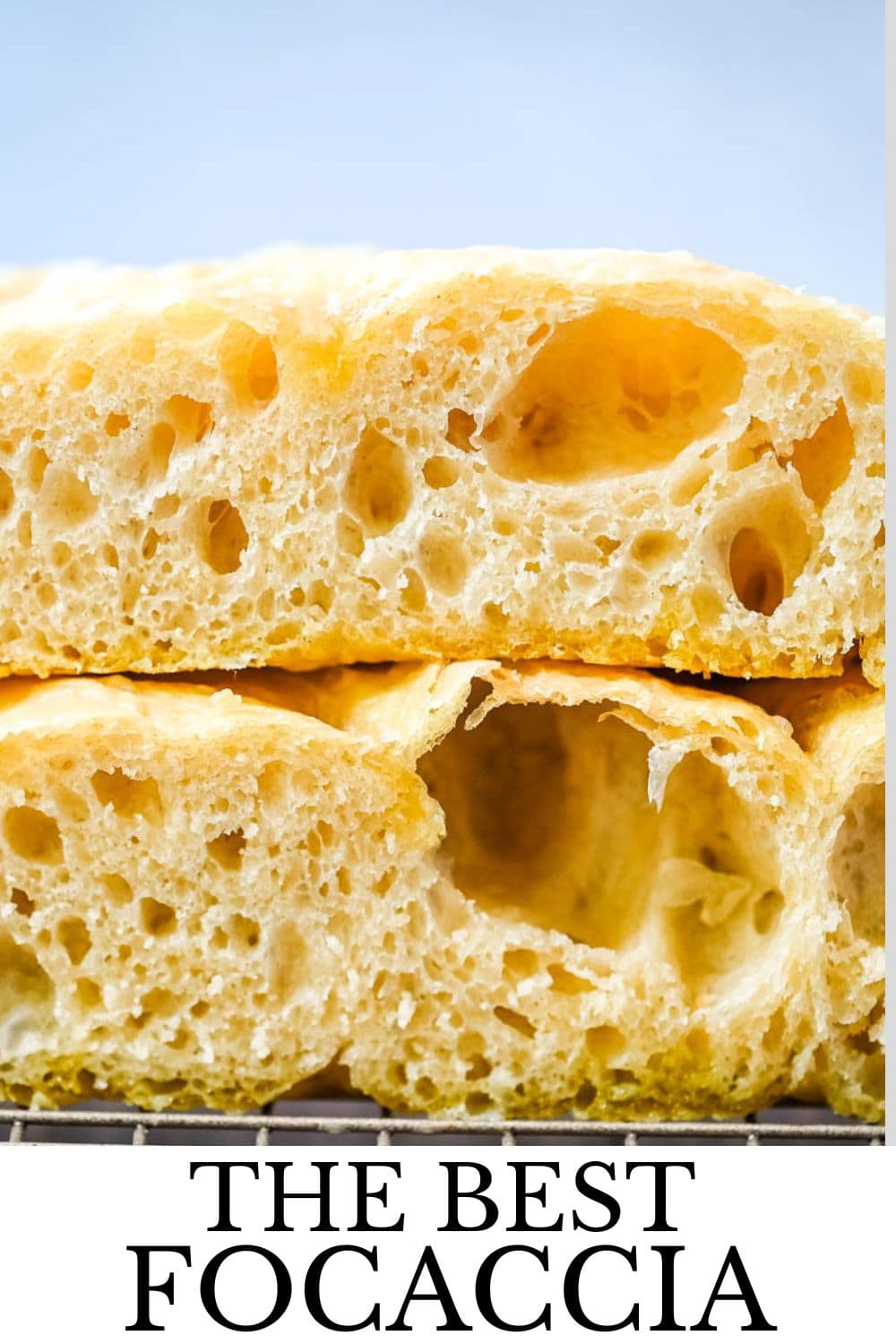
What is the perfect focaccia in my mind? I wanted it to be super light, fluffy, and airy on the inside with a crisp, golden crust that has the perfect olive oil flavor, and with a sprinkle of flaky salt on top.
So, I set out to make another round of recipe testing to find the ultimate focaccia recipe. I tested out an overnight rise, a quicker rise, stretch and fold technique, weighing the ingredients vs measuring in cups, and using a wetter, stickier dough. We have a winner! I wanted a clear-cut winner, and I am so glad to report that the easier method is just as flavorful, light, and fluffy as the overnight rest, so I am super happy about that!
This focaccia recipe is a no-knead recipe, so it is super easy to whip up and creates the perfect focaccia bread. It requires no stand mixer — just a bowl and a baking pan.
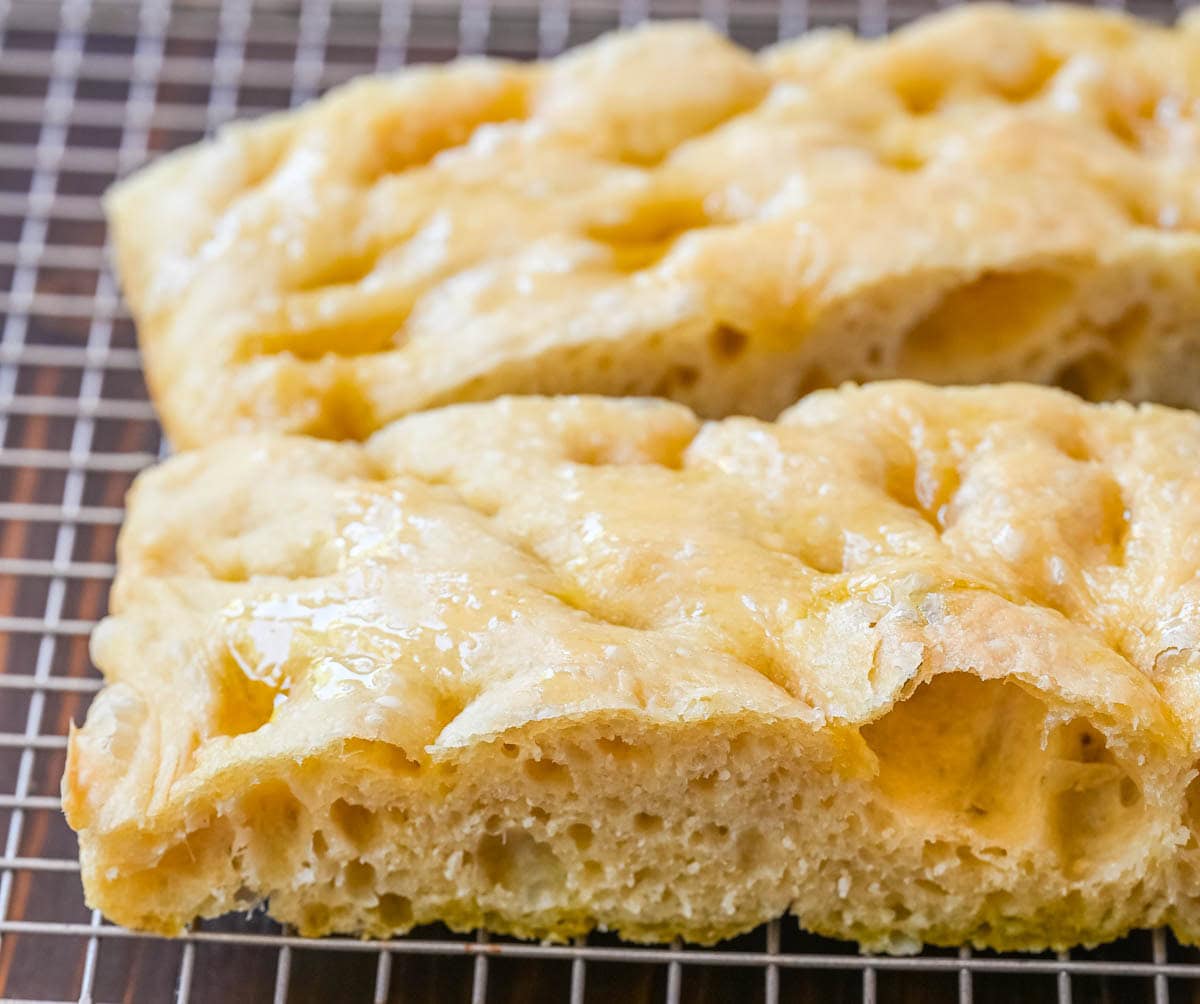
Why you’ll love this recipe:
- No kneading required – simple stretch-and-fold method anyone can do.
- Soft + airy texture with a crispy, golden crust and big air bubbles.
- Made with basic ingredients you likely already have and it also pairs well with any dinner.
What kind of flour should I use for focaccia bread?
The best flour for focaccia is bread flour or 00 flour, but all-purpose flour will also work depending on the texture you’re going for.
Bread flour is the most common choice because it has a higher protein content, which helps develop more gluten. This gives focaccia its signature chewy texture and airy structure with those beautiful bubbles.
00 flour (an Italian-style finely milled flour) creates a slightly softer, more delicate crumb. It’s great if you want a lighter, more tender focaccia with a smoother texture. I buy my Italian 00 flour from Whole Foods and it is imported from Italy.
If you only have all-purpose flour, don’t worry, it still works well. Your focaccia may be a bit less chewy and slightly softer, but it will still be delicious.
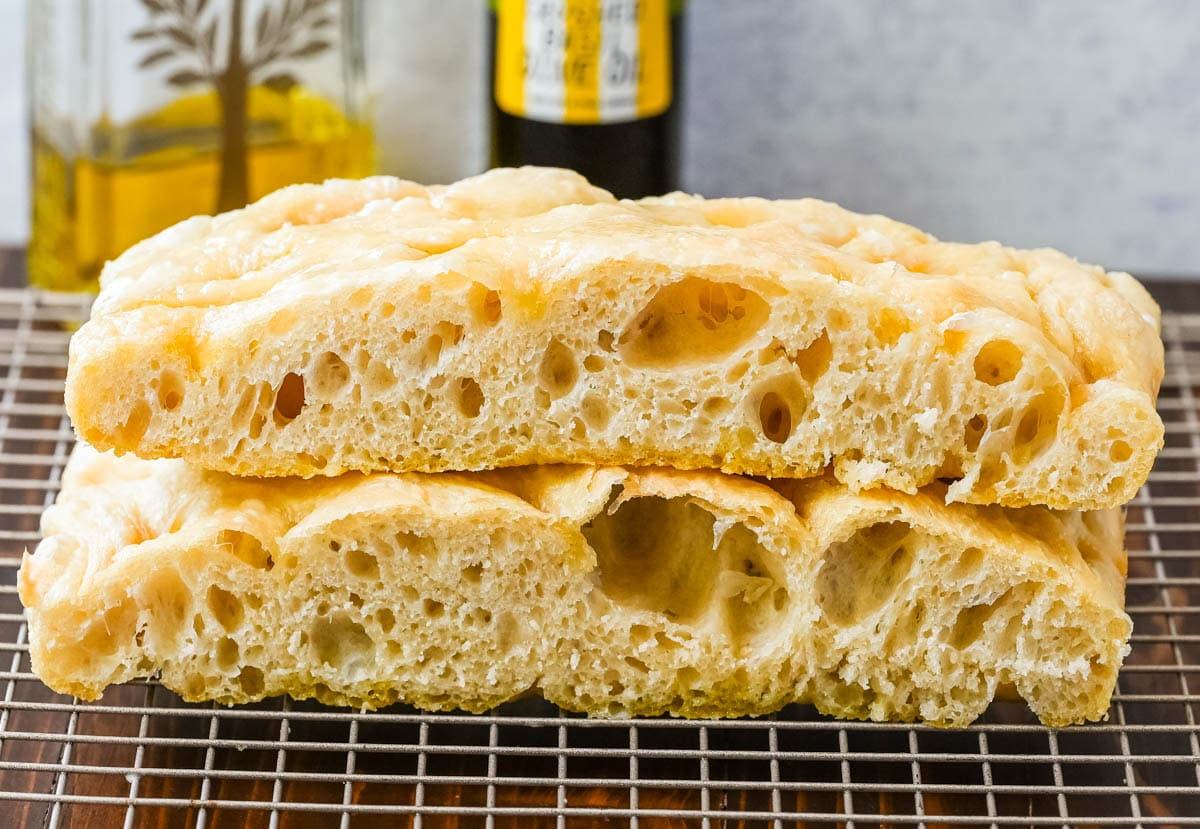
What is focaccia?
Focaccia is a classic Italian flatbread known for its soft, airy interior and crispy, olive oil-rich crust. It’s often described as being similar to pizza dough, but thicker, fluffier, and more bread-like.
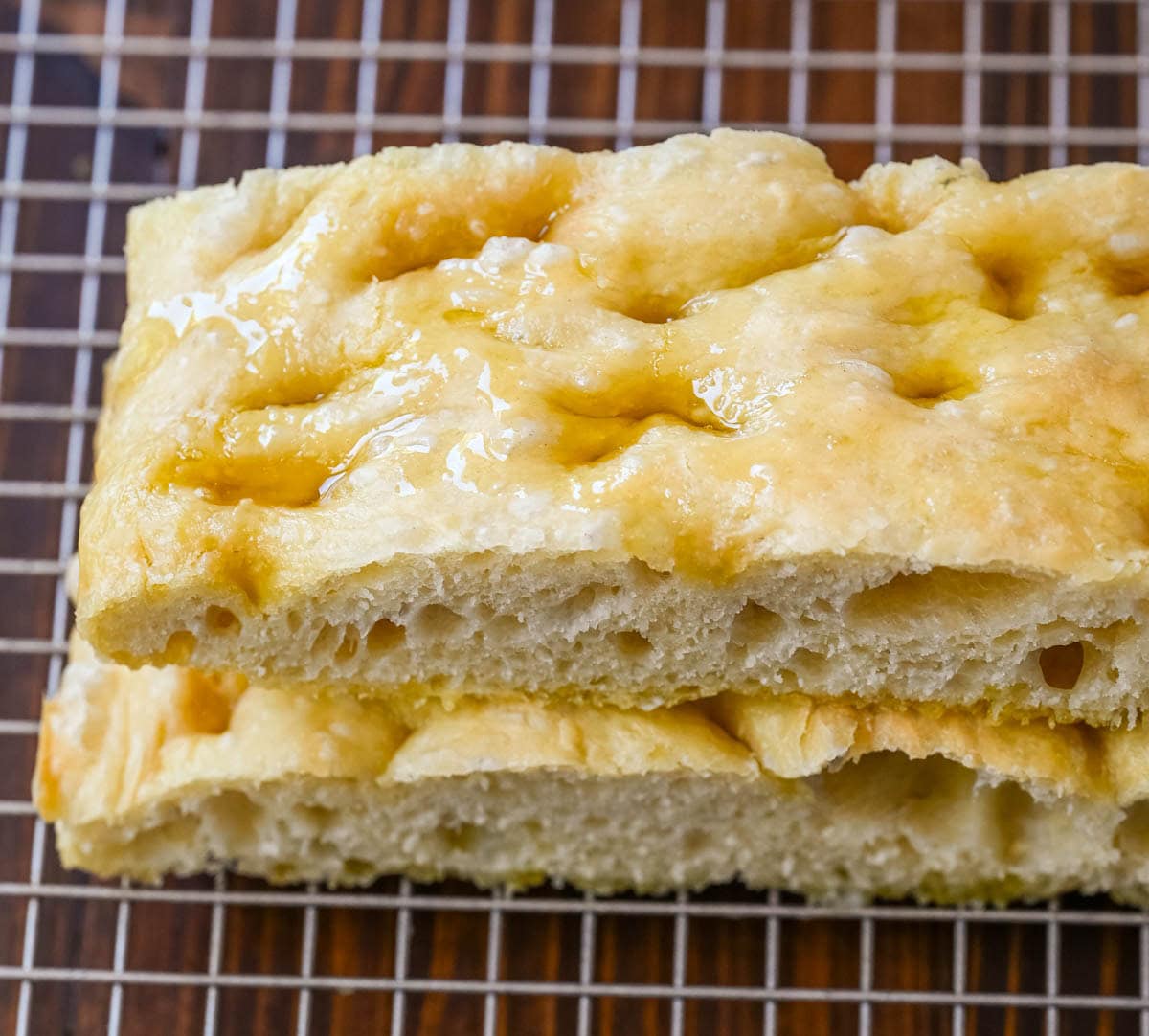
One of the defining features of focaccia is its dimpled surface, created by pressing your fingers into the dough before baking. These dimples help hold olive oil, salt, and toppings like herbs or garlic, giving the bread its signature flavor and texture.
Focaccia Bread Ingredients:
- Lukewarm Water (80–100°F): Helps activate the yeast and creates the perfect environment for the dough to rise properly.
- Salt: Adds flavor and helps strengthen the dough structure.
- Olive Oil: Gives focaccia its signature rich flavor and helps create that crispy, golden crust. Find an olive oil that you enjoy the taste of since the flavor comes through.
- Dry Yeast: The key to a light, airy texture. It helps the dough rise and develop bubbles.
- Bread Flour or 00 Flour: Bread flour creates a chewy texture, while 00 flour gives a softer, more delicate crumb; they both work beautifully.
How much olive oil should I use when making focaccia?
More than you think. Focaccia relies on olive oil for both flavor and texture — especially for that crispy base. Be generous with the extra-virgin olive oil.
Why these ingredients matter:
High hydration (lots of water) → creates an open, airy crumb
Strong flour (bread flour or 00) → helps trap gas and build structure
Olive oil → adds flavor and creates that crisp, golden crust
Minimal handling → preserves the air bubbles instead of knocking them out
How to make the Best No-Knead Focaccia Bread:
See more detailed instructions in the recipe card below.
- Mix the dough. In a large bowl, combine lukewarm water, yeast, salt, and olive oil. Add the flour and mix until a shaggy dough forms. The dough should feel very wet and sticky — that’s key to creating those airy bubbles. Another option to ensure your yeast is working is to mix the lukewarm water and yeast in a bowl and wait 10 minutes to see if it starts to foam and bubble.
- Rest the dough. Cover and let the dough rest for 30 minutes.
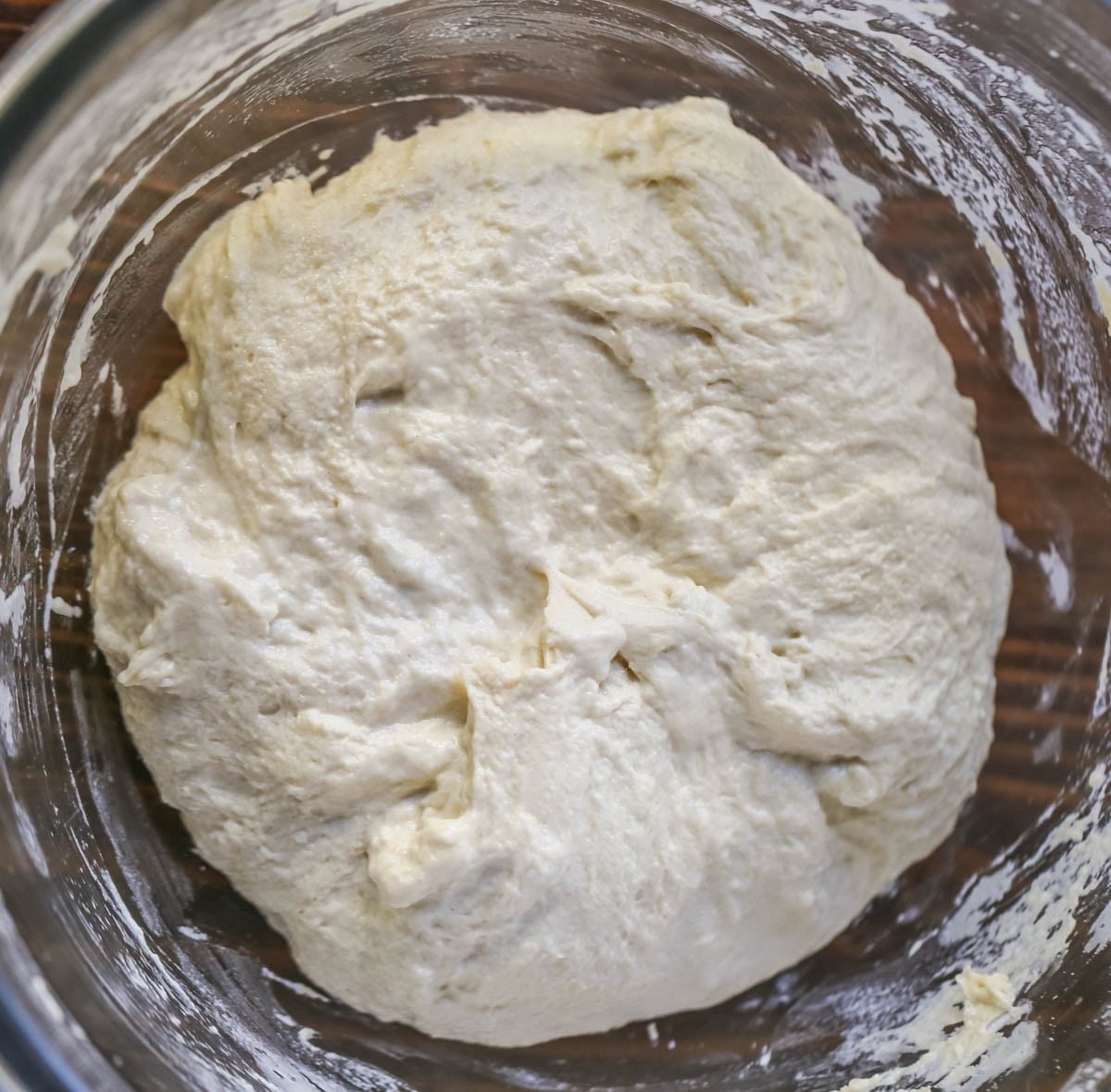
- Stretch and fold. Perform a stretch and fold by pulling one side of the dough up and folding it over itself. Repeat on all sides. Do this every 30 minutes for a total of 3–4 times.
- Final rise. If you prefer an overnight rise, cover tightly, and place in the refrigerator for about 6-12 hours. If you are baking it the same day, let the dough rise for another 30 minutes until slightly puffy.
- Transfer and shape. If you are shaping it after an overnight rise in the refrigerator, the dough needs to rise longer to reach room temperature — about 1-2 hours. Drizzle olive oil into a baking pan and transfer the dough. Gently stretch it to fit the pan.
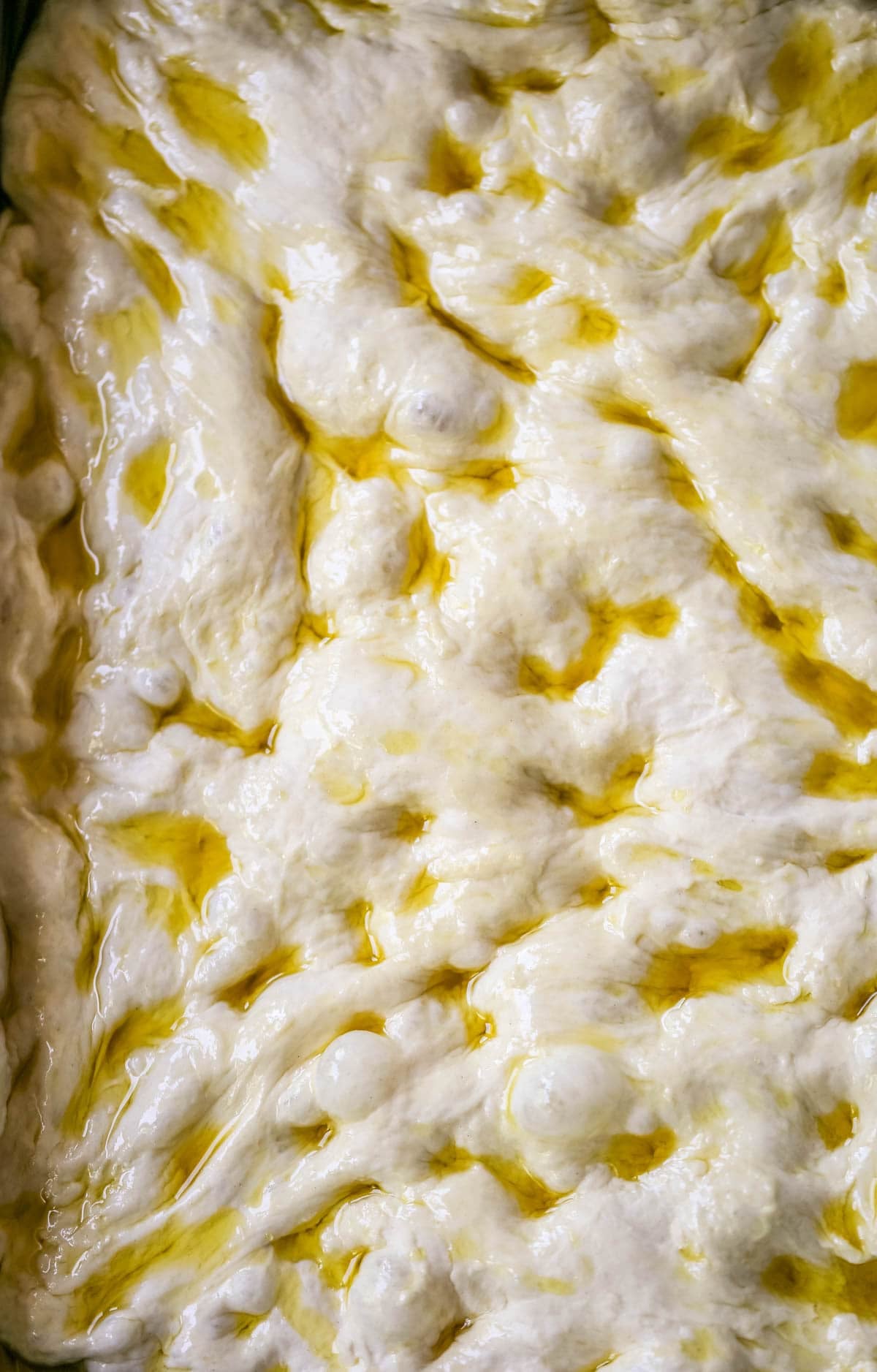
- Dimple the dough. Use your fingers to press dimples all over the surface. Drizzle with more olive oil and sprinkle with flaky salt if desired.
- Bake. Bake at 400°F for 20–25 minutes, or until golden brown on top.
Same-Day vs Overnight Rise:
I tested both methods with the exact same dough to see which one was better. Cold fermentation slows yeast activity, allowing flavor to develop more deeply while improving texture. I found that the overnight rise may have given it a slight edge in the flavor department, the pay-off may not have been worth the wait.
SAME DAY METHOD:
- Faster (ready in a few hours)
- Dough rises at room temperature
- Slightly less complex flavor
- Still soft and delicious
OVERNIGHT COLD FERMENTATION:
- Dough rests in fridge 8–18 hours
- Develops deeper, slightly tangy flavor
- Better structure and larger bubbles
- Requires extra time to warm up before baking
If refrigerated, let the dough rise in the tray for about 2 hours before baking to reactivate the yeast.
Frequently Asked Questions (FAQ’s):
Why is my dough so sticky?
Focaccia dough is naturally sticky this is what creates the airy texture. Use oiled or wet hands to handle it.
Do I need to knead the dough at all?
Nope! The stretch-and-fold method replaces kneading completely.
How do I know when it’s done baking?
The top should be golden brown and the bottom lightly crisp.
Why didn’t I get big air bubbles?
Dough may be too dry, not have enough fermentation time, or over-handling the dough.
What toppings to add on focaccia:
Classic focaccia toppings are simple but powerful — pressed into the dough right before baking:
- Rosemary + flaky salt
- Olive oil + sea salt
- Cherry tomatoes + garlic
- Caramelized onions + thyme
- Olives + oregano
- Potato slices + rosemary
- Sun-dried tomatoes + basil
- Mozzarella + pesto
- Parmesan + black pepper
Storage Tips:
Store at room temperature in an airtight container for up to 2 days
Reheat in the oven to bring back crispiness
Freeze slices for up to 2 months and reheat when ready to eat
Homemade Bread Recipes:
Homemade bread doesn’t have to be complicated, these are all easy recipes to follow!
Pin this now to find it later
Pin It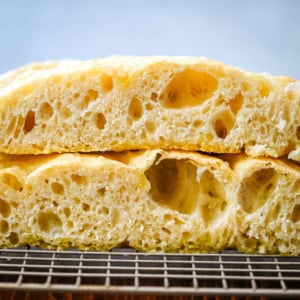
No-Knead Focaccia Bread
Ingredients
- 2 cups (470 grams) Lukewarm Water (85-100 degrees)
- 2 1/4 teaspoons (7 grams) Instant Yeast
- 4 cups (560 grams) Bread Flour (Italian 00 Flour)
- 2 teaspoons Salt
- 1 Tablespoon Extra-Virgin Olive Oil (plus 4 Tablespoons for baking)
- Sea Salt Flakes (optional)
- Optional Toppings
Instructions
- If you have a food scale, I suggest weighing the ingredients. In a large mixing bowl, combine the flour and salt. In a separate small bowl, stir the yeast into warm water until dissolved. Let sit for 10 minutes to make sure yeast is bubbling and foaming. Pour the liquid into the dry ingredients and mix until a rough dough forms and no dry flour remains.The dough should look very soft and sticky — almost too wet to handle. If it feels firm or dry instead, add a small splash of water and mix again until you reach a loose, tacky consistency.
- Cover the bowl and let the dough sit for about 20–30 minutes. This resting period allows the flour to fully hydrate and begins developing structure.
- Stretch and Fold. Because the dough is very sticky, lightly wet your hands with water or coat them with a bit of olive oil before handling it — this prevents sticking and makes the process much easier.Gently lift one side of the dough and fold it over itself. Rotate the bowl and repeat a few times until you’ve worked your way around the dough. Repeat for 1 minute.
- Repeat this stretch and folding step every 30 minutes for several rounds (3-4). You’ll notice the dough becoming smoother and more elastic over time.
- Once you’ve completed the folds, cover the bowl and let the dough rise until it looks puffy and expanded. This usually takes 1-2 hours at room temperature, depending on the warmth of your kitchen.
- OPTIONAL CHILL OVERNIGHT. For more developed flavor, transfer the covered dough to the refrigerator and let it rest overnight or up to 6-18 hours. This is a slow fermentation. Once you are ready to bake, the dough needs to come to room temperature after removing it from the refrigerator — about 1-2 hours. Drizzle olive oil into a baking pan and transfer the dough. Gently stretch it to fit the pan. For same day baking, see below…
- SAME DAY BAKING: Generously coat a baking pan with 3 Tablespoons of olive oil. Gently transfer the dough into the pan, taking care not to deflate it. Stretch it slightly toward the edges — it may not fill the pan right away.
- Let the dough rest in the pan until it relaxes, spreads out, and becomes light and airy again. Preheat oven to 400 degrees.
- Drizzle 1 Tablespoon of olive oil over the top, then press your fingertips into the dough to create deep dimples across the surface.
- Finish with flaky salt and any toppings you like, pressing them lightly into the dough.
- Bake in a preheated oven for 20-25 minutes until the top is golden and the edges are crisp. The bottom should be lightly crisped from the olive oil.
- Allow the focaccia to cool for a few minutes before slicing. Serve warm for the best texture and flavor. Sprinkle with flaky salt and serve with olive oil, balsamic vinegar, and herbs or pesto.
Notes
For accuracy, I do suggest weighing ingredients 470 grams lukewarm water (85-100 degrees)
7 grams instant yeast
560 grams Italian 00 flour or bread flour
2 teaspoons salt
1 Tablespoon Extra-virgin olive oil (plus 3-4 Tablespoons for baking focaccia)
Maldon sea salt flakes (optional) This recipe is adapted from Emma Fontanella’s focaccia recipe. I like to use Molino Grassi Italian 00 flour. I find it at Whole Foods. The dough should look wet and too sticky to touch without water or olive oil on your hands. If not, add a small amount of water to your dough.
Nutrition
Nutrition information is automatically calculated, so should only be used as an approximation.










Melissa ……. Do you ever develop gluten free bread recipes? I would be very interested in a gluten free focaccia 😋
Thank you!
Hi Barbara! That is on my list of recipes to test out and develop. I will let you know when I do. Thanks so much for following along!
Thanks Melissa …… I’ll be watching for updates!
SO GOOD AND SO EASY! Thank you for this amazing recipe.
Hi Jessie! Thanks so much for using my recipe.
What size baking pan? Bread pan or an 8 x 8 pan or bigger? Are you making one giant flat round that feeds 12?
Hi Peggy! I recommend using a 9×13 tray or pan.
What flour would you suggest be used to make this Foccasia gluten free?