
This post may contain affiliate links. Please read our disclosure policy.
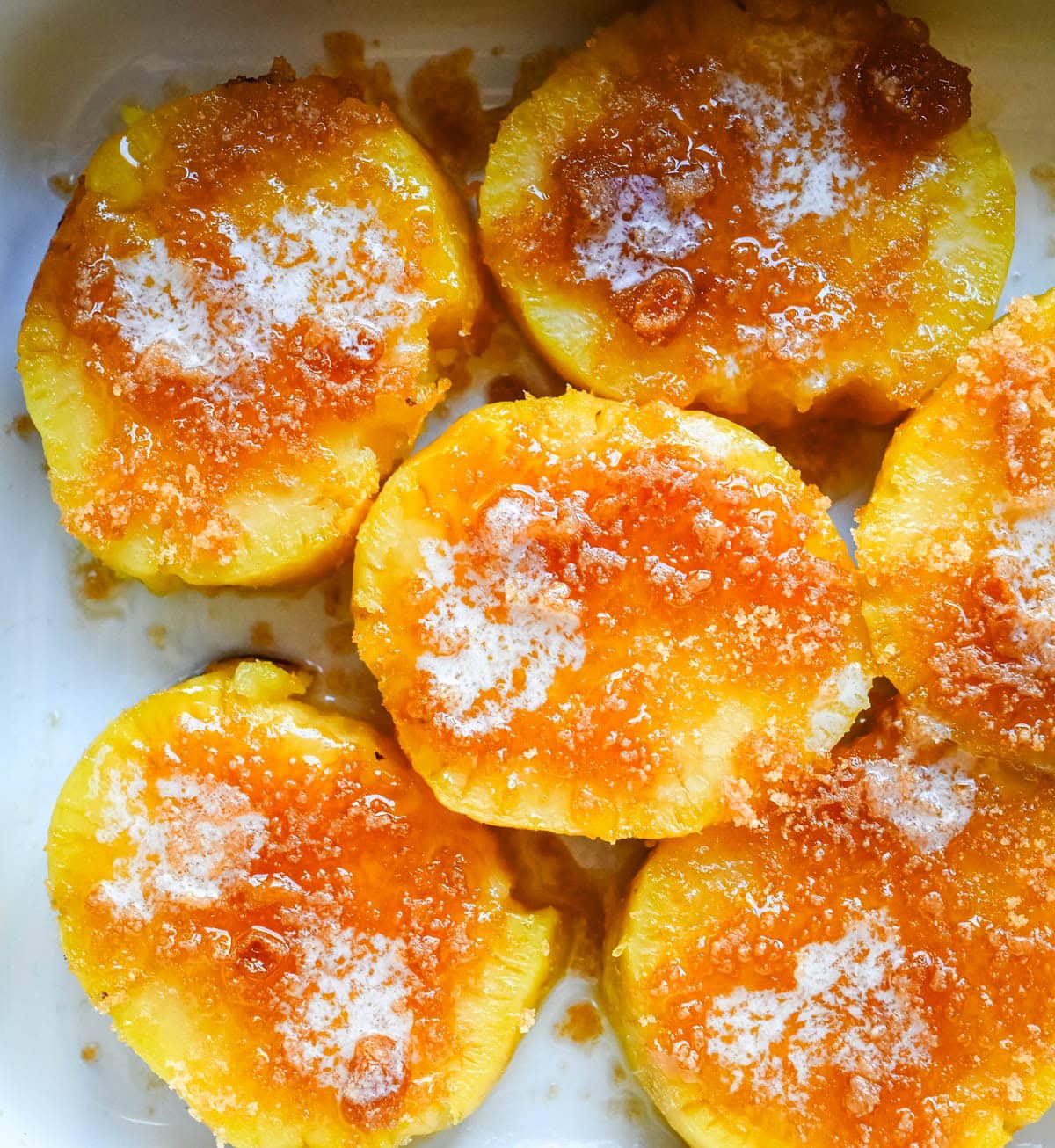
Roasted Japanese sweet potatoes caramelized with butter and brown sugar. Learn how to roast satsumaimo low and slow for the sweetest, perfectly tender results.
Last September, we visited Japan and I fell in love with it. From the food to the culture to the safety to the cleanliness, I loved it all. We tried so many different types of foods and it was one of my favorite food experiences I have ever had while traveling. I can’t wait to go back!
One of my favorite things to do when I travel is to learn more about their culture and food. I enjoy taking culinary classes and learning how to make authentic food. One of the vegetables Japan is known for is Japanese sweet potatoes. In Japan, these sweet potatoes are called satsumaimo and are roasted and sold as street food known as yaki-imo.
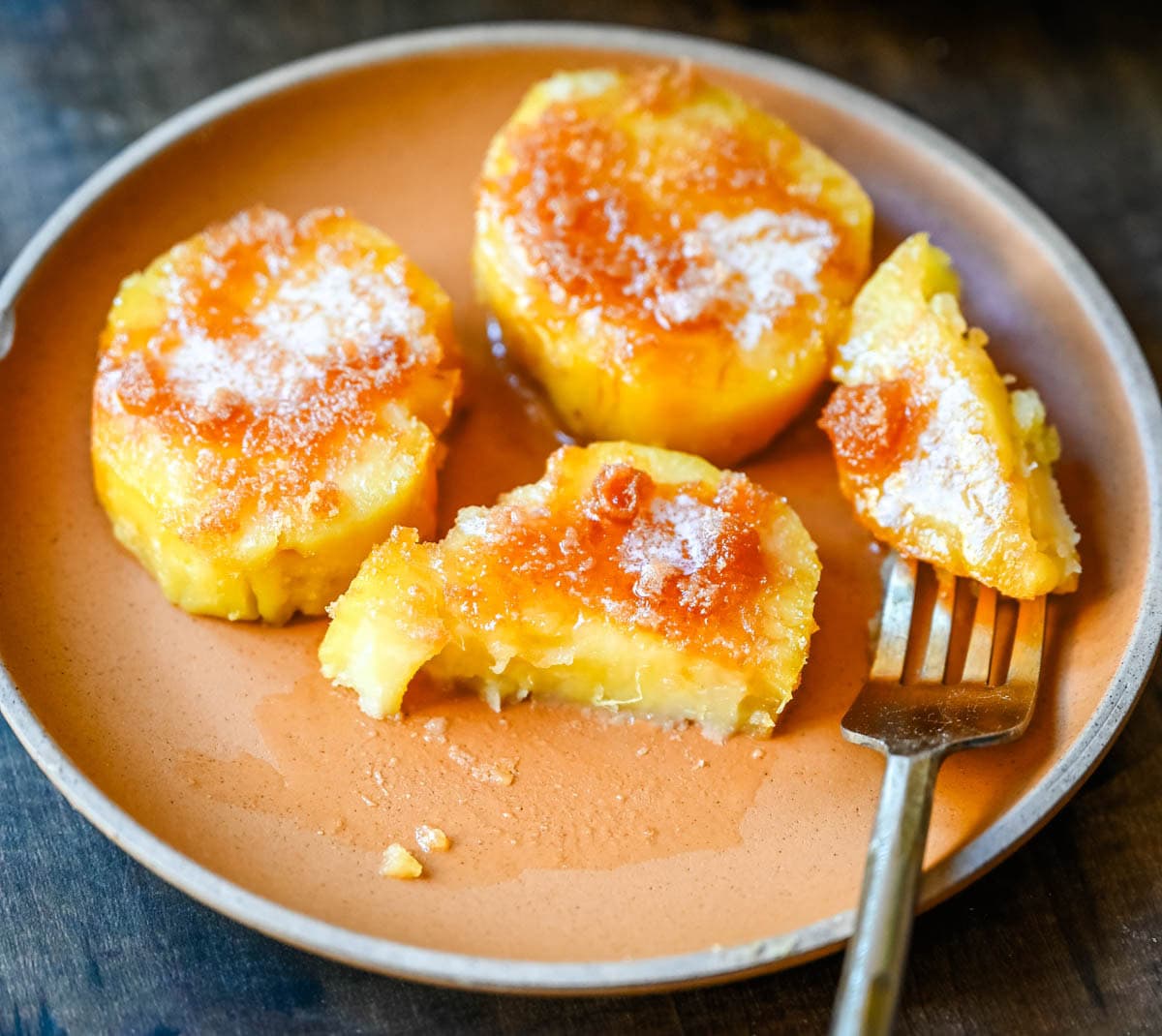
They have chestnut and caramel vibes with a “honeyed” sweetness and a fluffy-meets-creamy interior. When roasted slowly, they become almost custard and cake like. Japanese sweet potatoes are especially popular because their flavor transforms during roasting. What starts as a mildly starchy root vegetable becomes intensely sweet with the right cooking method — almost dessert-like without adding anything to it.
Their texture is another reason people seek them out. Instead of being overly moist, they’re thick, velvety, and cohesive, which makes them perfect for slicing, caramelizing, or simply enjoying warm with a little butter and salt. I love to add butter and brown sugar!
They are super popular because they can go from starchy to candy-sweet with the right cooking method, and the texture is dense and smooth rather than watery.
What is a Japanese Sweet Potato?
Japanese sweet potatoes, often called satsumaimo (and sometimes labeled Murasaki sweet potatoes or Japanese yams), have dark purple-red skin and pale yellow flesh. Compared to orange sweet potatoes, they’re firmer and more starchy, with a gentle sweetness and slightly nutty flavor that deepens as they roast. When cooked, the inside turns soft and creamy while still holding its shape, which makes them especially good for roasting and caramelizing.
How Japanese sweet potatoes differ from regular sweet potatoes:
In the United States, when people say “sweet potato,” they’re usually referring to the familiar orange-fleshed varieties like Beauregard or Garnet. Those tend to be softer and more moist once cooked, with a texture that’s almost silky or custard-like.
Japanese sweet potatoes are noticeably different. They are denser and more solid in texture, with a higher starch content that gives them a drier, more substantial bite. Instead of being soft and fluffy right away, they have a slightly firm, almost chestnut-like quality that becomes wonderfully tender when roasted long enough.
What Do Japanese Sweet Potatoes Taste Like?
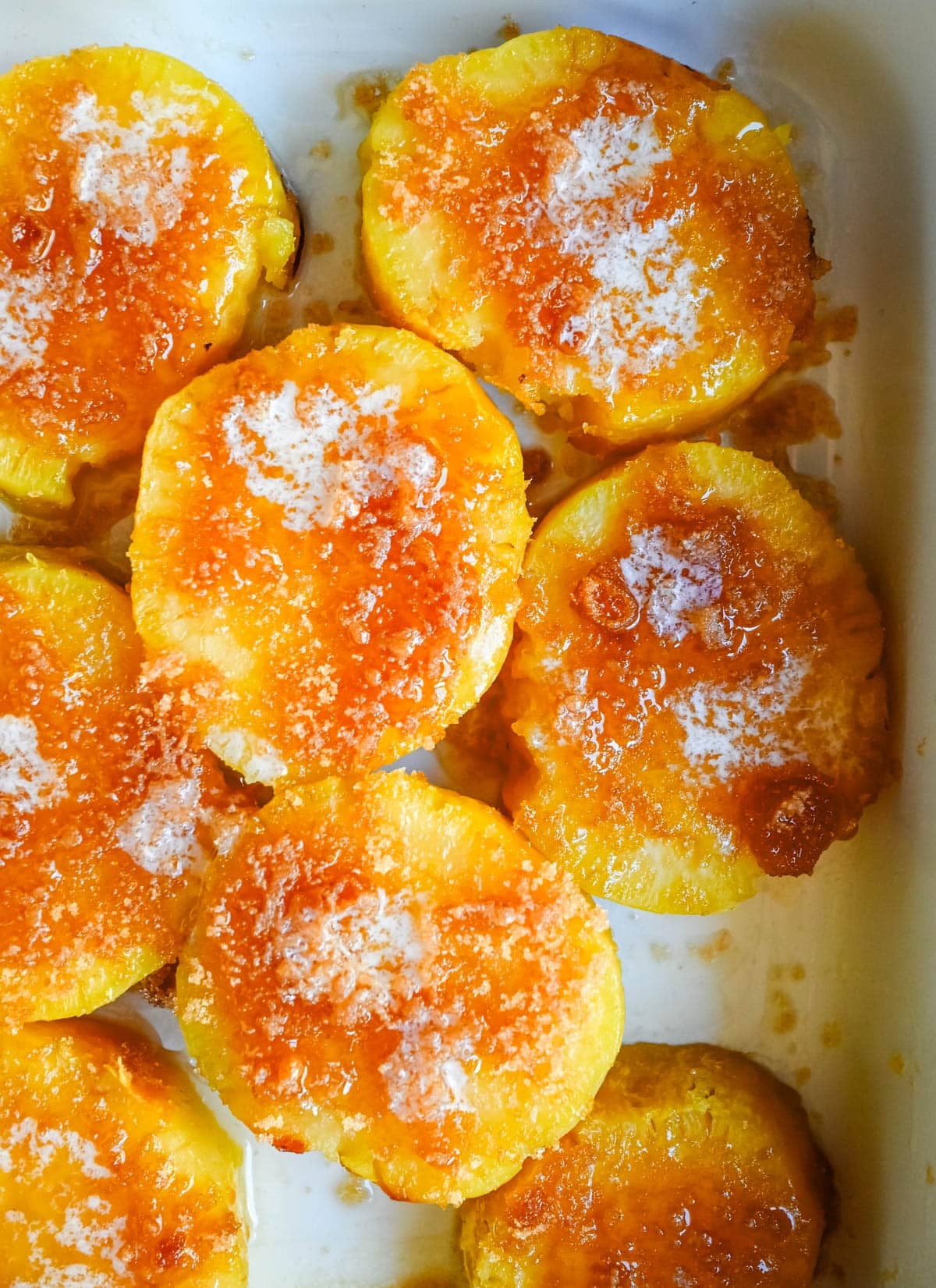
When roasted slowly, Japanese sweet potatoes develop a deep, natural sweetness that tastes richer and more complex than typical sweet potatoes. Their flavor leans slightly nutty, with warm caramel-like notes that intensify in the oven.
The inside becomes smooth and creamy but still holds together, creating a texture that feels hearty rather than soft or watery. It’s a balance of fluffy and dense.
Ingredients for Roasted Japanese Sweet Potatoes:
- Japanese Sweet Potatoes: Naturally sweet with a creamy texture! You can also use orange sweet potatoes in a pinch.
- Butter: Adds richness and helps the sugar melt into a glaze.
- Brown Sugar or Granulated Sugar: Creates that classic caramelized finish and enhances the natural sweetness.
- Salt: Balances the sweetness and deepens flavor.
How to make Roasted Brown Sugar Japanese Sweet Potatoes:
I recipe tested roasting these sweet potatoes at 3 different temperatures. Here’s what I found…there are two “best” approaches depending on what you want:
1. Low and slow (sweetest, yaki-imo style)
- 325°F for 70–90 minutes
This method is commonly recommended specifically for yaki imo–style sweetness and a more cake-like and creamy interior.
2. Hotter roast (faster, more caramelized skin)
- 375°F for 50–65 minutes
- This method will speed up the caramelization.
My “best overall” recommendation:
If your goal is that iconic Japanese street-style sweetness, lead with 325°F for 75–90 minutes.
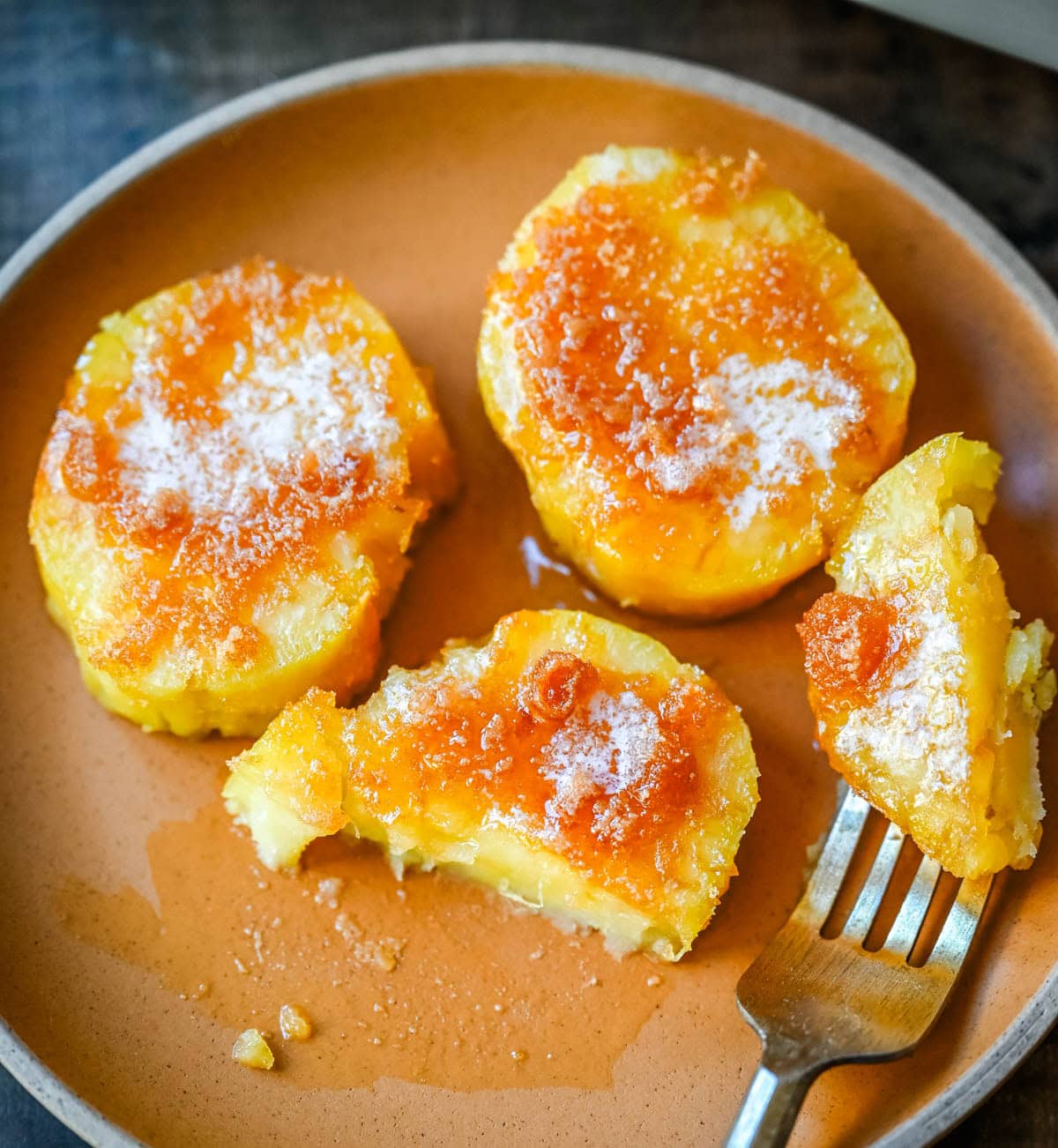
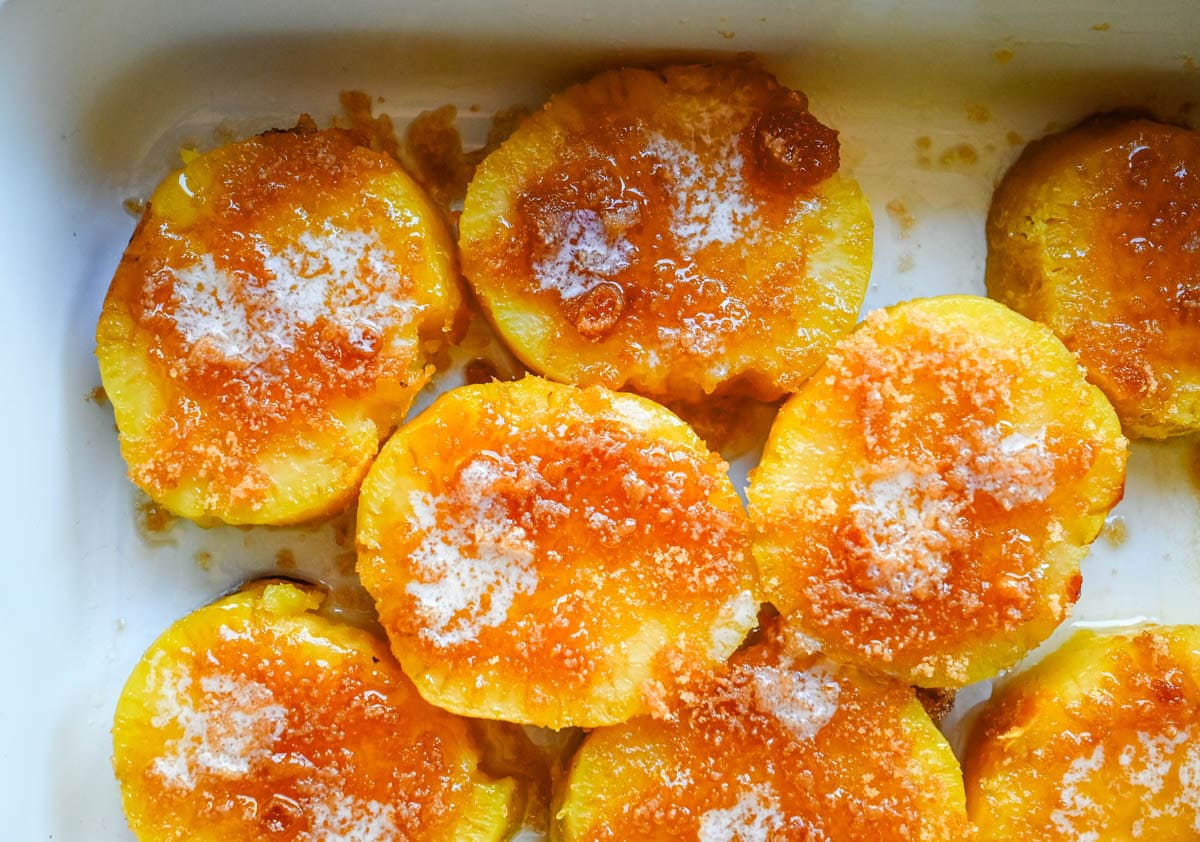
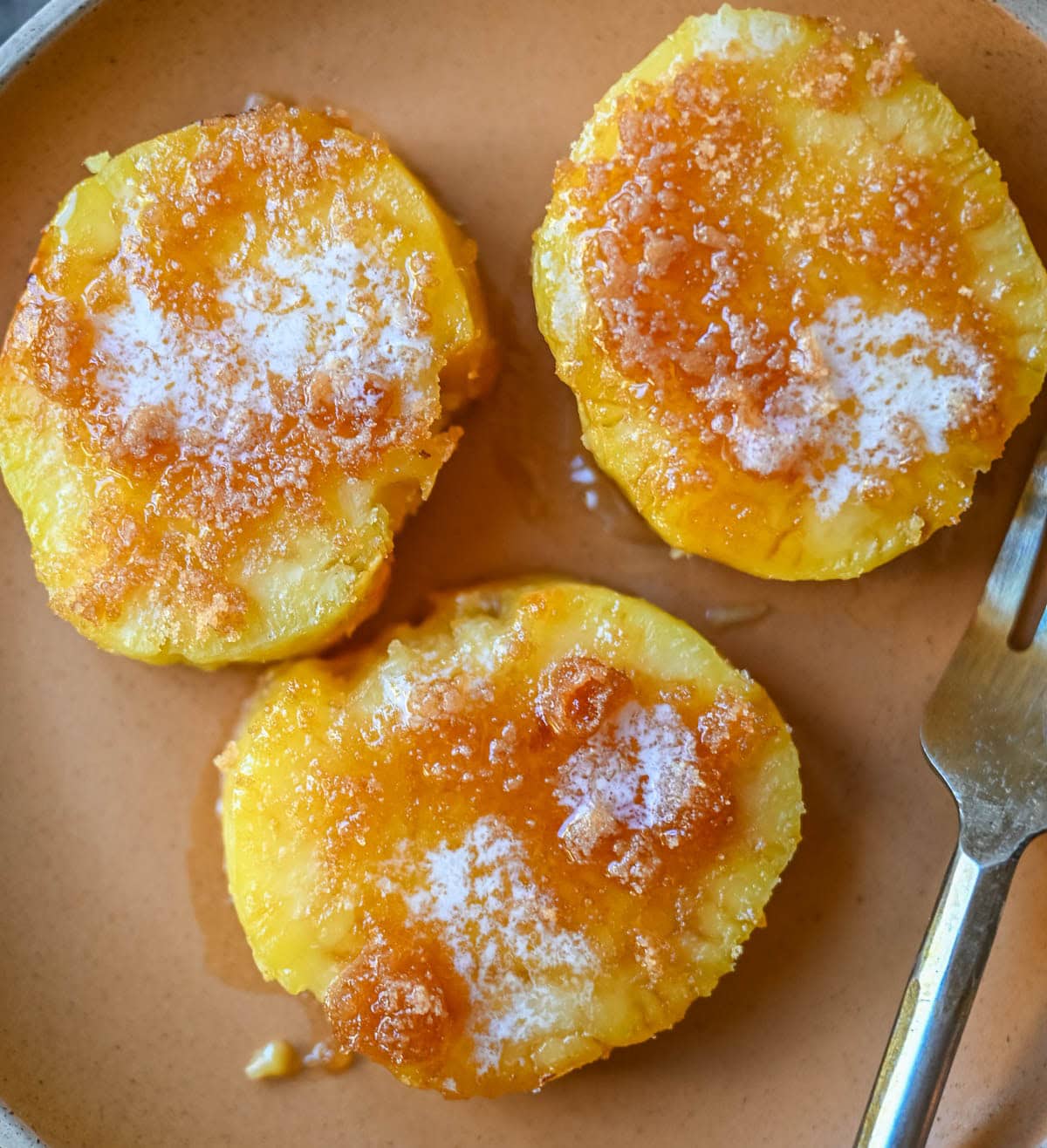
After roasting, adding butter and brown sugar and then caramelizing in the oven. This is basically a “candied finish,” and it works beautifully with Japanese sweet potatoes because they are naturally chestnut-sweet.
- Roast whole potatoes low-and-slow until fully tender.
- Rest 10–15 minutes, then slice into thick rounds or split lengthwise.
- Brush with melted butter, sprinkle brown sugar (and a pinch of salt).
- Return to oven at 425°F for 8–12 minutes or broil 1–3 minutes to caramelize.
The sweet potato is already cooked and sweet; the high-heat finish triggers rapid surface caramelization creating “toffee” notes.
Do you need to wrap them in foil?
Foil can reduce drying and keep the texture softer. Some yaki imo methods use foil for the slow bake, then unwrap for a short final roast to deepen the skin flavor.
No foil = drier skin, more “roasted” flavor
Foil = softer skin, more steamed interior
What Happens When Roasted Sweet Potatoes Chill After Baking:
- Firming: The starches in sweet potatoes continue to set as they cool, so they become slightly firmer and easier to handle.
- Sweetness development: Cooling allows flavors to mellow and the natural sugars to develop to make the best flavor!
- Texture for recipes: Chilled roasted sweet potatoes hold their shape better for dishes or salads.
Tip!
When using roasted Japanese sweet potatoes for this recipe, allow them to cool slightly before peeling or slicing to prevent them from breaking apart.
Use parchment paper to prevent sticking and make cleanup easy.
Frequently Asked Questions (FAQ’s):
- Can I use regular sweet potatoes instead of Japanese sweet potatoes?
Yes, but Japanese sweet potatoes are naturally sweeter and firmer, which makes caramelizing easier. - Can I make this ahead of time?
You can roast and peel the sweet potatoes ahead, then caramelize them right before serving. - Can I use granulated sugar instead of brown sugar?
Yes, granulated sugar will work, though brown sugar adds a deeper, molasses-like flavor. - How do I store leftovers?
Store in an airtight container in the fridge for up to 3 days. Reheat at 350 degrees gently in the oven before serving. You can also reheat in the air fryer at 350 degrees for 3-5 minutes, check halfway to make sure they don’t burn! - How do I know when they are done?
A knife should slide in with no resistance, and the potato should feel soft all the way through when gently squeezed with an oven mitt. - Can I roast them ahead of time?
Yes. Roast, cool, refrigerate, and then rewarm in the oven or air fryer. Cooling can also increase resistant starch somewhat.
Where do I find Japanese Sweet Potatoes?
Grocery Stores: You may find them at Kroger stores (Fry’s), Safeway, Sprouts, and many more.
Trader Joe’s: Often sells them during fall and winter. Look for them near the sweet potatoes, they will have a deep purple skin!
H-Mart / Asian grocery stores: Frequently stocked year-round, sometimes labeled Satsumaimo.
Other options: Local farmers’ markets or specialty produce stores may carry them. Some grocery chains with a larger produce section (Whole Foods, Kroger) also carry them seasonally.
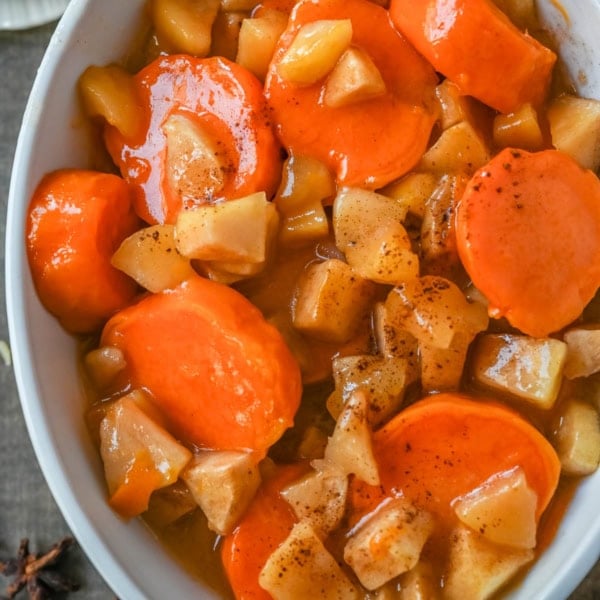
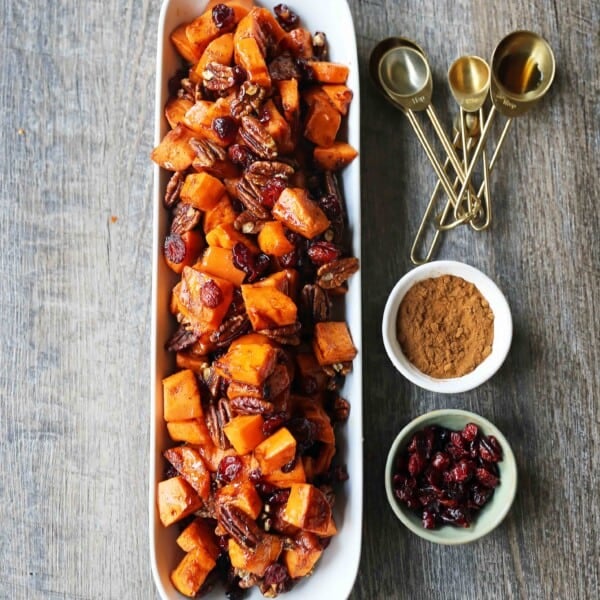
More Vegetable Recipes:
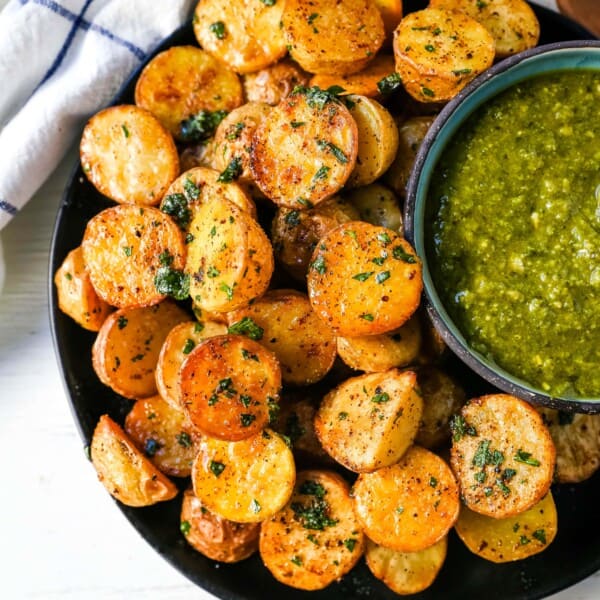
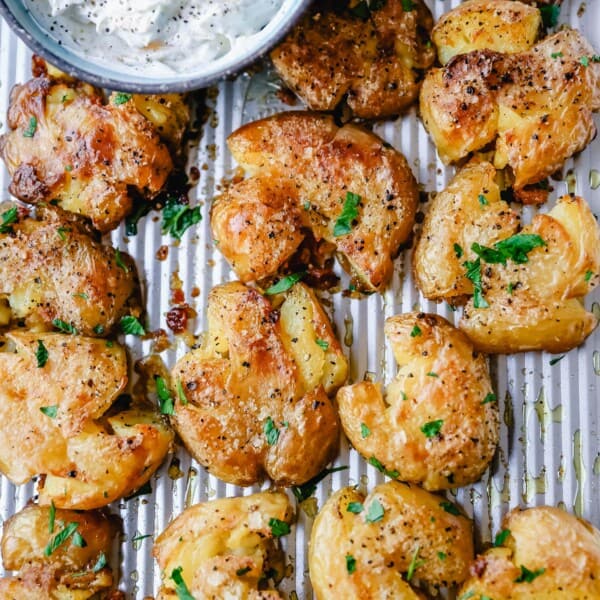
Pin this now to find it later
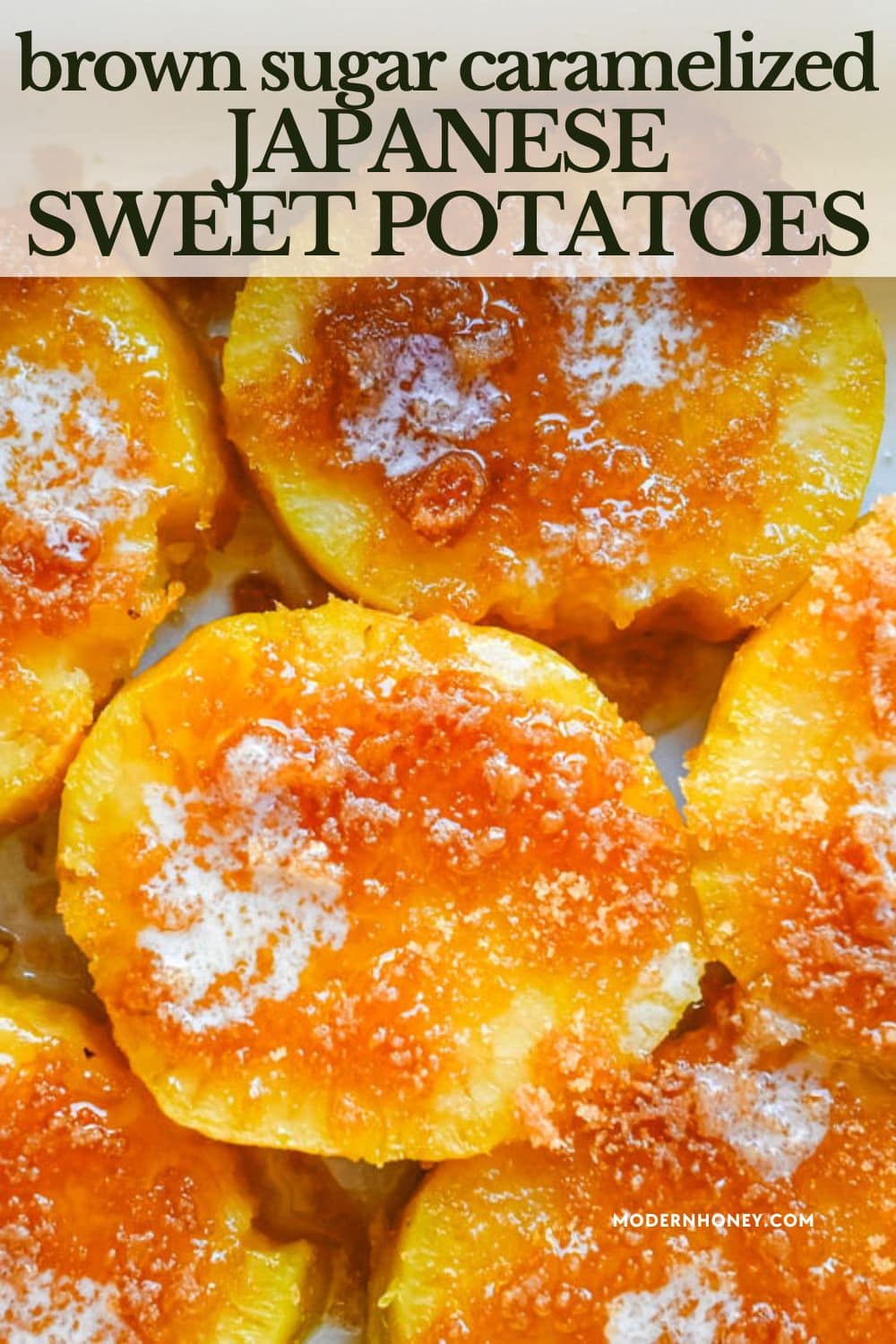
Pin It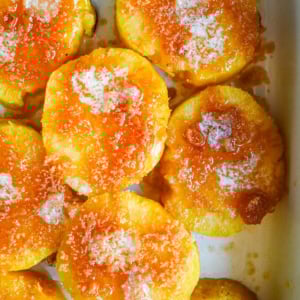
Brown Sugar Caramelized Japanese Sweet Potatoes
Ingredients
- 3 to 4 Japanese Sweet Potatoes (aka Murasaki or Satsumaimo)
- 3 to 4 Tablespoons Butter
- 3 to 4 Tablespoons Brown Sugar (or sugar)
- pinch Salt
- Cinnamon (optional)
Instructions
- Preheat oven to 325°F. Scrub skins clean. Wrap each potato individually in foil.
- Place directly on rack or on a baking sheet. Roast for 70–90 minutes or until very soft when gently squeezed (use oven mitts) or a knife slides in with zero resistance. If unsure, roast for longer. These benefit from extra time.
- Let them sit 10–15 minutes (this allows the interior to finish setting and become even creamier).
- Peel the potatoes. Skins should slide off easily with a paring knife.
- Cut into thick rounds or slabs (1–1.5 inches). Try to keep pieces intact— they’ll be soft.
- Increase to 375°F. Place slices in a baking dish. Dot butter all over. Sprinkle brown sugar evenly. Add a pinch of salt.
- Bake 10-15 minutes until butter is melted, the sugar is bubbling, and the edges are starting to caramelize. Optional finish — broil 2–3 minutes at the end.
Notes
- Can I use regular sweet potatoes instead of Japanese sweet potatoes?
Yes, but Japanese sweet potatoes are naturally sweeter and firmer, which makes caramelizing easier. - Can I make this ahead of time?
You can roast and peel the sweet potatoes ahead, then caramelize them right before serving. - Can I use granulated sugar instead of brown sugar?
Yes, granulated sugar will work, though brown sugar adds a deeper, molasses-like flavor. - How do I know when they are done?
A knife should slide in with no resistance, and the potato should feel soft all the way through when gently squeezed with an oven mitt.
Nutrition
Nutrition information is automatically calculated, so should only be used as an approximation.











Amazing recipe! I can’t wait to try it! You have the most incredible recipes