
This post may contain affiliate links. Please read our disclosure policy.
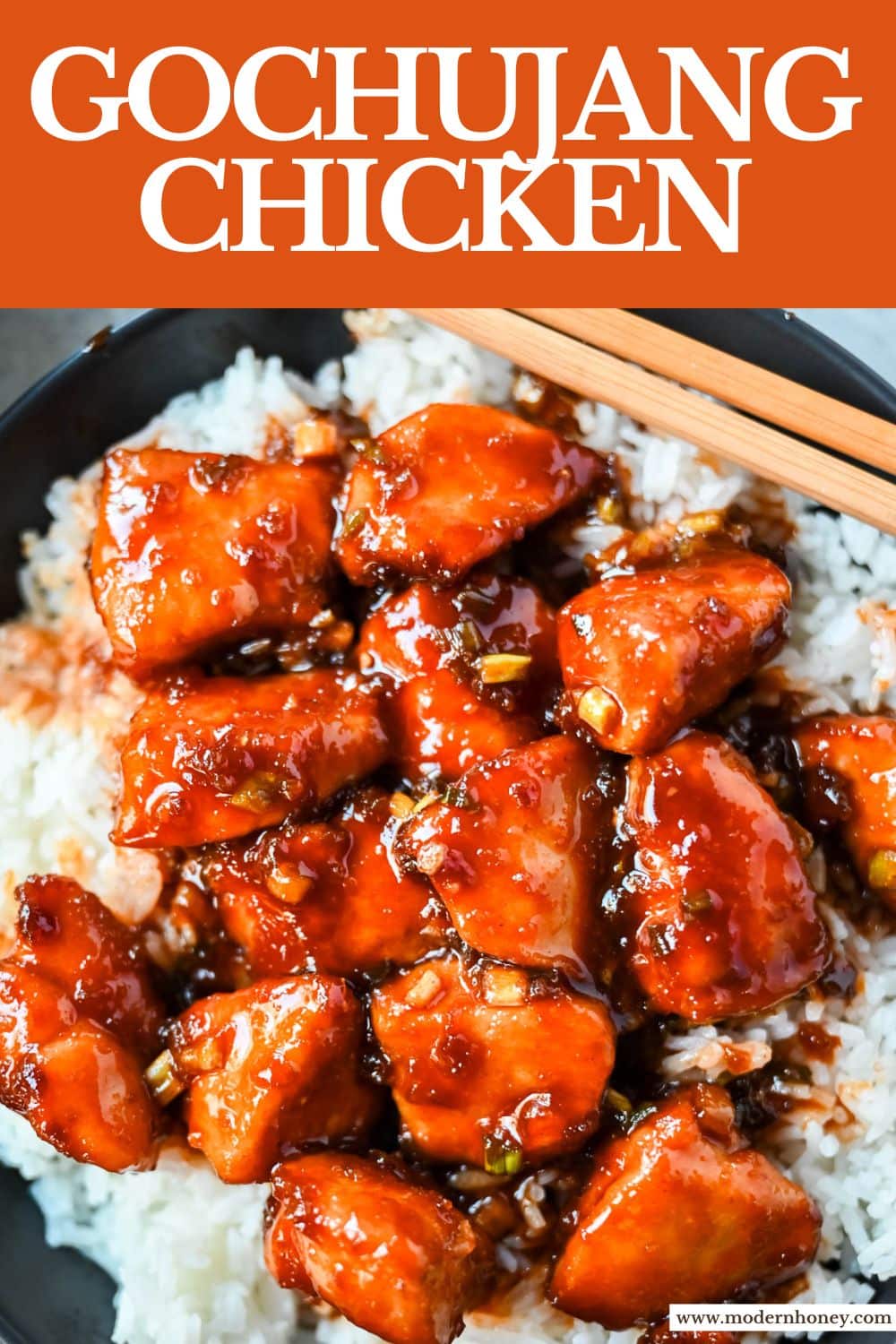
This sticky honey gochujang chicken is a quick and easy 30-minute dinner recipe with Korean-inspired flavor. Juicy chicken breast is coated in a sweet, spicy glaze made with honey, garlic, soy sauce, and gochujang paste for a perfect melt-in-your-mouth texture. Serve it over coconut rice or noodles for a simple easy dinner recipe!
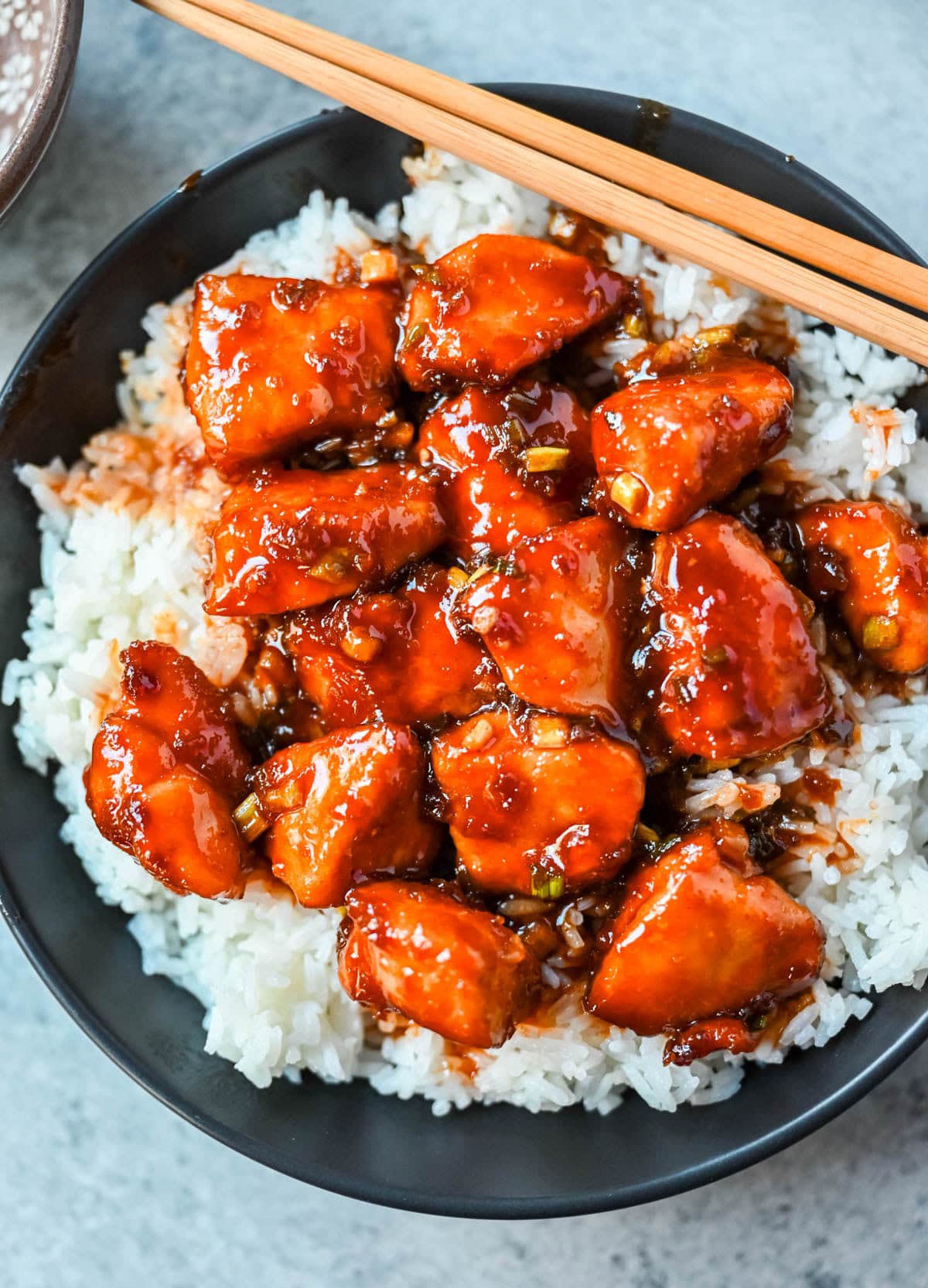
If you love bold flavors with just the right balance of heat, sweetness, and umami flavor, gochujang chicken deserves a place in your weekly dinner rotation. This Korean-inspired dish features tender pieces of chicken coated in a rich, glossy sauce made from gochujang, Korea’s iconic fermented chili paste. The result is deeply savory, slightly sweet, and a little spicy. Don’t worry…it’s a mild heat.
Gochujang chicken is a dish built around gochujang, a thick fermented paste made from red chili powder, glutinous rice, soybeans, and salt. Gochujang is a cornerstone of Korean cooking and is known for its unique balance of heat, sweetness, and umami. You can find it at your local grocery store, Trader Joe’s, World Market, or Asian grocery stores such as
H-Mart.
When paired with chicken, gochujang creates a sauce that clings beautifully to the chicken and caramelizes slightly when cooked. Gochujang originated in Korea and has been used for centuries in traditional dishes.
Why You’ll Love This Recipe:
So flavorful: A perfect balance of spicy, sweet, and savory from the gochujang sauce.
Quick and easy: Ready in under 30 minutes with simple pantry ingredients.
Restaurant-quality texture: The technique we use, velveting, makes the chicken incredibly tender and juicy. Just like a restaurant but with ingredients you know and can pronounce!
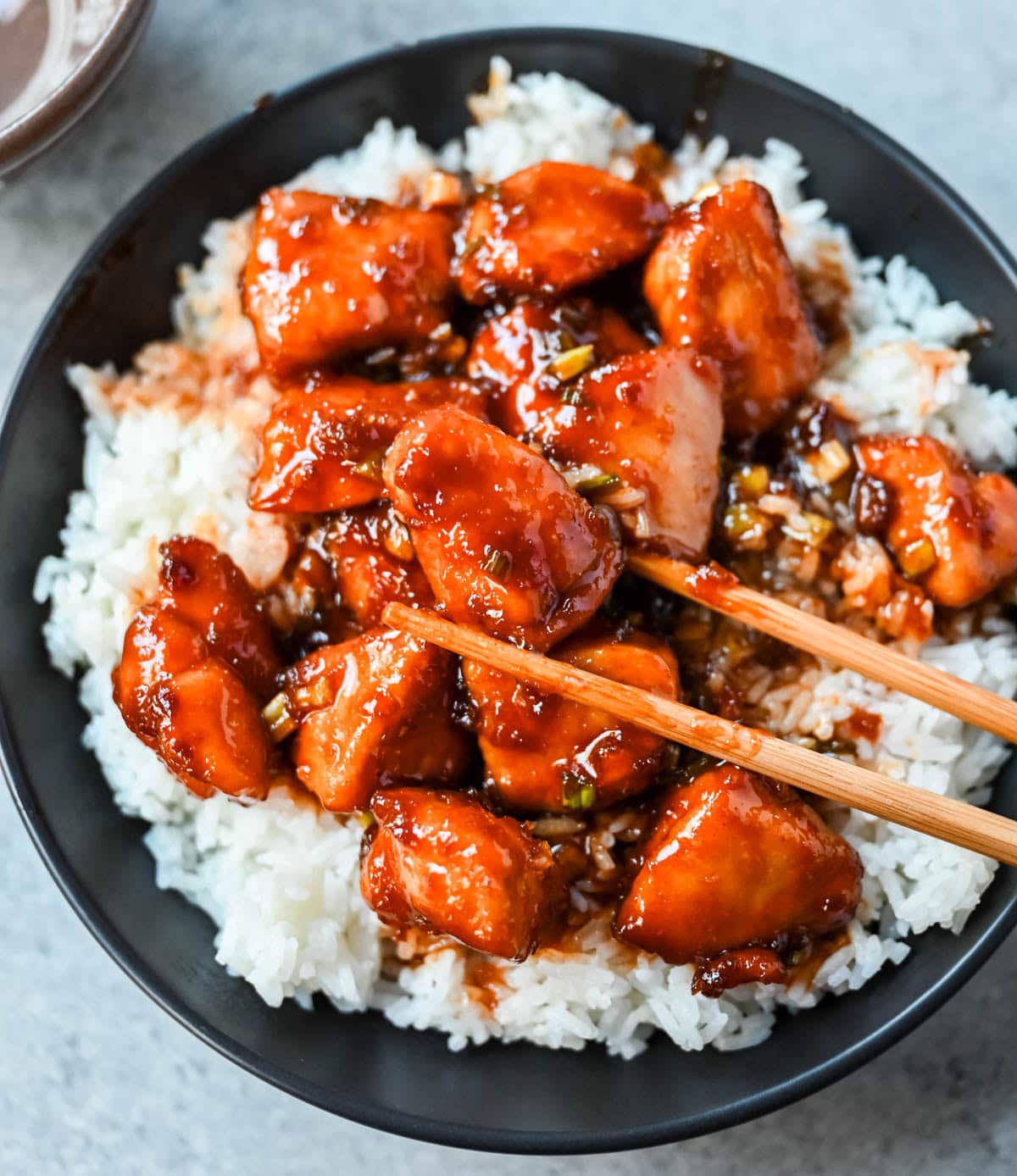
Ingredients for Honey Gochujang Chicken:
- Chicken breast: I use boneless, skinless chicken breast but you can also use chicken thighs.
- Gochujang paste: The key flavor base — a Korean red chili paste that adds heat and depth without being overpowering.
- Honey: Balances the spice and helps create that glossy, sticky glaze.
- Soy sauce: Adds saltiness to the marinade and sauce.
- Rice vinegar: Brings a little tang to cut through the richness.
- Sesame oil: Toasted sesame oil gives a warm, nutty aroma that ties everything together.
- Garlic: Adds punch and flavor to the sauce. I use fresh but you can also use dried garlic powder.
- Cornstarch & baking soda: Used in the velveting process to make the chicken soft and tender.
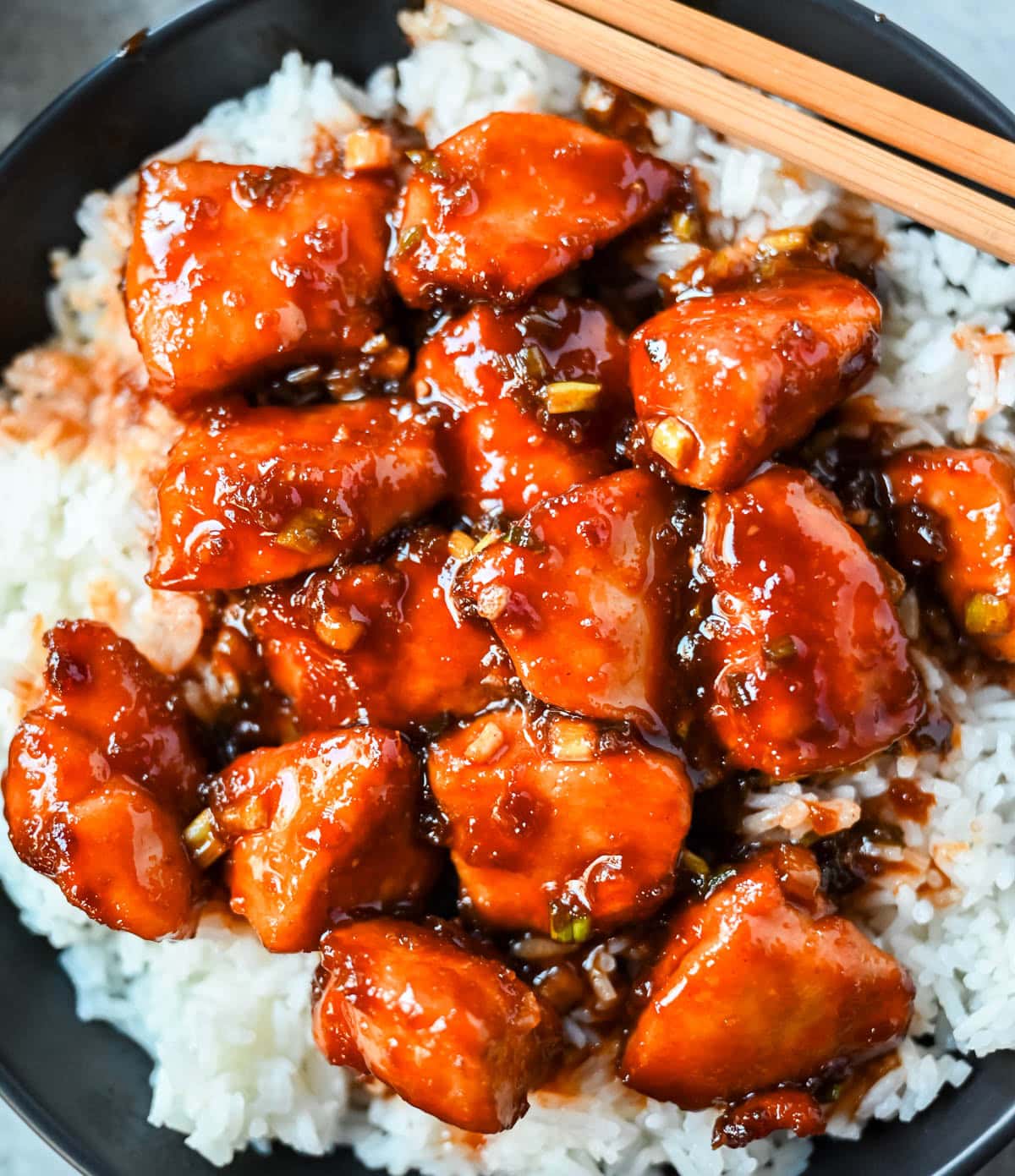
How to make Korean Gochujang Chicken:
1. VELVET THE CHICKEN. Cut chicken into bite-size pieces. In a large bowl, combine the chicken with baking soda, cornstarch, soy sauce, and sesame oil. Mix well and let it rest for 10-15 minutes, this step keeps the chicken tender.
2. MAKE THE SAUCE. In a small bowl, whisk together soy sauce, honey, gochujang paste, and rice vinegar until smooth. Set aside.
3. FRY THE CHICKEN. Heat 2 tablespoons of oil in a skillet over medium-high heat. Add half of the chicken and cook for 3 minutes per side until golden. Remove from skillet and repeat with the rest.
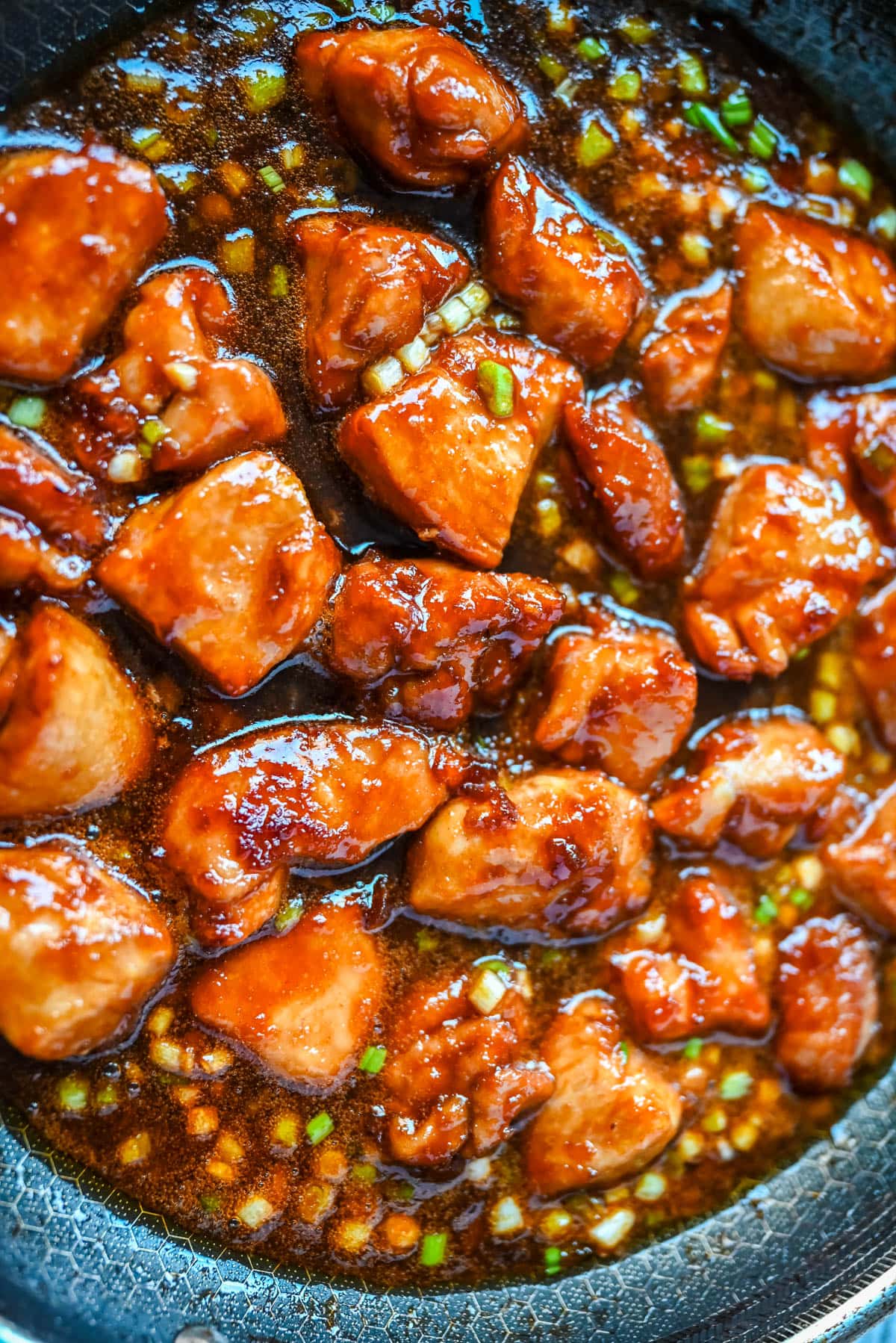
4. SAUTE AND SAUCE. To the same pan lower the heat to medium-low, add a small drizzle of oil, and sauté the minced garlic for 30 seconds. Add the sauce mixture, then bring to medium heat until thickened.
5. COMBINE CHICKEN WITH SAUCE. Return all the chicken to the pan and toss until fully coated in sauce. Garnish with sliced green onions and sesame seeds. Serve immediately with rice or noodles.
Why You Should Velvet the Chicken (and What It Does):
Velveting is a Chinese cooking technique often used in stir-fries, and it works so well for gochujang chicken.
What is velveting?
Velveting involves coating raw chicken in a light mixture — usually cornstarch, baking soda, and a little liquid — before cooking.
Why velvet chicken?
Creates exceptionally tender, juicy meat
Protects the chicken from drying out over high heat
Helps sauce cling evenly to each piece
Produces a silky, restaurant-style texture
For gochujang chicken, velveting ensures the chicken stays soft and succulent, even after being tossed in a bold, thick sauce.
Storage:
Store leftover gochujang chicken in an airtight container in the refrigerator for up to 4 days. Reheat in a skillet over medium heat with a splash of water to loosen the sauce. This dish can also be frozen for up to 2 months — just thaw overnight and reheat before serving.
Frequently Asked Questions (FAQ’s):
1. What is gochujang?
Gochujang is a Korean fermented chili paste made from chili powder, glutinous rice, and soybeans. It’s spicy, slightly sweet, and full of umami flavor.
2. Can I use chicken thighs instead of breasts?
Yes! Boneless, skinless chicken thighs work great and are naturally more juicy and flavorful.
3. How spicy is gochujang chicken?
It’s mildly spicy — you can easily adjust the heat by adding more or less gochujang to your preference.
4. Is this recipe gluten-free?
Yes! Use tamari or gluten-free soy sauce and check that your gochujang is labeled gluten-free.
Asian-Inspired Dinner Recipes:
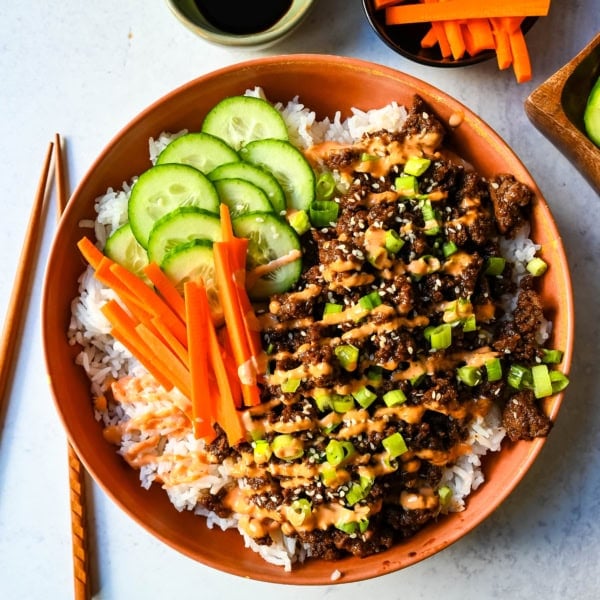
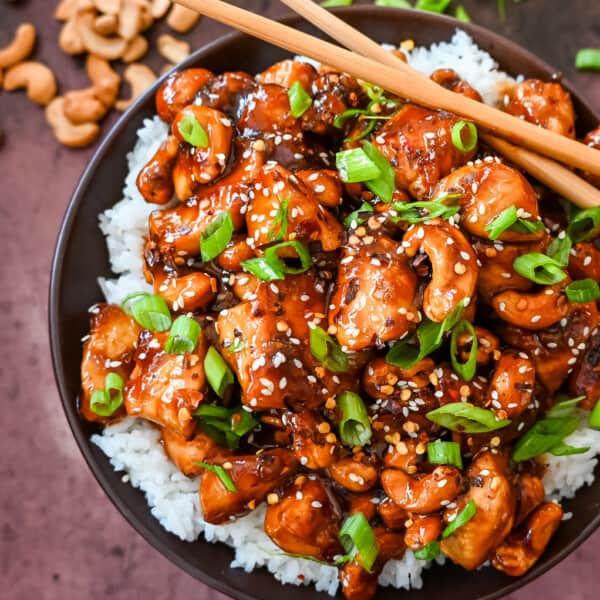
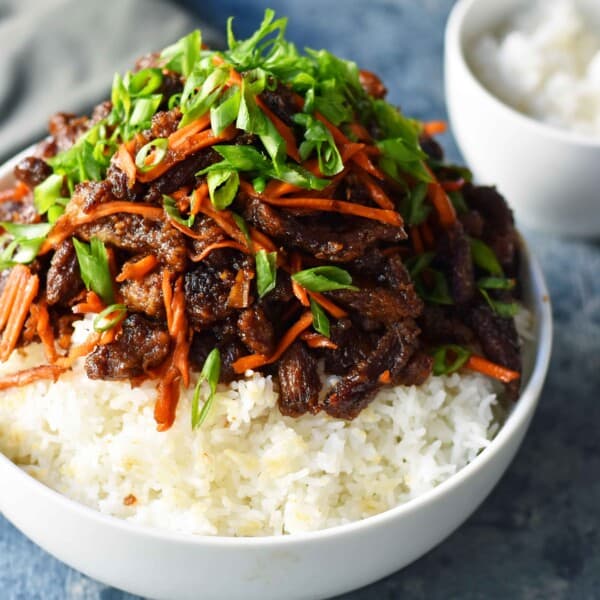
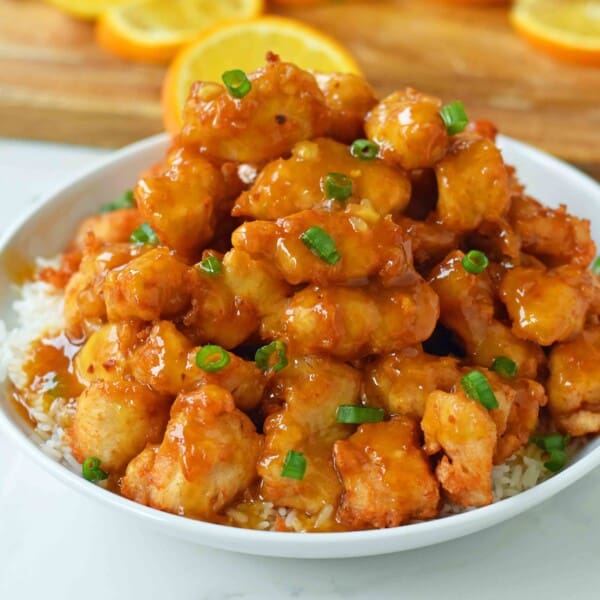
Sides to serve with this Gochujang Chicken:
Spicy Wonton Dumplings with Chili Sauce
Pin this now to find it later
Pin It
Gochujang Chicken
Ingredients
Velveting Chicken:
- 1 1/2 lbs. Chicken Breast (or thighs)
- 2 Tablespoons Cornstarch
- 1/4 teaspoon Baking Soda
- 1 Tablespoon Soy Sauce
Gochujang Sauce:
- 1/3 cup Honey
- 2 Tablespoons Gochujang Paste (or more to taste)
- 2 Tablespoons Soy Sauce
- 2 teaspoons Rice Vinegar
- 2 Garlic Cloves (minced)
- 3 Tablespoons Oil
Garnish:
- 2 Green Onions (sliced)
- Sesame Seeds
- Rice
Instructions
- Cut the chicken into bite-size pieces. In a large bowl, combine chicken, cornstarch, baking soda, and soy sauce. Stir to coat. Let sit for 10 minutes.
- In a small bowl, whisk together honey, soy sauce, gochunjang paste, rice vinegar, and garlic until smooth. Set aside.
- Heat large skillet over medium heat. Add oil and let it heat for several minutes. Add the chicken (may split into two batches) and cook for 3 minutes, then flip and cook for another 2-4 minutes or until cooked through.
- Lower the temperature to medium-low. Add the sauce and stir to coat chicken. Allow the sauce to thicken and cook for 5-7 minutes.
- Top with green onions and sesame seeds and serve on top of rice.
Nutrition information is automatically calculated, so should only be used as an approximation.











Made this for one, this being one of my favourite dishes to cook for a quick mid week meal.
Thanks so much for making this recipe Jon!
Melissa’s. I like all your recipes. Since you were on with VanillaPura!! ❤️