This post may contain affiliate links. Please read our disclosure policy.
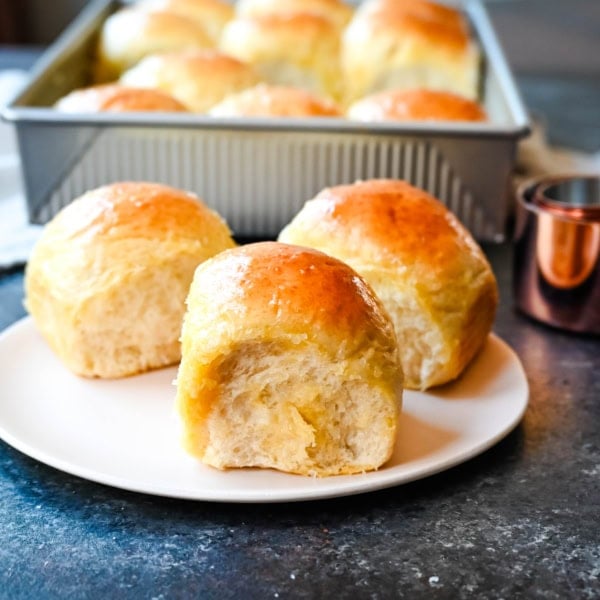
Soft, buttery brioche dinner rolls that are rich, fluffy, and melt in your mouth. Make them the same day or overnight for the best homemade brioche dinner rolls!

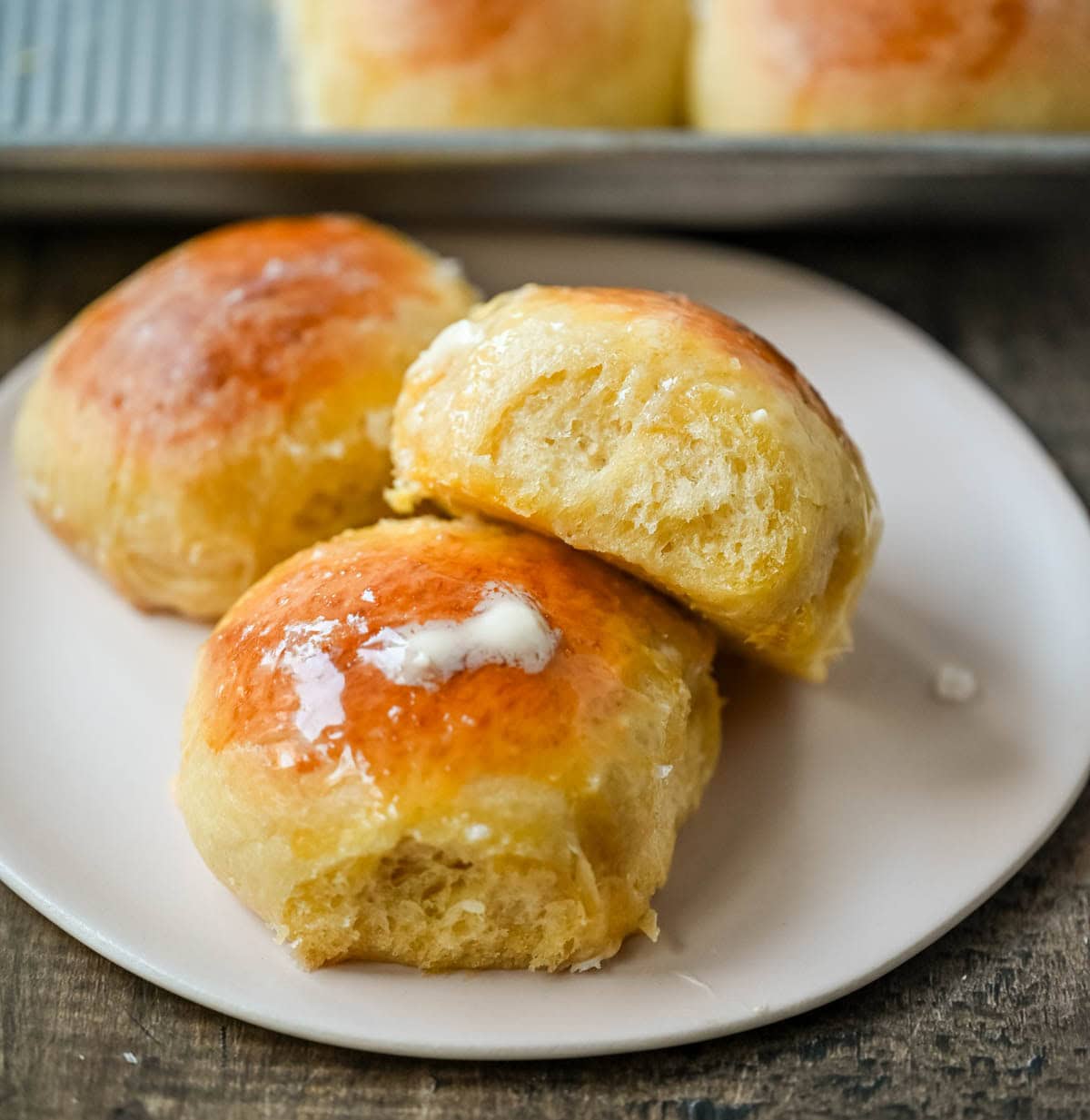
If there’s one thing that makes a holiday dinner feel extra special, it’s a basket of warm, homemade rolls. And these brioche dinner rolls are the best of the best. They’re golden and shiny on the outside, unbelievably soft and feathery on the inside, and so rich and buttery you don’t even need to add butter (but I always do).
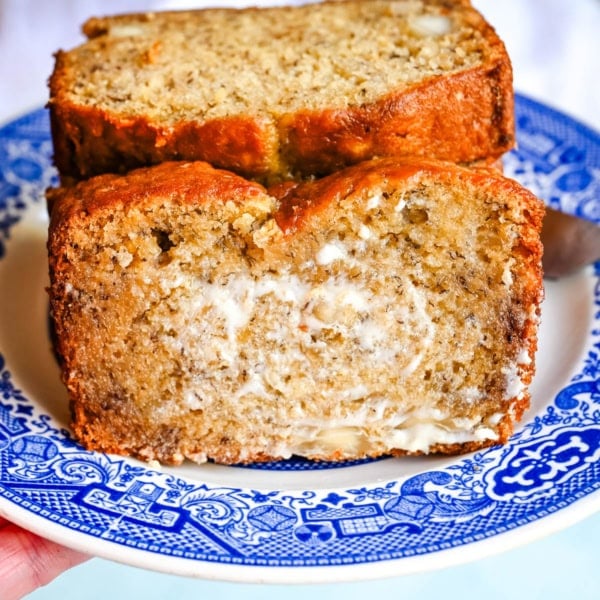
This is real bakery-style brioche, made with plenty of eggs and butter. My recipe is adapted from the brioche at Joanne Chang’s Flour Bakery in Boston. When my daughter and her husband lived in Boston, when we visited them, we always visited Flour Bakery and loved it. I have been making their brioche for years but it was time to turn it into a brioche dinner roll recipe. Also, I have shared her Flour Bakery Banana Bread Recipe as well.
The best part? You can make the dough the night before, so on Thanksgiving day all you have to do is shape, rise and bake. Short on time? I tested a same-day version too, so you can make them start to finish in one day. Brush them with melted butter right out of the oven and get ready for everyone to ask for the recipe.
When we were visiting Paris, we ate so much brioche, and there is a reason it is so loved. It is the richest bread because of all of the butter, which makes so many layers. You are going to love these rolls!
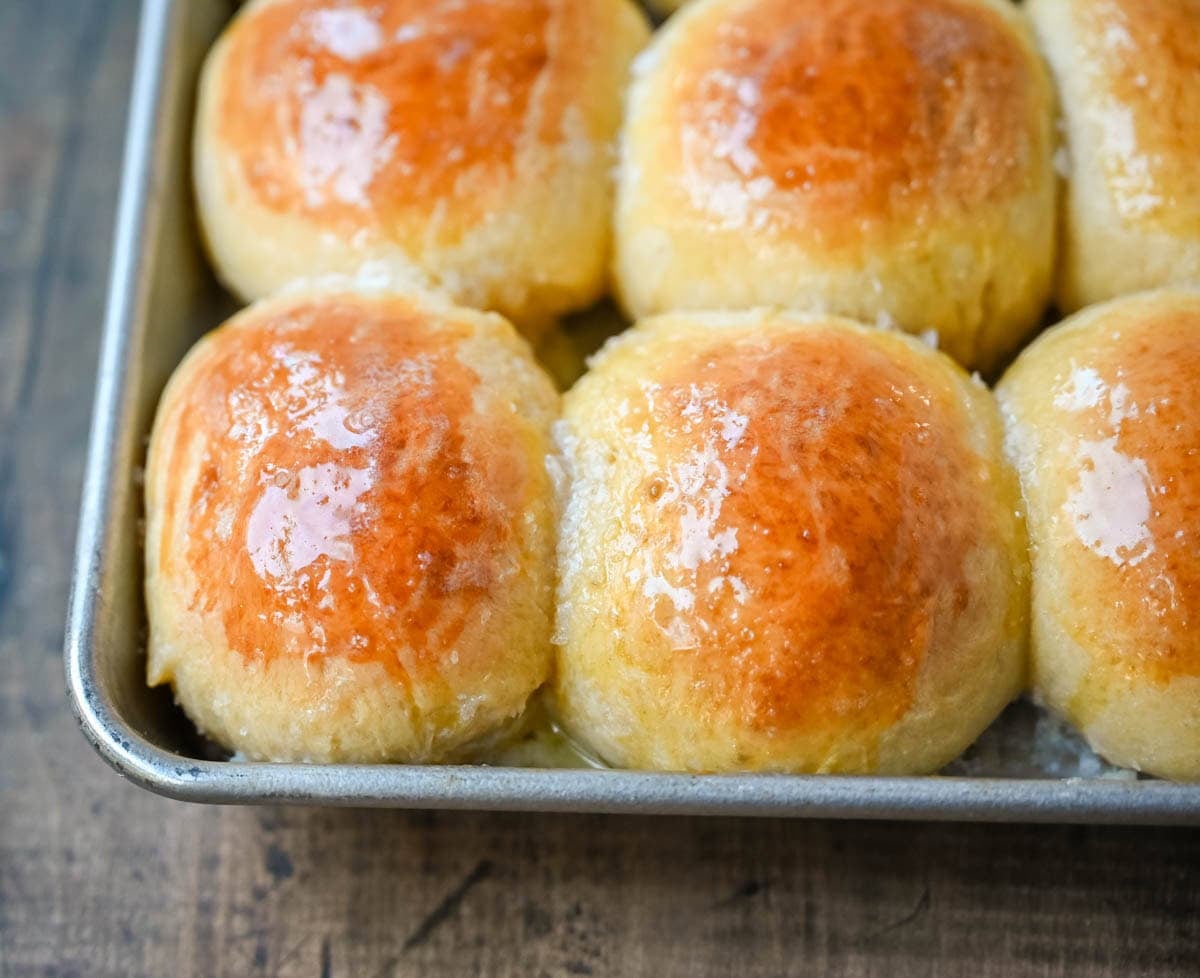
Why You’ll Love These Brioche Dinner Rolls
- Real bakery-style brioche. Five eggs and plenty of butter make them richer and softer than regular dinner rolls.
- Made for your stand mixer.
- Make-ahead friendly. Chill the dough overnight so most of the work is done the day before, or make them start to finish in one day.
- Soft, feathery and golden. An egg wash gives them a shiny bakery finish, and a brush of melted butter keeps them soft.
What is brioche?
Brioche is a classic French bread made with lots of eggs and butter. That’s called an “enriched” dough. The eggs and butter make it tender, golden and rich, with a soft, cake-like crumb and a slightly sweet flavor.
Brioche rolls vs. regular dinner rolls: most dinner rolls are made with milk and a little butter. Brioche uses eggs as most of the liquid and a lot more butter, so it’s richer, softer and more golden inside. It also takes a little more time, because a buttery dough rises more slowly.
If you love a good homemade roll as much as I do, you have to try my Japanese Milk Bread Rolls, Crescent Rolls, and Classic Dinner Rolls too!
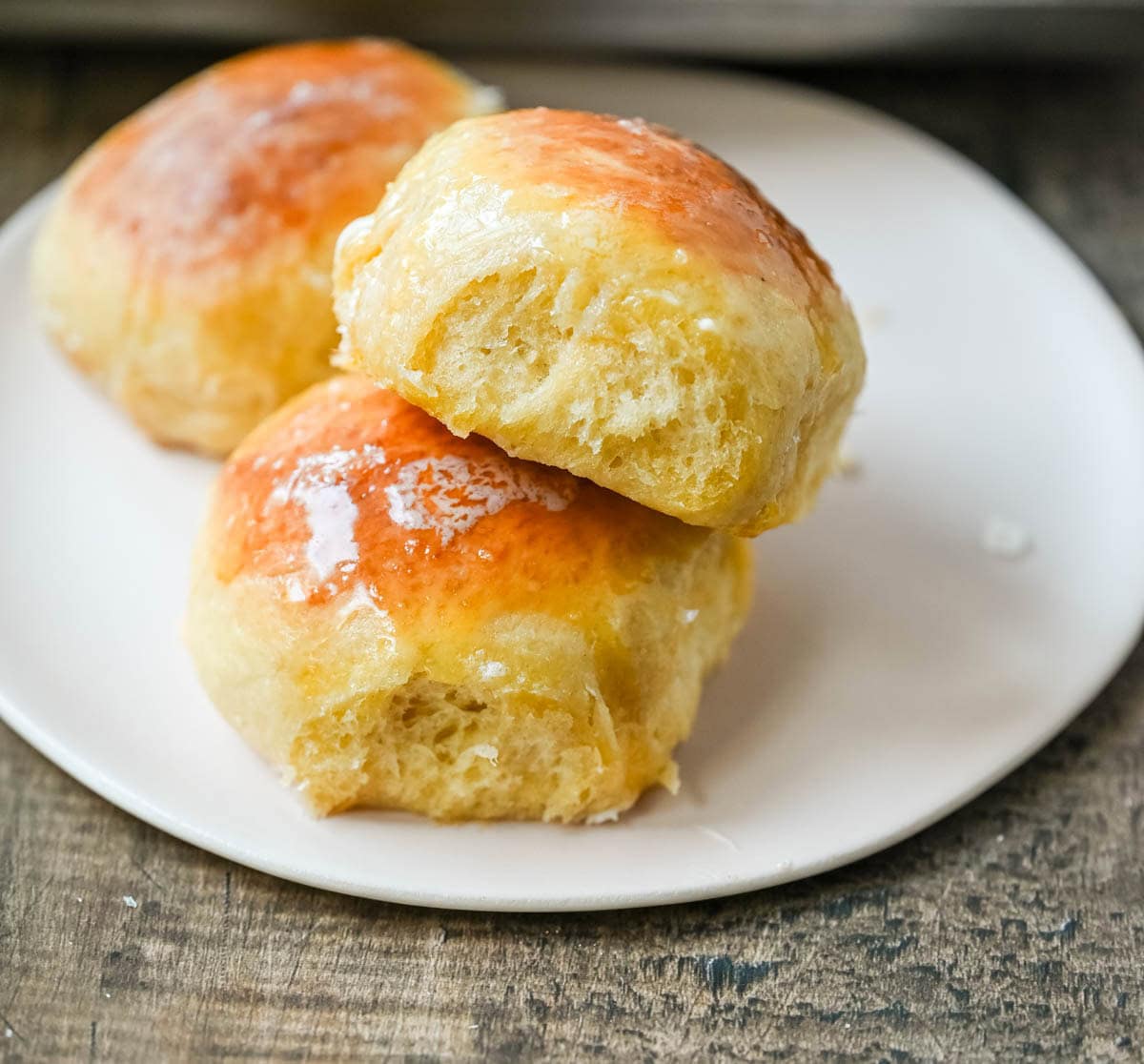
Brioche Roll Ingredients
- Ice-cold water: keeps the dough cool during the long mixing time, so the butter doesn’t melt and turn the dough greasy.
- Active dry yeast: mixed right in with the flour. No need to proof it first.
- All-purpose and bread flour: bread flour has more protein, which gives the rolls structure to hold up all that butter. All-purpose keeps them tender.
- Sugar: a little sweetness and a golden crust.
- Kosher salt: if you use Morton kosher salt, start with about 2 teaspoons, since it’s saltier by volume than Diamond Crystal.
- Eggs: five eggs are the main liquid in the dough. Cold eggs help keep the dough cool.
- Unsalted butter: 2¾ sticks (11 ounces), softened to room temperature. It should be soft enough to press easily but not greasy or melted.
- Egg wash: 1 beaten egg for a shiny, golden top.
- Melted butter: brushed on right after baking.
How to make Brioche Dinner Rolls
- Step 1: Mix the dough. In your stand mixer with the dough hook, mix the cold water, yeast, both flours, sugar and salt on low. Add the eggs one at a time, then mix on speed 2 until a shaggy dough forms, about 3 minutes. It will be very stiff.
- Step 2: Add the butter early (this is the key). In the original recipe, the stiff dough is kneaded for several minutes before any butter goes in, which is really hard on a home mixer. Instead, add the butter right away, 1 or 2 pieces at a time, letting each piece mostly disappear before adding the next. It takes about 8 to 10 minutes.
- Step 3: Knead until smooth and stretchy. Butter slows down gluten development, so this dough needs a longer knead. Knead on speed 2 to 4 for 12 to 15 minutes, scraping the bowl and hook a few times. It’s ready when it’s smooth, glossy and stretchy, and it slaps against the sides of the bowl and pulls away cleanly. It may start out sticky and eventually pulls away from the sides of the bowl. Mixer tip: if your mixer feels hot or starts straining, turn it off and let the dough rest for 5 minutes. The rest gives the gluten time to relax and develop on its own.
- Step 4: Let the dough rise (overnight or same day). Place the dough in a large bowl, cover it tightly and refrigerate it for at least 6 hours or overnight (see same day instructions below). This slow, cold rise develops flavor and firms up the butter, so the soft dough is much easier to shape.
- Same-day option: cover the bowl and let the dough rise at room temperature until doubled, about 2 hours. Keep it somewhere comfortably warm but not hot (under about 80°F), or the butter can start to melt out of the dough. Room-temperature brioche is softer than chilled dough, so shape it with a bench scraper and lightly buttered hands instead of flour.
- Step 5: Shape the rolls. Divide the dough into 16 (2 3/4-3 ounces) or 24 pieces (2 ounces) each. A scale makes them perfectly even, so they bake at the same rate. To shape, place a piece on an unfloured counter and cup your hand over it. Move your hand in small circles, letting the dough catch on the counter, until it forms a tight, smooth ball. Flour makes the dough slide instead of grip, so skip it. Place the rolls on a parchment-lined baking sheet with space between them.
- Step 6: Proof until doubled. Cover the baking sheet loosely with plastic wrap and let the rolls rise in a warm spot (not hot, or the butter will melt) until doubled. It will take 2 to 3 hours for overnight dough, since it starts cold, or about 1 1/2 to 2 hours for same-day dough. They’re ready when they’ve doubled, look puffy, and a gentle poke leaves a dent that springs back slowly.
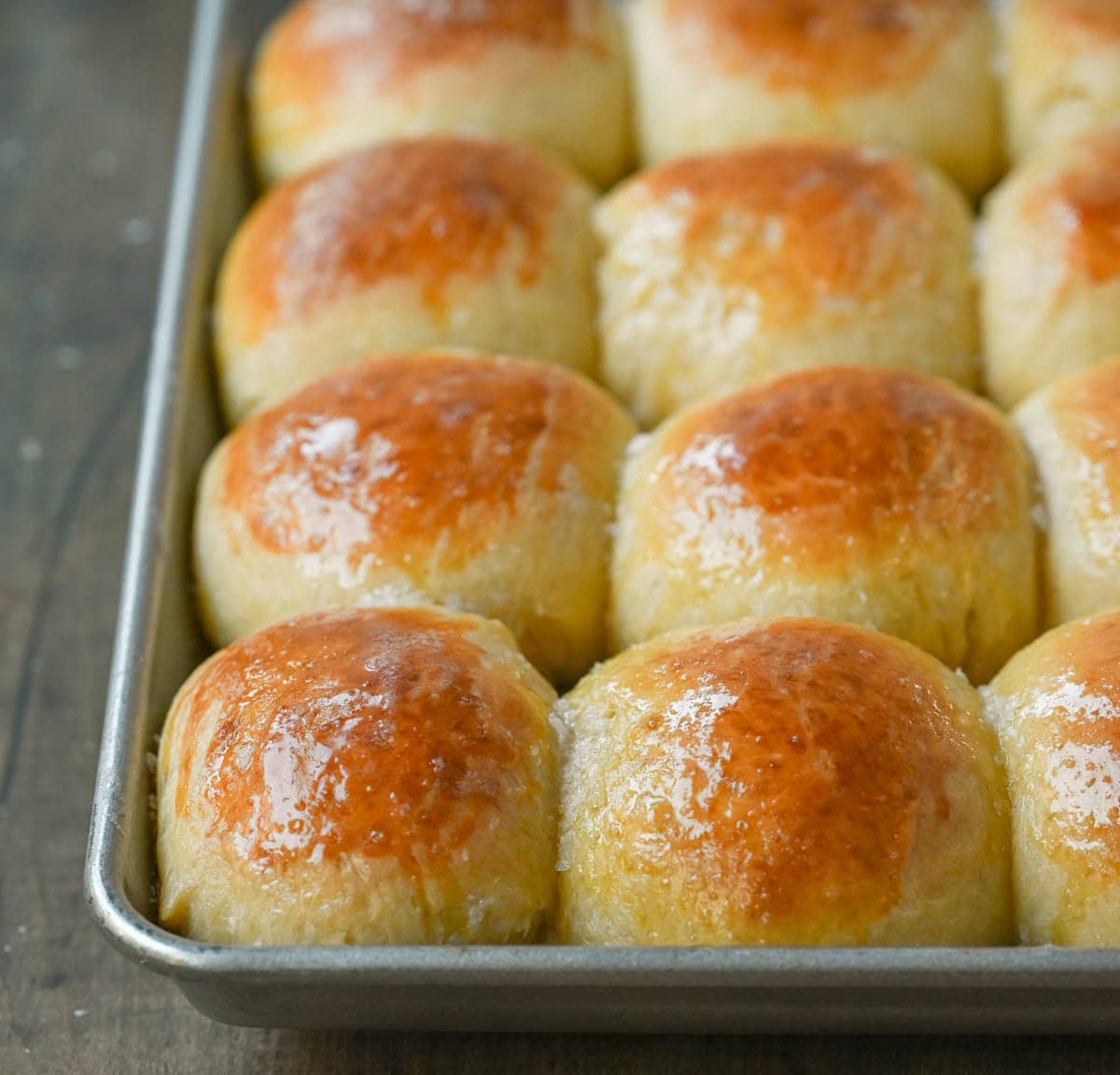
- Step 7: Egg wash and bake. Heat the oven to 350°F. Gently brush the rolls with beaten egg, all the way down the sides, without letting it pool underneath. Bake for 18 to 22 minutes, until deep golden brown.
- Step 8: Brush with butter. Brush the hot rolls with melted butter right away. It soaks in, keeps the tops soft, and gives them that bakery shine. Sprinkle with flaky salt if you like, and serve warm.
Tips for Perfect Brioche Rolls
- Use a scale. Weighing the dough balls is the easiest way to get bakery-perfect rolls.
- Keep everything cool while mixing. Cold water and cold eggs keep the butter from melting during the long knead.
- Soft butter, not melted. Melted butter makes a greasy dough that won’t come together.
- Be patient with the knead. Brioche needs a long knead to develop the structure that makes it light and fluffy.
- Shape the dough cold. Cold brioche is much easier to handle. If it gets soft and sticky while you’re shaping, pop it in the fridge for 15 to 30 minutes. This works for same-day dough too.
- Don’t rush the rise. Underproofed rolls bake up dense. Wait until they truly double.
- Don’t skip the butter brush. It’s what keeps the tops soft and shiny.
Troubleshooting
| Problem | Why it happened | Fix |
|---|---|---|
| Mixer is struggling | The dough is very stiff before the butter | Add the butter earlier, as in this recipe. Still too stiff? Add 1 Tbsp milk with the eggs. |
| Dough looks greasy and won’t come together | The butter or dough got too warm | Chill the bowl 10 to 15 minutes, then keep kneading. |
| Dough is too sticky to shape | It warmed up | Chill it 15 minutes. Use a bench scraper, not extra flour. |
| Rolls didn’t rise | Cold dough rises slowly, or the yeast is old | Give them more time in a warm spot. Check your yeast’s date. |
| Rolls are dense | Underkneaded or underproofed | Knead until it passes the windowpane test, and let the rolls fully double. |
| Tops are too dark | Oven runs hot | Tent with foil for the last 5 minutes. |
Make Ahead, Storage and Freezing
- Make ahead: the dough keeps in the fridge for up to 2 days before shaping.
- Storage: keep baked rolls in an airtight container or zip-top bag at room temperature for up to 2 days.
- Freezing baked rolls: cool completely, then freeze in a freezer bag for up to 3 months. Thaw at room temperature and warm at 300°F for 5 to 8 minutes.
- Reheating: wrap in foil and warm at 300°F for 5 to 8 minutes.
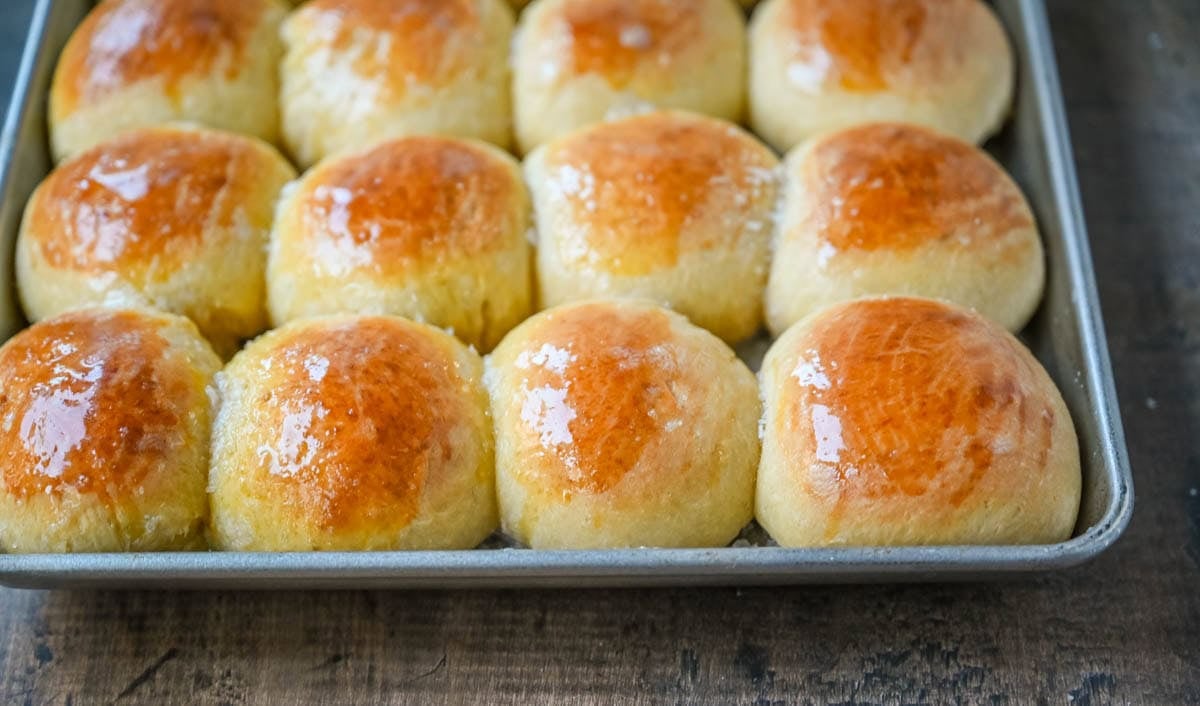
What to Serve with Brioche Rolls
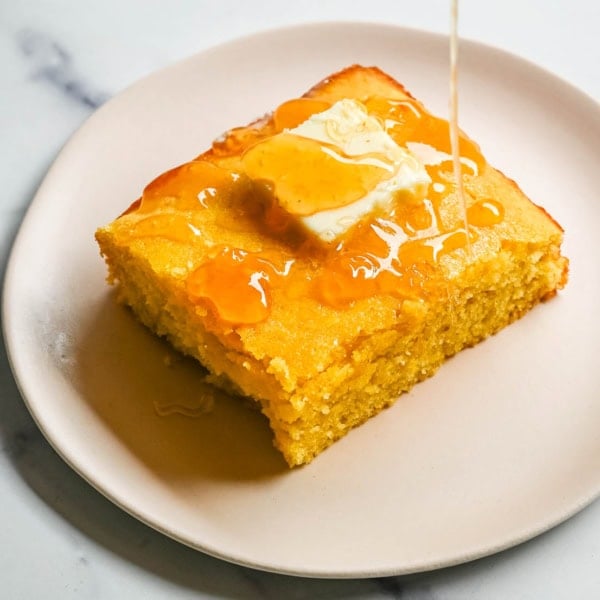
Serve them with your Slow Cooker Thanksgiving turkey, Christmas ham or Steak, soups and stews, and holiday sides like Sweet Potato Casserole, Homemade Green Bean Casserole and Corn Crème Brûlée. Leftovers make the best turkey sliders!
Frequently Asked Questions
- What’s the difference between brioche and regular dinner rolls? Brioche is made with lots of eggs and butter, so it’s richer, softer and more golden than regular dinner rolls, which usually use milk and a small amount of butter.
- Why is my brioche dough so stiff? Before the butter goes in, the only liquid is a little water and the eggs, so the dough is very stiff. That’s why this recipe adds the butter earlier. It softens the dough so your mixer can knead it.
- Can I make brioche rolls without a stand mixer? It’s possible, but it’s a lot of work. Brioche is very sticky and needs a long knead. A stand mixer makes it much easier.
- Can I make brioche rolls the same day? Yes! Let the dough rise at room temperature until doubled, about 2 hours, then shape the rolls and let them rise about 2 more hours before baking. The overnight option is great for making ahead. The cold rise also firms up the butter, so the dough is easier to shape.
- How do I know when brioche rolls are done? They should be deep golden brown, and an instant-read thermometer should read 190°F in the center.
- Can I make these ahead for Thanksgiving? Yes! Make the dough up to 2 days ahead and keep it in the fridge. Shape, rise and bake on the day. You can also bake them ahead and freeze them.
- Can I use all all-purpose flour? Yes, but bread flour gives the rolls more structure to hold all that butter. All-purpose flour alone makes a slightly softer, less tall roll.
- How many rolls does this make? 24 dinner rolls at about 55 grams (2 ounces) each, or 16 larger rolls at about 80 grams (2¾ ounces) each.
Roll Recipes
Make your Thanksgiving menu unforgettable with these easy Thanksgiving side dishes!

Pin this now to find it later
Pin It
Brioche Dinner Rolls
Ingredients
- 1/4 cup Water (ice cold)
- 3 1/4 teaspoons Active Dry Yeast
- 2 1/4 cups All-Purpose Flour
- 2 1/4 cups Bread Flour *
- 1/3 cup + 1 Tablespoon Granulated Sugar
- 1 Tablespoon Salt * (2 teaspoons table salt)
- 5 large Eggs
- 1 cup + 6 Tablespoons Unsalted Butter 2¾ sticks or 11 ounces unsalted butter, at room temperature, cut into 10 to 12 pieces
Egg Wash:
- 1 large Egg beaten
To Finish:
- 3 Tablespoons Salted Butter melted
- Flaky sea salt optional
Instructions
- In your stand mixer with the dough hook, mix the cold water, yeast, both flours, sugar and salt on low. Add the eggs one at a time, then mix on speed 2 until a shaggy dough forms, about 3 minutes. It will be very stiff.
- Add the butter early (this is the key). In the original recipe, the stiff dough is kneaded for several minutes before any butter goes in, which is really hard on a home mixer. Instead, add the butter right away, 1 or 2 pieces at a time, letting each piece mostly disappear before adding the next. It takes about 8 to 10 minutes.
- Knead until smooth and stretchy. Butter slows down gluten development, so this dough needs a longer knead. Knead on speed 2 to 4 for 12 to 15 minutes, scraping the bowl and hook a few times. It's ready when it's smooth, glossy and stretchy, and it slaps against the sides of the bowl and pulls away cleanly. It may start out sticky and eventually pulls away from the sides of the bowl. Mixer tip: if your mixer feels hot or starts straining, turn it off and let the dough rest for 5 minutes. The rest gives the gluten time to relax and develop on its own.
- Let the dough rise (overnight or same day). Place the dough in a large bowl, cover it tightly and refrigerate it for at least 6 hours or overnight (see same day instructions below). This slow, cold rise develops flavor and firms up the butter, so the soft dough is much easier to shape.
- Same-day option: cover the bowl and let the dough rise at room temperature until doubled, about 2 hours. Keep it somewhere comfortably warm but not hot (under about 80°F), or the butter can start to melt out of the dough. Room-temperature brioche is softer than chilled dough, so shape it with a bench scraper and lightly buttered hands instead of flour.
- Shape the rolls. Divide the dough into 16 (2 3/4-3 ounces) or 24 pieces (2 ounces) each. A scale makes them perfectly even, so they bake at the same rate. To shape, place a piece on an unfloured counter and cup your hand over it. Move your hand in small circles, letting the dough catch on the counter, until it forms a tight, smooth ball. Flour makes the dough slide instead of grip, so skip it. Place the rolls on a parchment-lined baking sheet with space between them.
- Proof until doubled. Cover the baking sheet loosely with plastic wrap and let the rolls rise in a warm spot (not hot, or the butter will melt) until doubled. It will take 2 to 3 hours for overnight dough, since it starts cold, or about 1 1/2 to 2 hours for same-day dough. They're ready when they've doubled, look puffy, and a gentle poke leaves a dent that springs back slowly.
- Egg wash and bake. Heat the oven to 350°F. Gently brush the rolls with beaten egg, all the way down the sides, without letting it pool underneath. Bake for 18 to 22 minutes, until deep golden brown.
- Brush with butter. Brush the hot rolls with melted butter right away. It soaks in, keeps the tops soft, and gives them that bakery shine. Sprinkle with flaky salt if you like, and serve warm.
Notes
- Flour: may use 4 1/2 cups of all-purpose flour total.
- Larger rolls: divide the dough into 16 pieces (about 80 to 85 grams or 2¾ to 3 ounces each) and bake for 18-23 minutes.
- Salt: if you use kosher salt instead of table salt, use 1 tablespoon.
- Storage: keep baked rolls in an airtight container for up to 2 days, or freeze for up to 3 months. Rewarm at 300°F for 5 to 8 minutes.
- Mixer tip: KitchenAid recommends kneading yeast dough on speed 2. Going a little higher speeds up kneading, but rest the mixer if it gets warm.
Nutrition
Nutrition information is automatically calculated, so should only be used as an approximation.