
This post may contain affiliate links. Please read our disclosure policy.
This Carbonara Udon recipe is creamy, cheesy, and ridiculously easy. This viral Japan noodle dish is a quick and easy 20-minute weeknight dinner. Thick udon noodles, silky egg yolk and parmesan cheese sauce, crispy bacon, and tons of black pepper. It’s the viral Tokyo dish everyone’s been lining up for, except you can make it at home in no time at all.
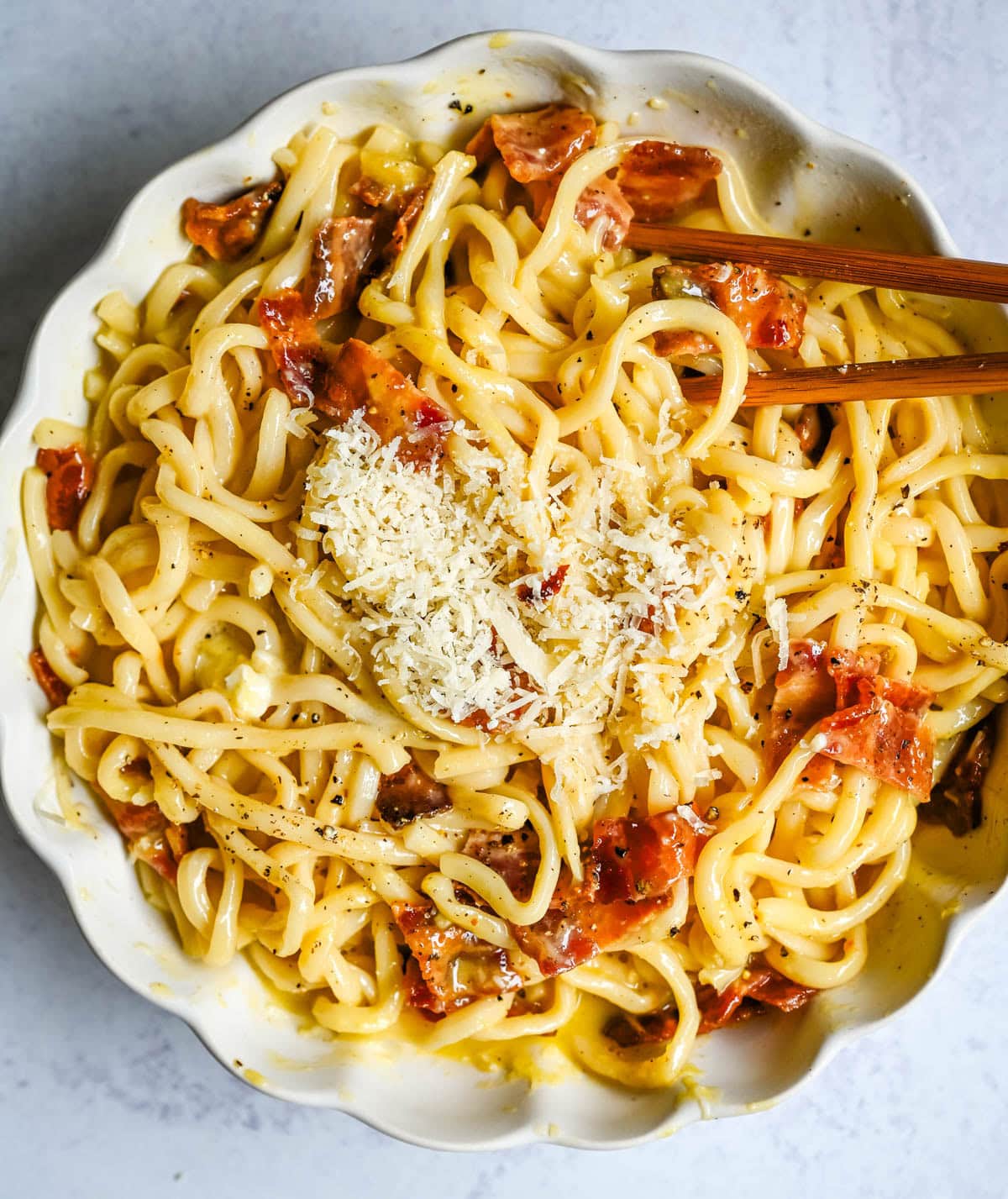
Have you heard about the popular carbonara udon that seems to be popping up everywhere? When we visited Japan last year (my new favorite place), we wanted to try as much unique food as possible.
If you’ve spent any time on TikTok or Instagram lately, you’ve probably seen a bowl of thick, glossy noodles being twirled through a creamy, cheesy sauce, usually with the caption “worth the wait” or “1 hour queue.” That’s Carbonara Udon, and it’s become one of the biggest food trends to come out of Tokyo, Japan in years.
It all started with two spots in Japan — Udon Shin and Menchirashi. Once we tried it, I knew that I needed to recreate it at home. We ate a lot of carbonara in Rome, Italy but we loved trying the Japanese version in Japan to see how they tweaked it to make it their very own.
They took Italian carbonara and Japanese udon — and combined them into something that is super simple but still tastes out-of-this-world.
I have recipe tested this 3 times with different types of udon noodles. I bought some from my local grocery store, Fry’s, and also wanted to try the authentic noodles from the Asian grocery stores in my town. Both turned out amazing, but with different textures.
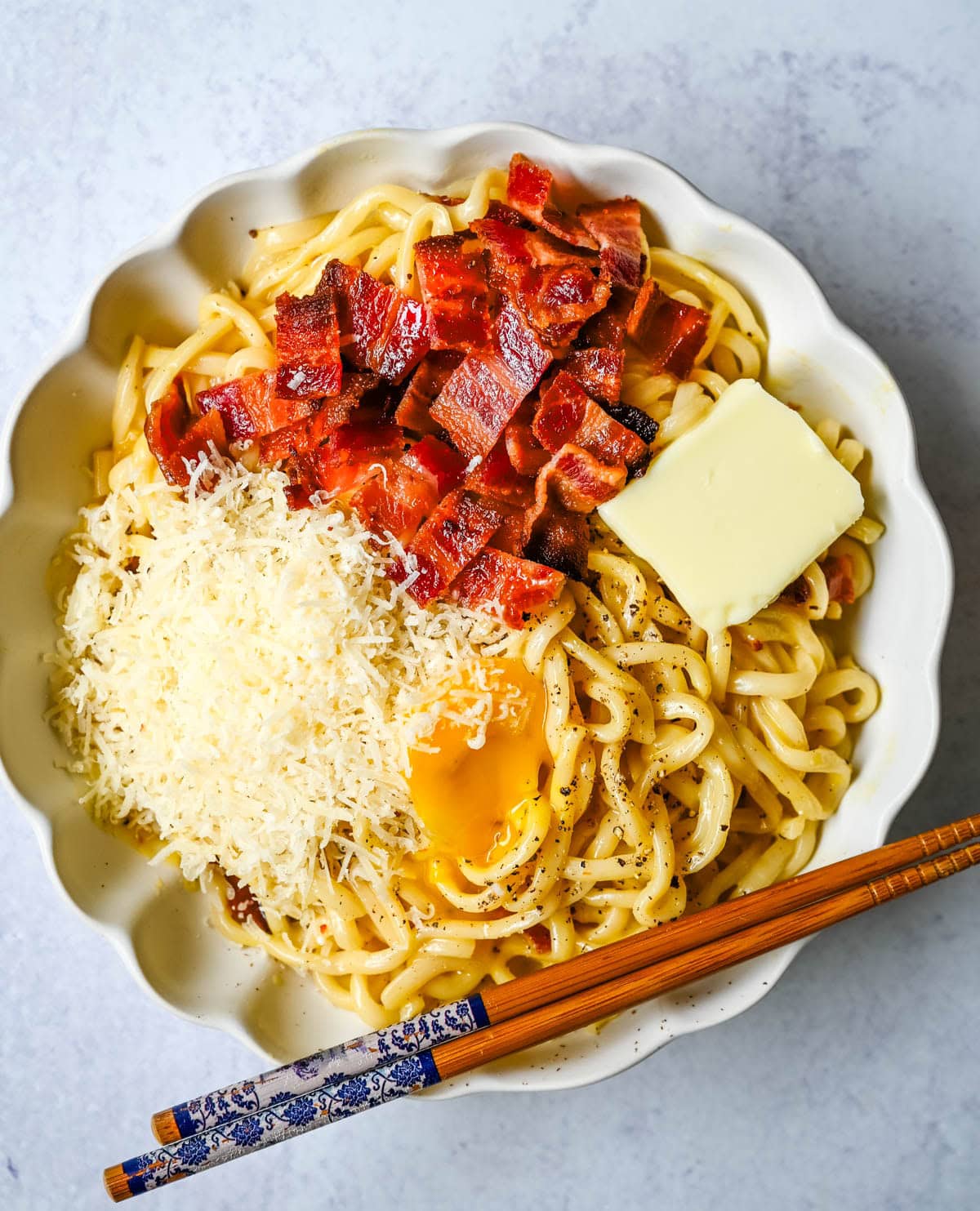
What is Carbonara Udon?
Carbonara udon is a Japanese Italian fusion dish that combines the classic Italian carbonara technique with thick and chewy Japanese udon noodles. Instead of traditional spaghetti or rigatoni, udon noodles are tossed in a silky egg yolk and parmesan sauce with crispy bacon and freshly cracked black pepper. The result is a rich, creamy, and incredibly satisfying fusion dish that has the comforting chewiness of udon with all the indulgent creaminess of a classic carbonara.
Carbonara udon is having a major moment in Japan right now and honestly we completely understand why! This viral Japanese Italian fusion dish has been taking over food scenes across Tokyo and beyond, and once you taste it you will understand exactly why it has gone viral.
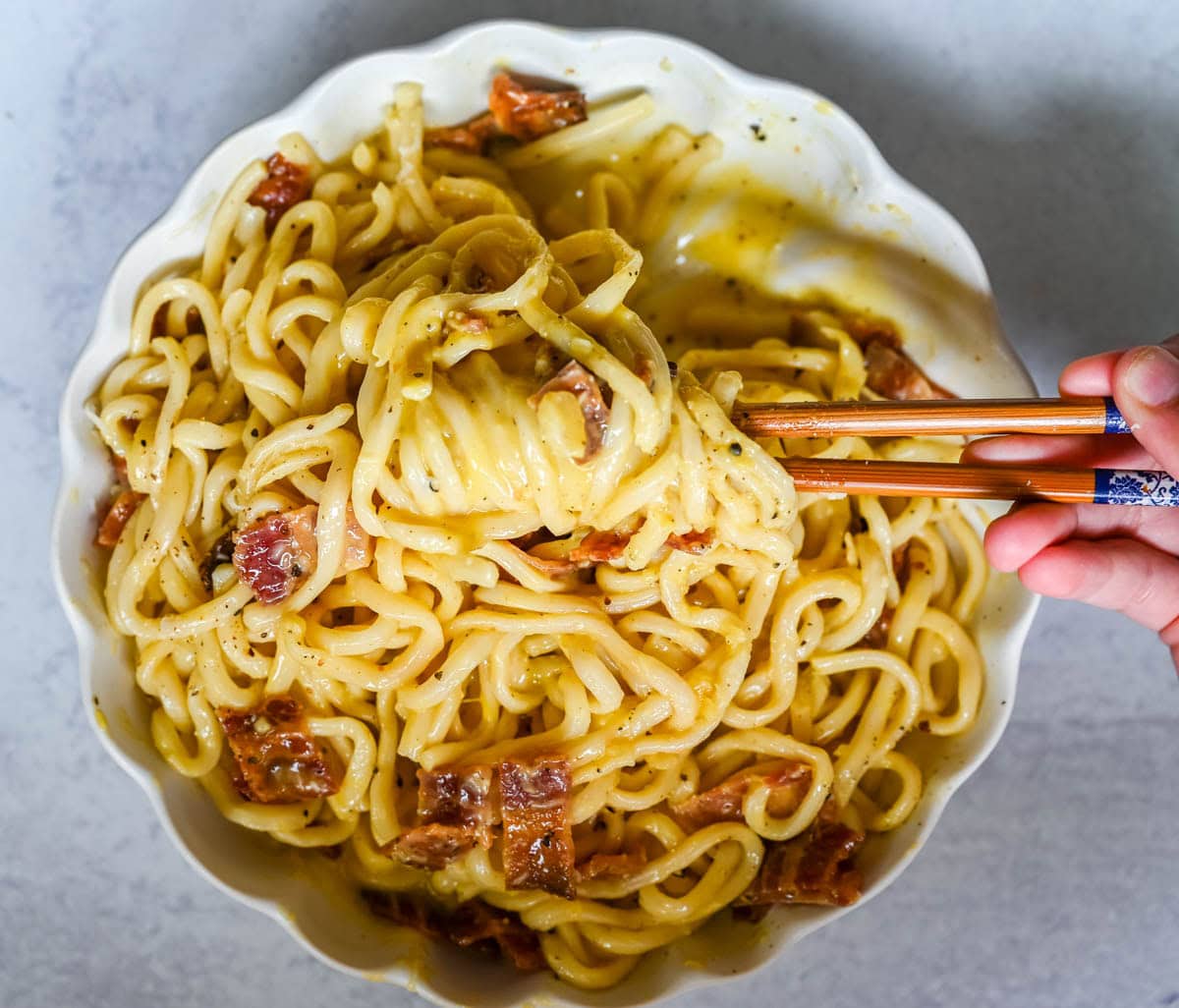
Ingredients:
- Udon Noodles (14-16 ounces) – the star of the show and the ingredient that transforms this classic dish into something completely extraordinary! You can use fresh, frozen, or dried udon noodles fresh udon only needs 1 to 2 minutes to cook while frozen and dried will take a little longer according to package instructions.
- Salted Pasta Water– do not skip this and do not pour it down the drain! This starchy, salty liquid is absolutely essential for building the silky carbonara sauce.
- Butter– adds a rich and velvety finish to the sauce and helps everything come together beautifully. The butter combined with the rendered bacon fat creates an incredibly flavorful base that coats the udon noodles before the egg mixture is added.
- Egg Yolks– the heart and soul of a true carbonara sauce! Egg yolks provide the richness, creaminess, and silky texture that makes carbonara so uniquely indulgent without needing any cream. The extra egg yolk placed on top of each serving is a beautiful and impressive finishing touch that adds extra richness and makes for the most stunning presentation.
- Parmesan Cheese– use freshly grated parmesan for the absolute best results! Pre-shredded parmesan contains anti-caking agents that prevent it from melting smoothly into the sauce and can result in a grainy texture.
- Black Pepper– freshly cracked black pepper is non-negotiable in carbonara and should be used generously! It adds a bold, warm, and slightly spicy bite that cuts through the richness of the egg yolks and parmesan and is one of the defining flavor components of an authentic carbonara. Do not use pre-ground pepper — freshly cracked makes an enormous difference in flavor.
- Bacon– sliced into small strips and cooked until perfectly crispy. The crispy bacon adds a salty, smoky, and savory depth of flavor that is absolutely essential to the dish. I recommend using a thick cut high-quality bacon.
What kind of udon noodles to use:
Not all udon is created equal, and the type you use will change your results:
Frozen udon is the top choice for most home cooks recreating this dish — it has a noticeably thicker, chewier texture that’s closer to what’s served in Tokyo, and it cooks in just a minute or two.
Fresh, refrigerated udon (often found in the refrigerated section near tofu and other Japanese ingredients) is also excellent and cooks quickly.
Dried udon is the most widely available and shelf-stable option, but it tends to be thinner and less chewy than frozen or fresh varieties.
Sanuki-style udon is worth seeking out at a Japanese grocery store if you want to get as close to the original as possible.
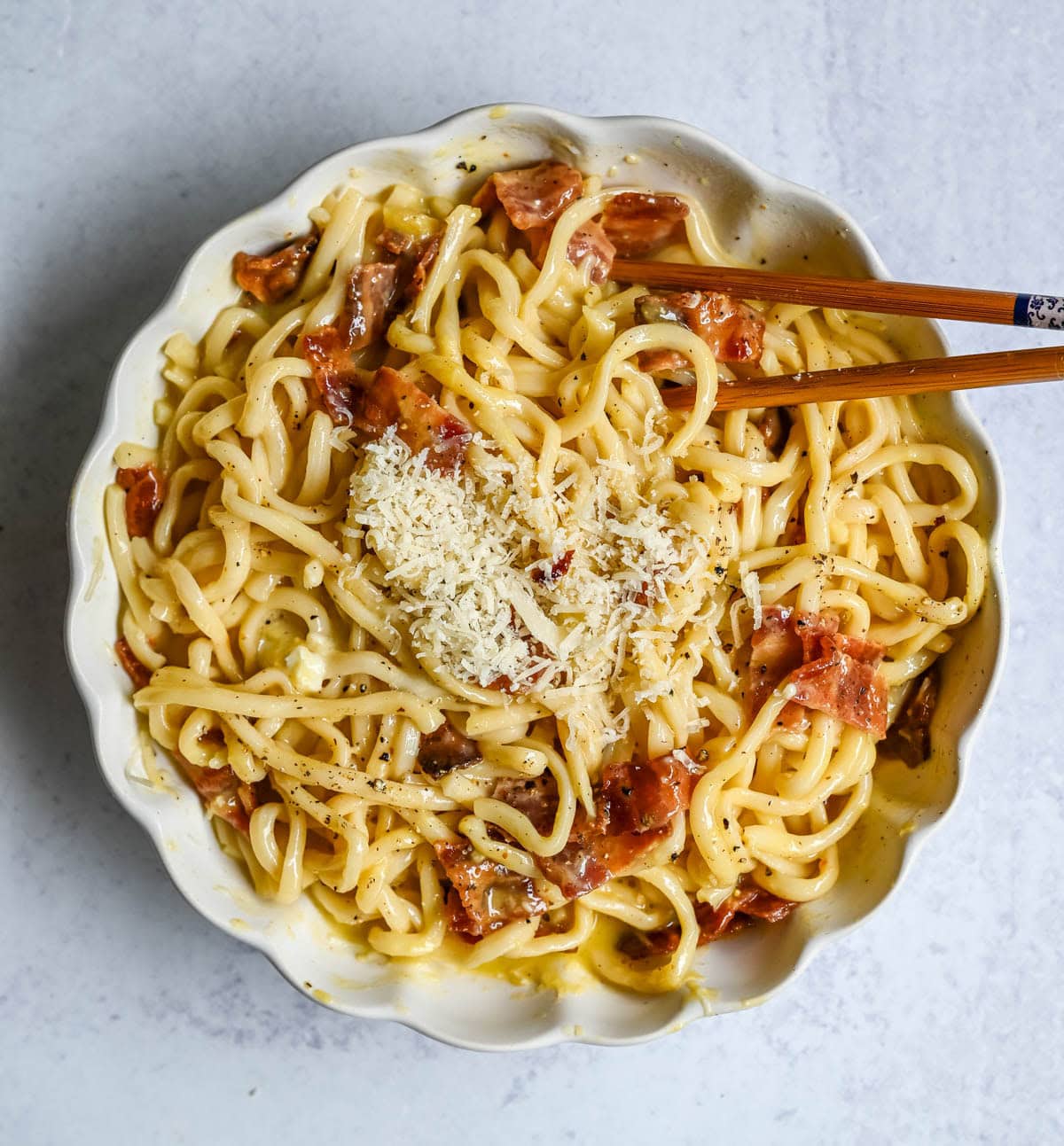
How to make the Best Carbonara Udon:
- Cook the Bacon. Slice the bacon into small lardons or strips. Add them to a large skillet or pan over medium heat and cook until perfectly crispy and all the fat has rendered out, about 5 to 7 minutes. Remove the crispy bacon to a plate and set aside, but leave every drop of that rendered bacon fat in the pan — that is the flavor base you want to keep and build on.
- Cook the Udon Noodles. Bring a large pot of well-salted water to a boil and cook the udon noodles according to the package instructions. Fresh udon typically only needs 1 to 2 minutes while frozen or dried will take a little longer. Right before draining, reserve at least 1/2 cup of the starchy salted pasta water. This liquid is essential for building the sauce so do not skip this step!
- Make the Egg Mixture. While the noodles are cooking, whisk together the egg yolks and freshly grated parmesan in a bowl until well combined and smooth. Set 1 egg yolk aside separately for topping each bowl right before serving.
- Combine Everything. This step is all about temperature control. It’s what separates a silky carbonara sauce from scrambled eggs! Remove the skillet from the heat completely or reduce to the lowest possible setting. Add the drained udon noodles directly to the pan with the rendered bacon fat and toss to coat. Add the butter and let it melt into the noodles while tossing continuously.
- Add the Egg Mixture. Pour the egg yolk and parmesan mixture over the noodles and toss quickly and continuously. The residual heat from the noodles and the pan will gently cook the egg yolks into a silky sauce without scrambling them. Immediately begin adding the reserved pasta water a little at a time, tossing constantly between each addition. The pasta water helps loosen the sauce and emulsify everything into a smooth coating that clings to every single noodle.
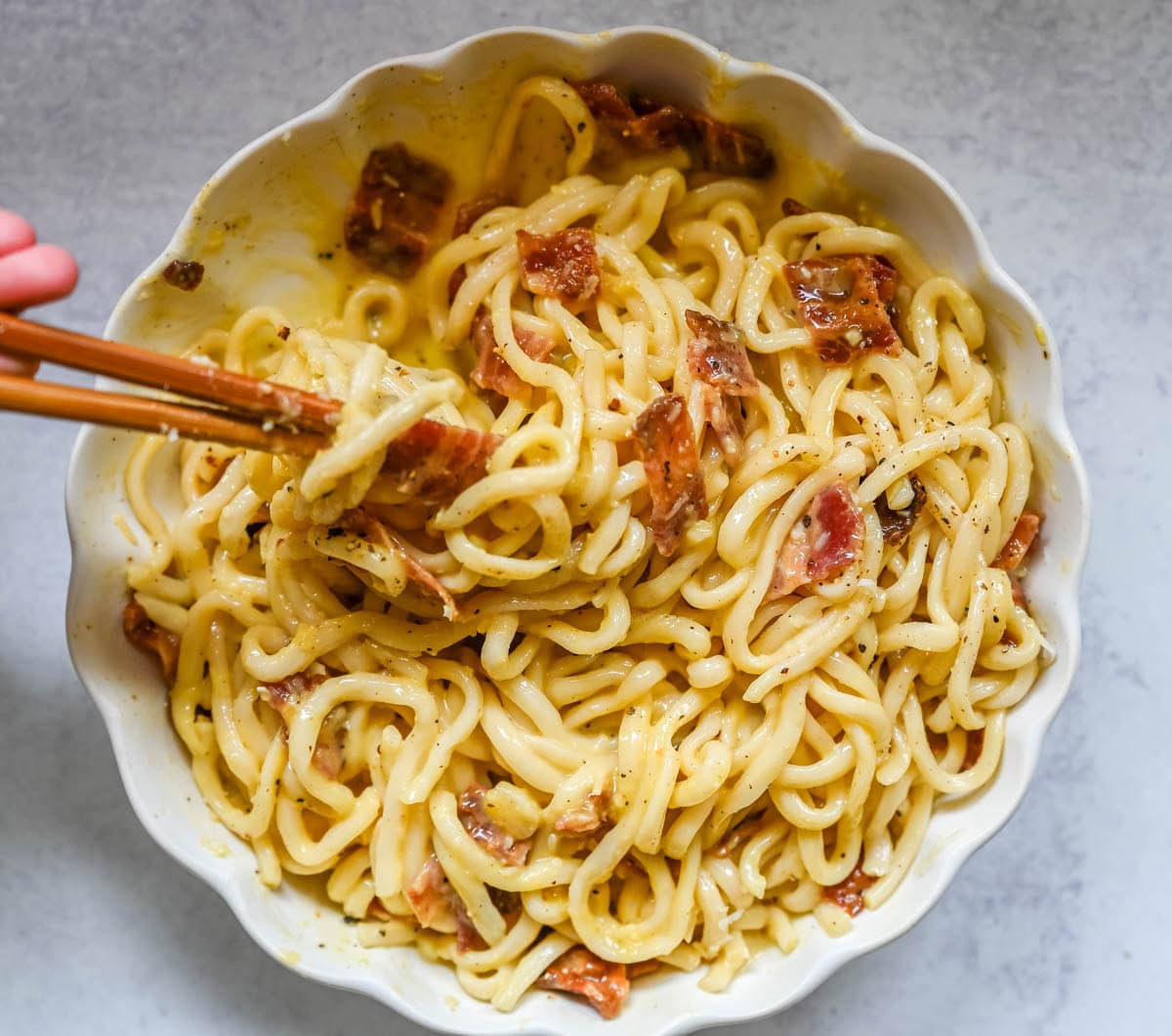
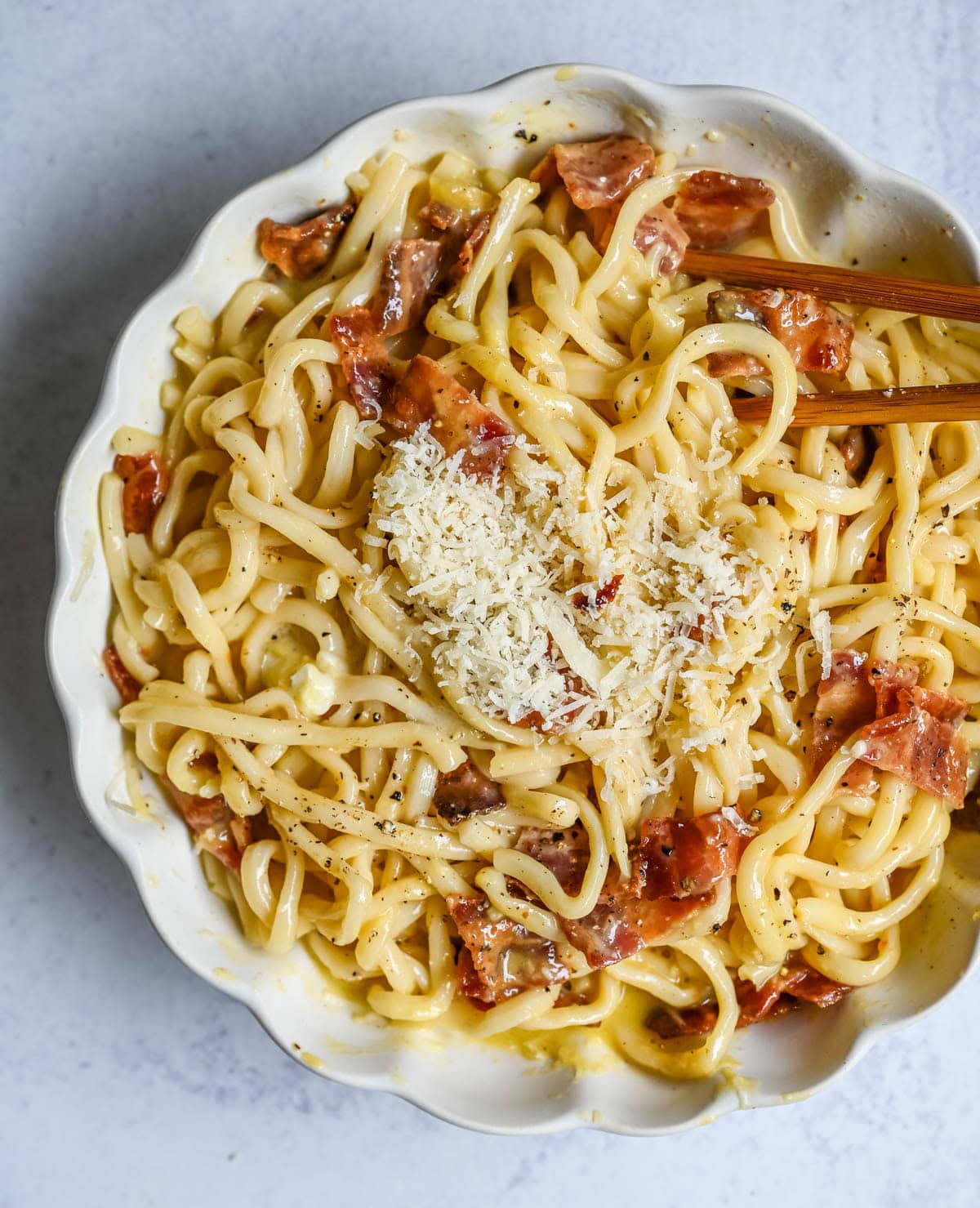
- Serve Immediately. Divide the carbonara udon into bowls and top each one with a raw egg yolk right in the center, a generous handful of crispy bacon, extra freshly grated parmesan, and a crack of fresh black pepper. Serve immediately while hot and silky and enjoy!
Frequently Asked Questions:
Can I use different noodles for this recipe?
Absolutely! While udon noodles are what make this recipe so unique and special, you can substitute spaghetti, linguine, fettuccine, or even ramen noodles if udon is not available. That said, the thick and chewy texture of udon is what truly sets this dish apart from a traditional carbonara so we highly recommend seeking out udon noodles at your local Asian grocery store or in the international aisle of most major supermarkets.
Can I use pancetta instead of bacon?
Yes! Traditional Italian carbonara actually uses guanciale which is cured pork cheek, but pancetta or bacon both work beautifully in this recipe. Pancetta will give you a slightly more authentic Italian flavor while bacon adds a subtle smokiness that pairs wonderfully with the chewy udon noodles. Use whichever you prefer or have on hand, both are equally delicious.
Will the eggs scramble?
Not if you take the pan off direct heat before adding the egg mixture and toss constantly. The residual heat from the hot noodles and pan is enough to gently cook the eggs into a creamy sauce rather than curdling them.
Substitutions and Variations
- No udon on hand? Thick spaghetti, bucatini, or even ramen noodles can work in a pinch.
- No parmesan? Pecorino romano is the more traditional carbonara cheese and has a sharper, saltier flavor — a great swap if you want something closer to the original Italian dish.
- No bacon? Pancetta or guanciale are the more traditional choices and add a deeper, more savory flavor, though bacon’s smokiness is a delicious substitute most people already have on hand.
- Want it spicy? A spoonful of chili crisp stirred into the sauce adds heat.
- Want extra umami? Stir a small spoonful of soy sauce or white miso paste into the egg and cheese mixture for a deeper, slightly sweet, savory note that pairs beautifully with the udon.
Noodle Recipes:
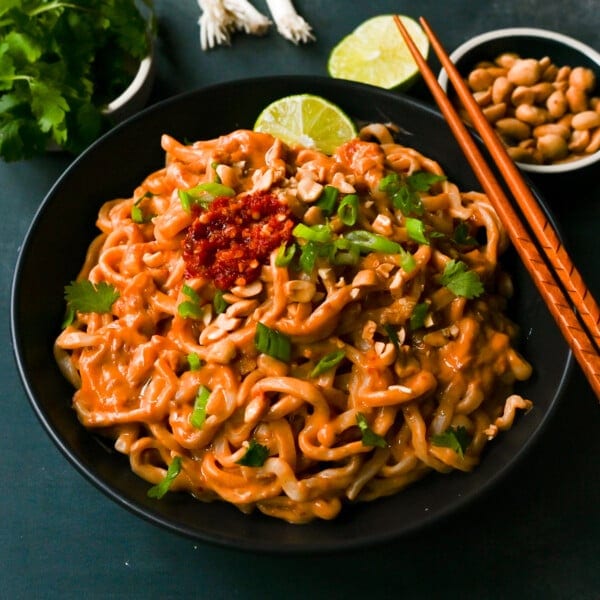
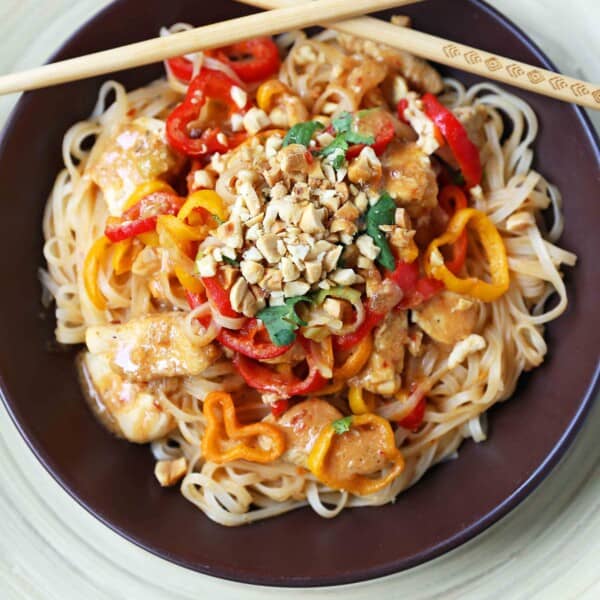
If you are looking for a classic carbonara recipe, check out my spaghetti carbonara recipe.
Storage:
Refrigerator: Store leftover carbonara udon in an airtight container in the refrigerator for up to 2 days. Keep in mind that the sauce will thicken significantly as it sits and absorbs into the noodles overnight so the leftovers will not have quite the same silky texture as when freshly made.
Reheating: Reheat gently in a skillet over low heat, adding a splash of water or chicken broth to loosen the sauce and restore some of the original creaminess. Toss continuously while reheating and avoid high heat, which will cause the egg yolks in the sauce to scramble. Do not microwave if you can avoid it, as the high heat is difficult to control and often results in an unevenly heated and rubbery texture.
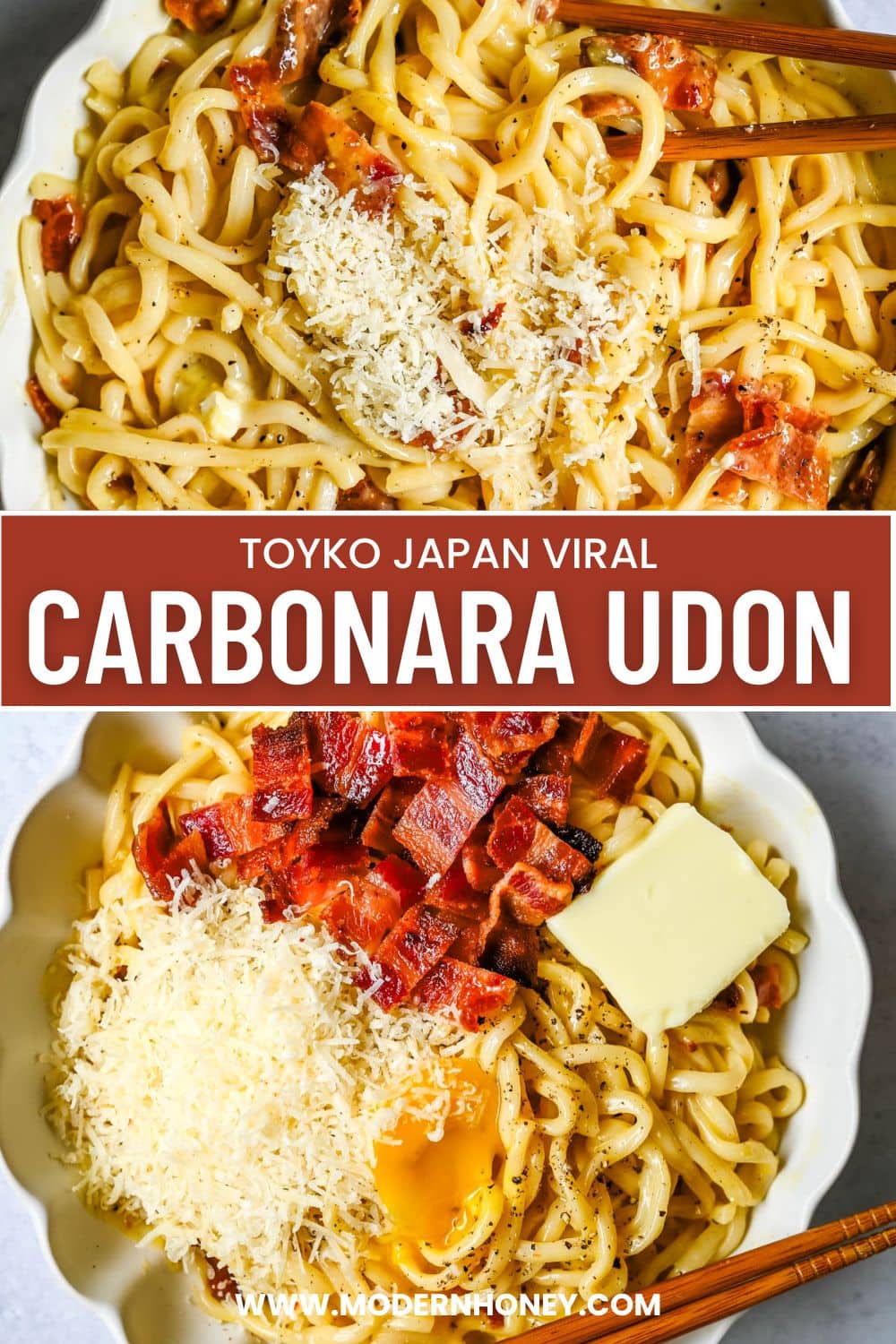
Pin this now to find it later
Pin It
Carbonara Udon
Ingredients
- 14-16 ounces Udon Noodles (refrigerated, frozen, or dry)
- 1/2 cup Salted Pasta Water
- 2 Tablespoons Salted Butter
- 4 large Egg Yolks (3 egg yolks + 1 on top)
- 1 cup Parmesan Cheese
- 5 Bacon Slices
- Black Pepper
Instructions
- Cook the bacon in a large skillet or pan over medium heat until crispy and the fat has rendered, about 5-7 minutes. Remove the bacon to a paper towel lined plate.
- Bring a pot of water to a boil and cook the udon noodles according to the package instructions (fresh udon usually only needs 1-2 minutes; frozen or dried will take longer). Before draining, reserve ½ cup of the salty pasta water — this starchy liquid is essential for building the sauce. Drain the noodles.
- While the noodles cook, whisk together 3 egg yolks and the parmesan cheese in a bowl until well combined. Set aside. (Save the 4th yolk for topping each bowl at the end.)
- This is the most important step — turn the heat off or remove the pan from the heat completely before adding the egg mixture, or the eggs will scramble instead of creating a silky sauce.Add the butter to the warm pan and let it melt. Add the drained udon noodles and toss to coat in the butter. Pour in the reserved pasta water a little at a time while tossing — the starchy water helps loosen and emulsify the sauce. Then add the egg and parmesan mixture, tossing continuously and quickly so the residual heat gently cooks the eggs into a creamy sauce without curdling them. If the sauce seems too thick, add a splash more reserved pasta water.
- Fold the crispy bacon back into the noodles. Divide between bowls, top each with a raw egg yolk in the center, and finish with a generous crack of black pepper and extra parmesan if you like.
Nutrition
Nutrition information is automatically calculated, so should only be used as an approximation.











The instructions are confusing. To me, it is unclear if you use the same pan that the bacon was fried in to melt the butter and perform the final steps. If using the same pan, are you to remove some of the fat before melting the butter?
Also, on the ingredient list, it states 4 eggs- 3 for the sauce and 1 each for serving. If making 4 servings, then 8 eggs are needed.