
This post may contain affiliate links. Please read our disclosure policy.
These Cottage Cheese Scrambled Eggs are the creamiest, fluffiest scrambled eggs you’ll ever make — with over 20g of protein per serving! Learn the simple technique, the best mix-ins, and every tip for perfect scrambled eggs every time.
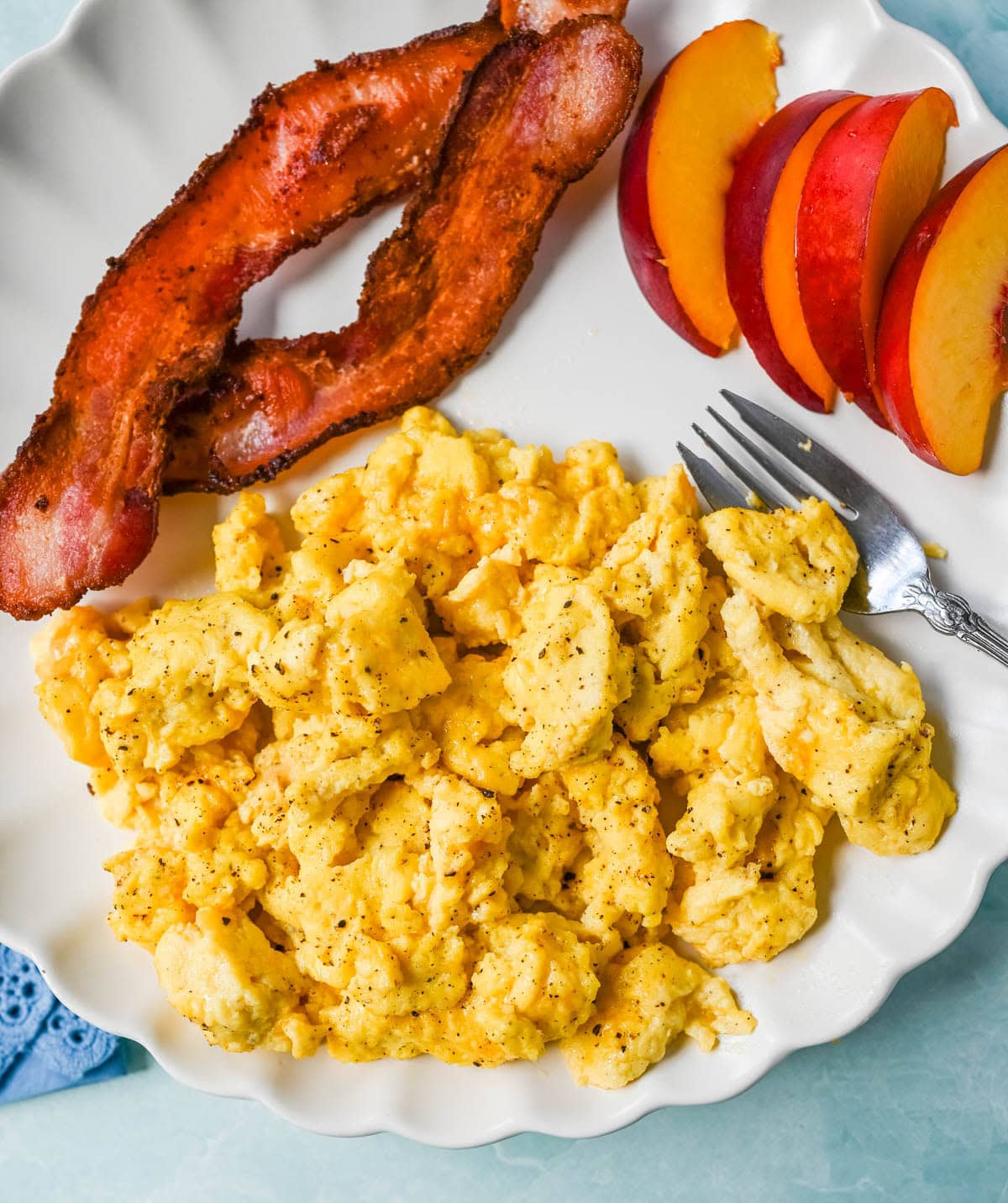
My Mom is known for several things that she makes again and again and again — her soft French bread, buttermilk waffles, bran muffins, and the perfect scrambled eggs. All of my kids get to excited to eat Grandma’s famous scrambled eggs and waffles.
Before cottage cheese was even the trendy ingredient, my Mom was putting it in scrambled eggs. She has been doing it for over 40 years! She mixes in a little parmesan cheese and sometimes some green chilies for flavor and they are the creamiest, fluffiest, most flavorful scrambled eggs ever.
I can’t believe that I haven’t shared this recipe with you yet but I am excited to share it with you because you are getting an elevated scrambled eggs recipe with extra protein, thanks to the cottage cheese.
If you’ve ever wondered how restaurants get their scrambled eggs so soft and creamy, the answer might surprise you: cottage cheese. Blended right into the eggs before cooking, it melts away completely as the eggs cook, leaving behind no lumps or curds of cheese — just incredibly rich, fluffy, high-protein scrambled eggs.
These high protein cottage cheese scrambled eggs are the creamy, fluffy breakfast upgrade you never knew you needed — and once you try them, you will never go back to plain scrambled eggs again. This cottage cheese eggs recipe elevates ordinary scrambled eggs into fluffy, velvety eggs with an unbelievably creamy texture while boosting the protein content for the perfect high protein breakfast.
This post covers everything: how cottage cheese actually changes the texture of your eggs, the technique for truly perfect scrambled eggs, what fat to cook them in, when (and how) to add extra cheese, the best mix-ins, and every tip you need to never end up with dry, rubbery eggs again.
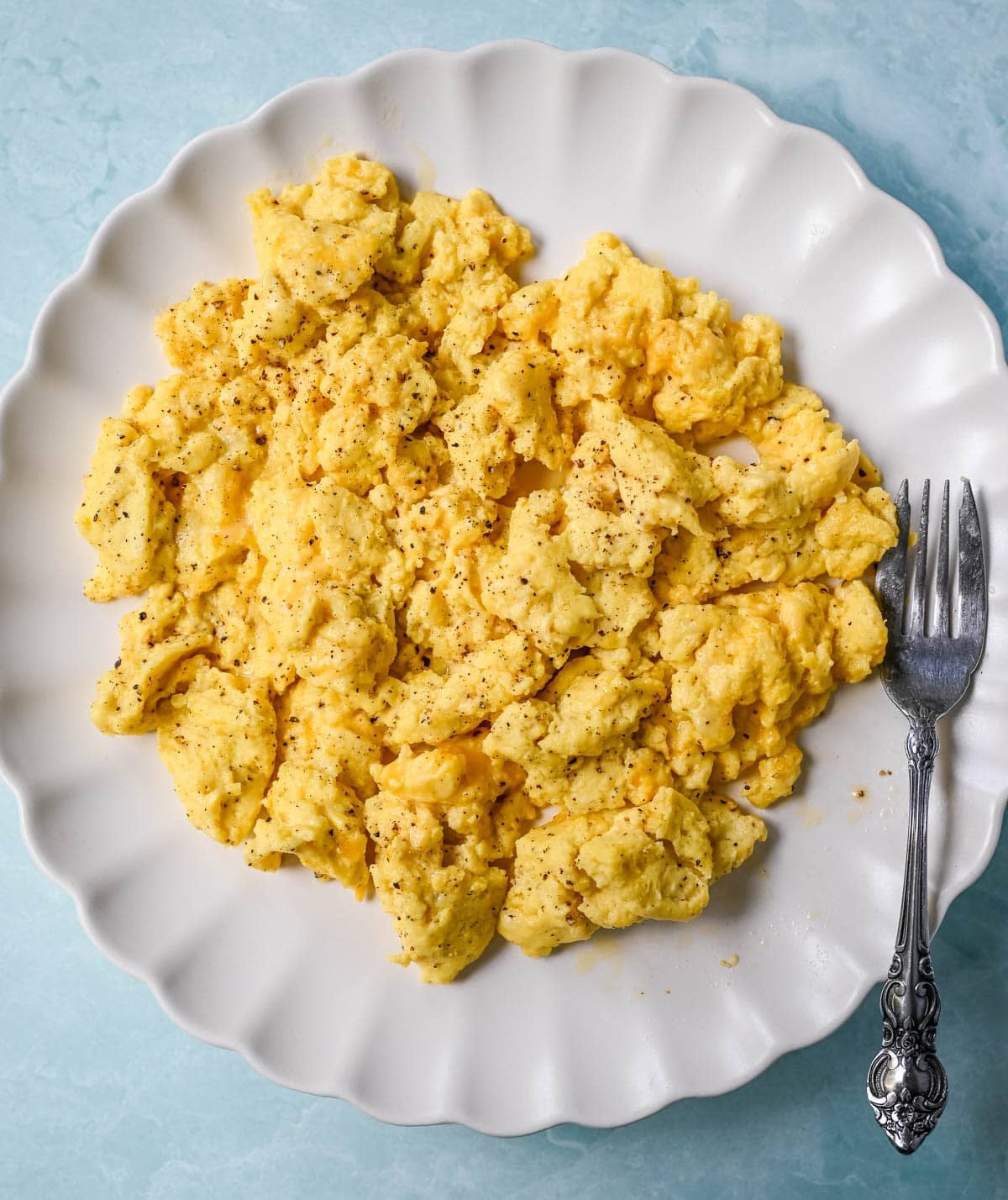
High Protein Scrambled Eggs Ingredients:
- Eggs: The star of the show. Use large whole eggs for the richest flavor and best texture. The fat in the yolk is what gives scrambled eggs their signature golden color and creamy bite. For an extra protein boost, you can add an additional egg white without changing the flavor.
- Cottage Cheese: This is the secret ingredient that takes scrambled eggs from good to absolutely incredible. Cottage cheese adds moisture that makes the eggs lighter and fluffier, plus a subtle tang that enhances the overall flavor. Use full fat cottage cheese for the creamiest results, or 2% if you prefer a lighter option. Avoid nonfat cottage cheese as it tends to release more water and can make the eggs watery. My favorite brands are Good Culture and Daisy.
- Butter: If possible, cook scrambled eggs in butter. It adds richness, prevents sticking, and gives the eggs a flavor that cooking spray or oil simply cannot replicate.
- Salt and Black Pepper: Season generously. Eggs need salt to bring out their full flavor — under-seasoned scrambled eggs are the number one reason people think they don’t like them. Add salt before cooking and a fresh crack of black pepper right before serving.
- Shredded Cheese (optional): I like to use freshly grated cheese for the best even melting. You can use whatever cheese you prefer. Parmesan cheese adds saltiness and flavor. Colby Jack cheese adds more creaminess.
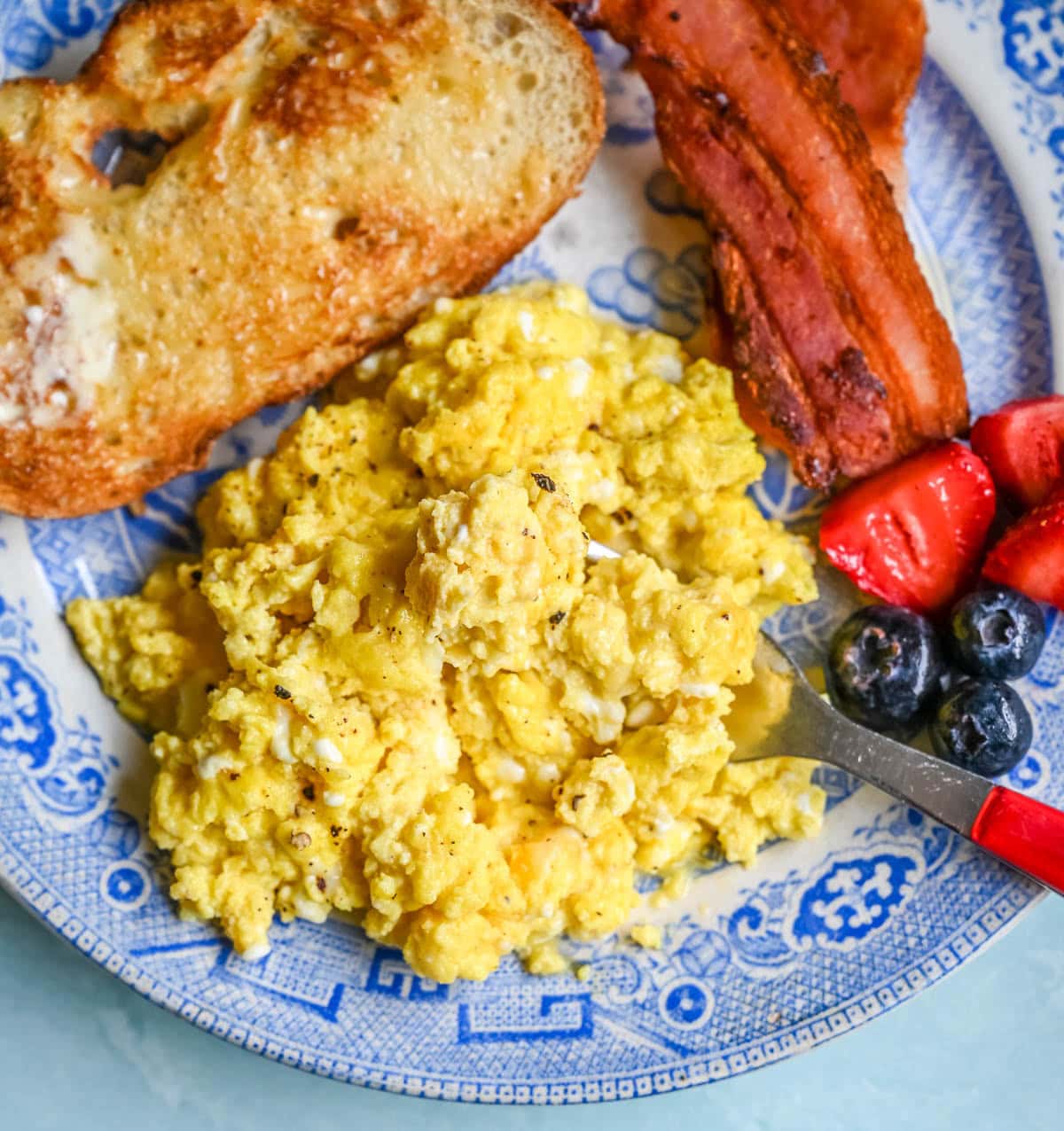
What does cottage cheese actually do to scrambled eggs?
It’s doing more than just adding protein — though it does that too. Here’s what’s actually happening:
- Moisture and creaminess. Cottage cheese is mostly water and protein, so as it heats up in the eggs, it releases moisture slowly throughout cooking. This keeps the eggs from drying out the way plain scrambled eggs often do, giving you a softer, creamier finished texture.
- Extra protein without extra effort. A quarter cup of cottage cheese adds roughly 6–7 grams of additional protein, on top of what your eggs already provide. Blended with 3 whole eggs, you can land well over 20 grams of protein in a single serving.
- A neutral flavor that disappears. Once blended and cooked, cottage cheese doesn’t taste like cottage cheese at all — the curds melt into the eggs, and what you’re left with is a rich, almost custardy texture rather than a distinct cheese flavor.
- A buffer against overcooking. Because the moisture in cottage cheese cooks off gradually, it gives you a little more room for error — the eggs stay soft and tender even if they’re on the heat a touch longer than ideal.
Should you blend the cottage cheese or leave it in curds? Both work, but they give you different results. Blending the cottage cheese (in a blender or with an immersion blender) before whisking it into the eggs creates a completely smooth, uniform texture with no visible curds. Whisking it in as-is, with the curds intact, gives you little pockets of extra creaminess throughout, which some people prefer for texture.
Which brand of cottage cheese is the best?
Good Culture: This is the top pick for cottage cheese scrambled eggs and honestly for almost any cottage cheese recipe. Good Culture is notably thicker and creamier than most grocery store brands, has a clean tangy flavor, and contains very little excess liquid. It blends beautifully into eggs without making them watery and the protein content is excellent. If you can find it at your local grocery store, this is the one to grab.
Daisy: A longtime favorite and one of the most widely available cottage cheese brands in the country. Daisy is known for its simple, clean ingredient list with no fillers or additives, and it has a consistently thick texture that works really well in scrambled eggs. The full-fat version is especially great and gives you a noticeably richer, creamier result.
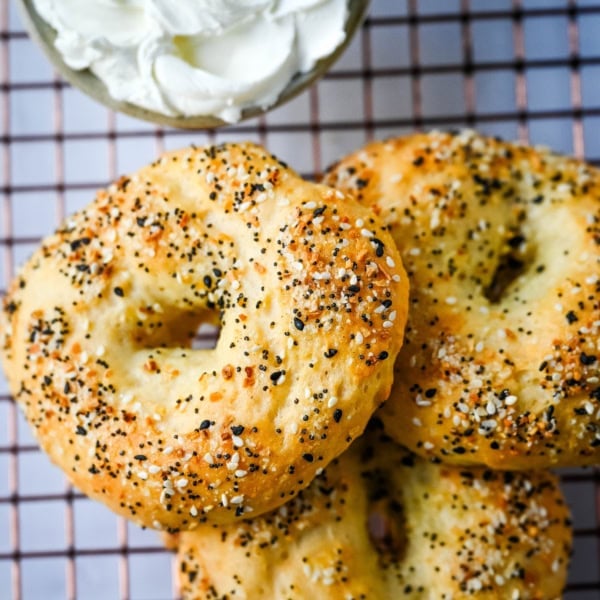
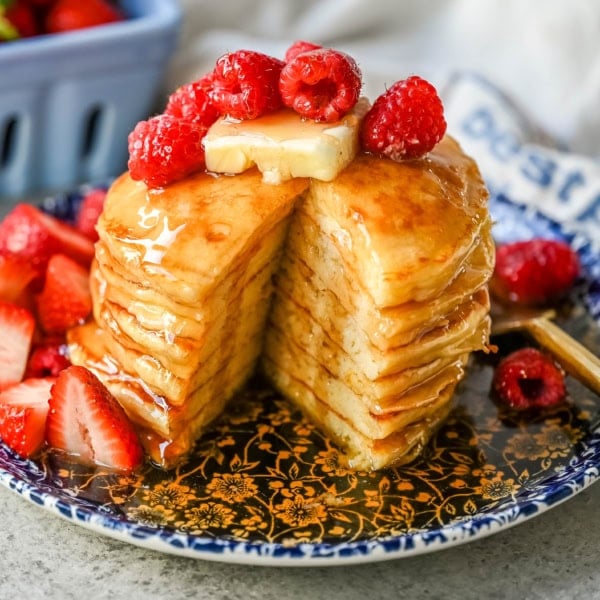
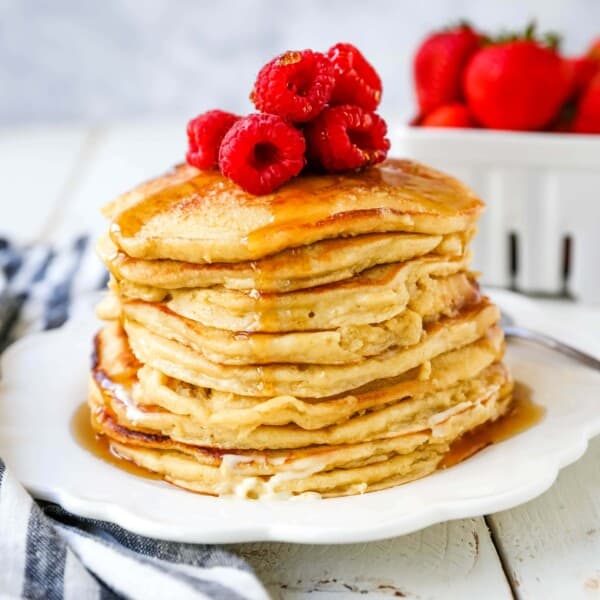
If you love this recipe, you will also want to try my Cottage Cheese Protein Bagels and Cottage Cheese Pancakes they’re two more easy high protein breakfast recipes that belong in your weekly rotation!
How to make the Best Cottage Cheese Scrambled Eggs:
Learn how to make the creamiest, fluffiest scrambled eggs using cottage cheese for extra protein. Plus every tip and trick for perfect scrambled eggs, every time.
1. Prep your cottage cheese — choose one of two methods.
Option A: Whisk it in as-is. Add the cottage cheese directly to your mixing bowl with the eggs and whisk together — you’ll still see small curds throughout the cooked eggs for extra texture.
Option B: Blend it smooth. Add the eggs to a blender or a tall container if using an immersion blender, then add the cottage cheese and blend until completely smooth, about 15–20 seconds. This gives you a fully uniform, custard-like texture with no visible curds.
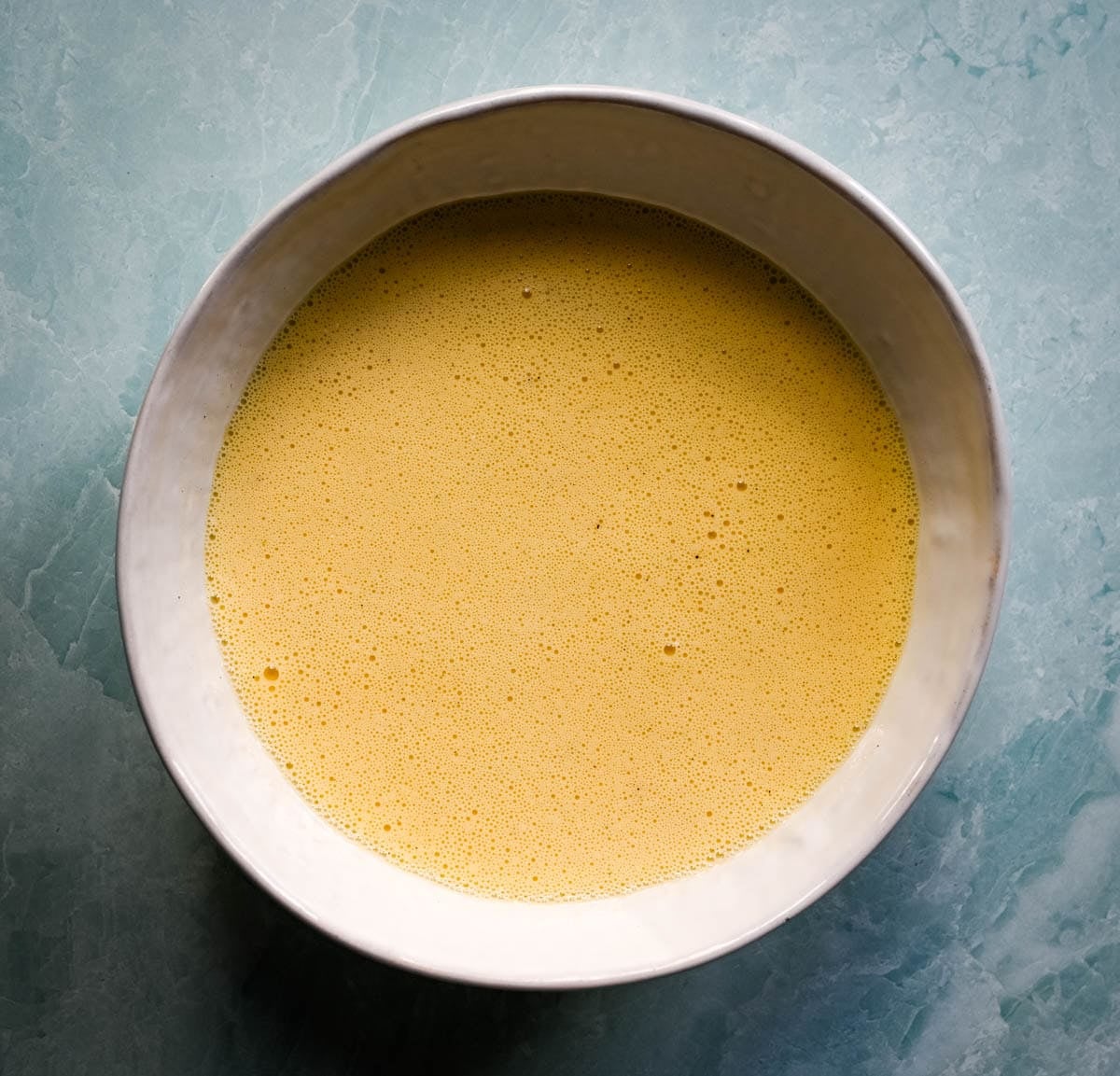
2. Combine and season. If you used Option A, whisk the eggs and cottage cheese together until fully combined with no streaks. If you used Option B, your mixture is already blended — just pour it into a bowl. Either way, stir in a pinch of salt and pepper at this stage.
3. Season before cooking, not after. Adding salt to the eggs before they hit the pan (rather than after) gives it time to dissolve and season the eggs evenly, and many cooks find it also helps keep the eggs more tender.
4. Use low to medium-low heat. This is the single biggest factor in whether your eggs turn out creamy or rubbery. High heat cooks the outside of the eggs too quickly, leading to tough, dry curds. Low and slow gives you soft, custardy eggs.
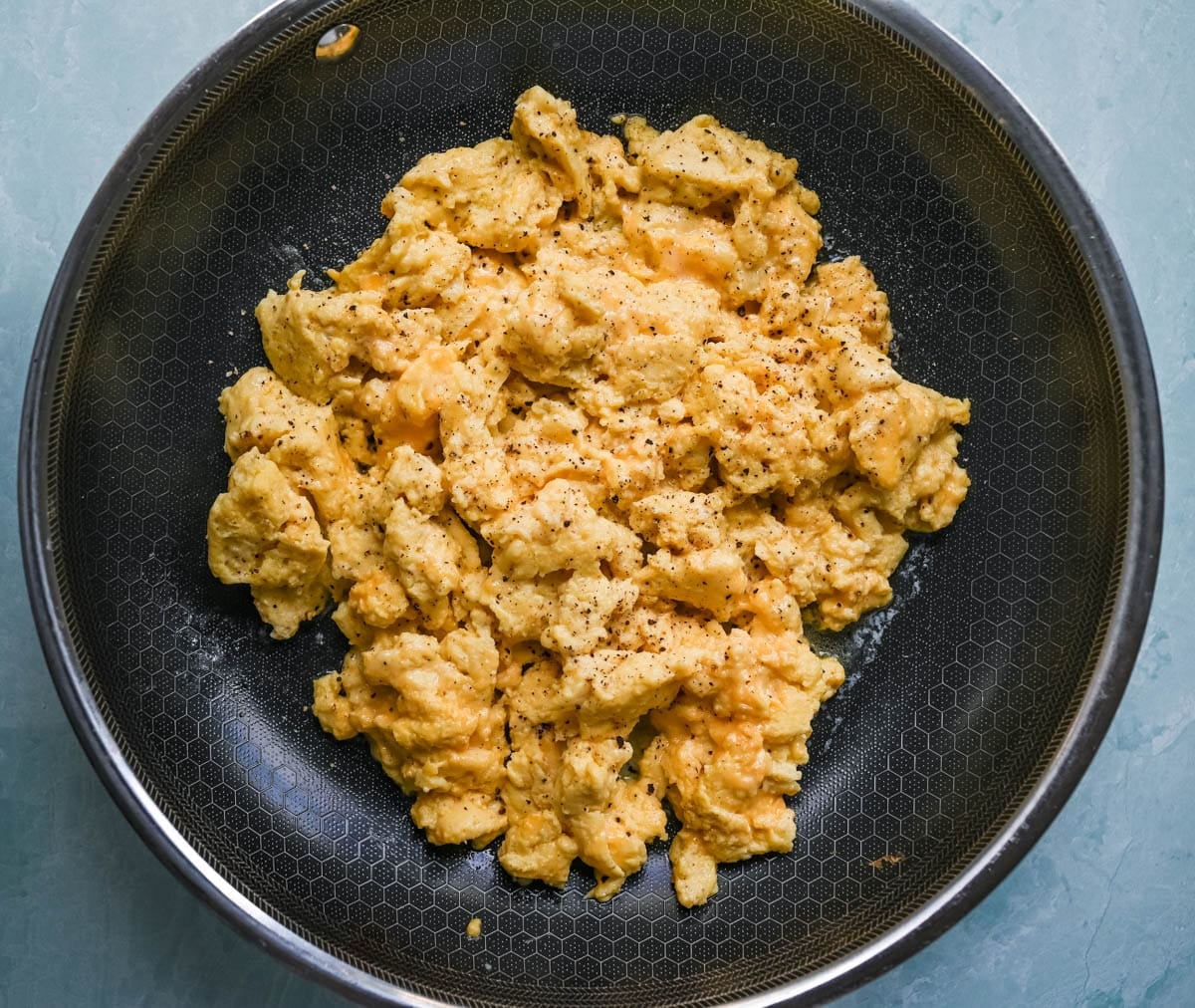
5. Don’t walk away. Scrambled eggs go from perfect to overcooked in the span of about 30 seconds. Stay at the stove and keep your eyes on the pan the entire time.
6. Push, don’t stir constantly. Rather than continuously stirring, use a spatula to gently push the eggs from the edges of the pan toward the center as they begin to set, letting the uncooked egg flow into the space you’ve cleared. This creates soft, large curds instead of small, tight, scrambled bits.
7. Pull them off the heat early. Eggs continue cooking from residual heat even after you take the pan off the stove. Remove them while they still look slightly underdone and glossy — they’ll finish setting on the way to the plate.
8. Let them rest for a few seconds before serving. This gives the residual heat time to finish the eggs gently without overcooking them directly in the pan.
Which method should you choose? If you’re new to cottage cheese eggs or serving them to picky eaters, blending first is the safer bet since it hides the texture completely. If you already love cottage cheese or don’t mind a bit of texture, whisking it in as-is saves you a step and still gives you a delicious, protein-packed result.
When should you add cheese to scrambled eggs?
- Add cheese near the end of cooking, once the eggs have mostly set but are still soft and slightly glossy. Adding it too early means the cheese can either fully melt into the eggs and disappear (fine if that’s the texture you want) or cause the eggs to stick and cook unevenly as the cheese affects the pan’s surface.
- Turn off the heat, then fold in the cheese. The residual heat from the eggs is usually enough to melt shredded cheese without needing to keep cooking, which helps you avoid overcooking the eggs while you wait for cheese to melt.
Can you use both parmesan and cheddar? Absolutely — and it’s a great combination. Parmesan brings a salty, nutty depth of flavor, while cheddar adds that classic melty, gooey texture. A small amount of finely grated parmesan whisked into the eggs before cooking (it dissolves well since it’s already a hard, dry cheese) paired with shredded cheddar folded in at the end gives you layered flavor without one cheese overpowering the other.
Frequently Asked Questions:
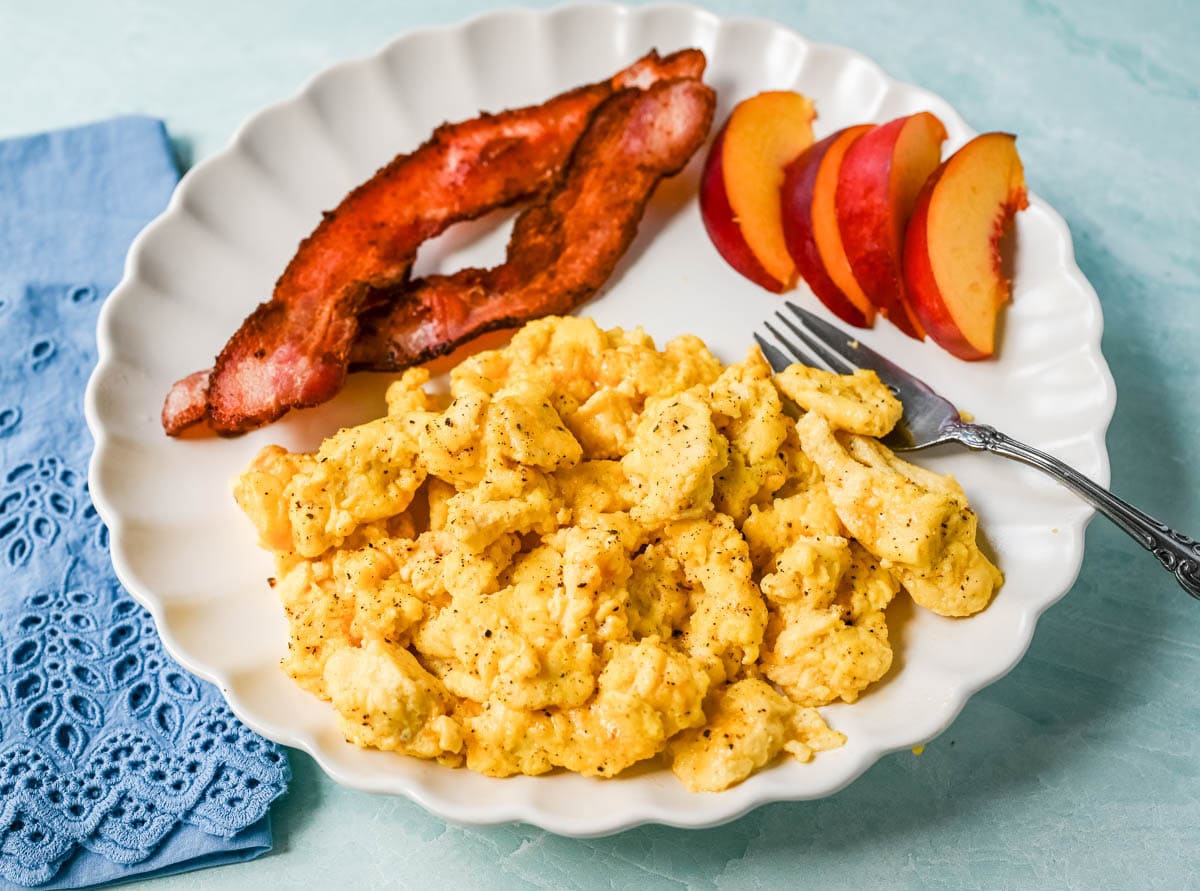
- Can you taste the cottage cheese in scrambled eggs? No, and this surprises almost everyone who tries this recipe for the first time! The cottage cheese melts completely into the eggs as they cook, and you cannot taste it as a distinct ingredient. What you do taste is an overall creamier, richer, more flavorful scrambled egg that is noticeably better than plain eggs. The cottage cheese essentially disappears into the eggs and just makes everything better.
- How much protein is in cottage cheese scrambled eggs? These eggs are fluffy, creamy, and loaded with approximately 20 grams of protein per serving, making them one of the most protein-dense quick breakfast options available. The exact amount will vary slightly depending on how many eggs you use and the brand of cottage cheese, but this recipe consistently delivers a high protein breakfast that keeps you full and satisfied for hours.
- Are cottage cheese scrambled eggs good for weight loss? Yes! These eggs are low in fat and high in protein at approximately 16-25 grams of protein per portion, making them an excellent option for anyone following a weight loss, low carb, or high protein diet. The high protein content helps keep you full and satisfied much longer than a carb-heavy breakfast, which can help reduce overall calorie intake throughout the day.
Scrambled Eggs Mix-in ideas:
What mix-ins to add to eggs? Try cooked crumbled bacon, diced peppers, sauteed mushrooms, cheddar, breakfast sausage, green chilies, jalapenos, diced tomatoes, spinach, parmesan cheese, green onions or chives, chicken sausage, diced ham, shredded mozzarella.
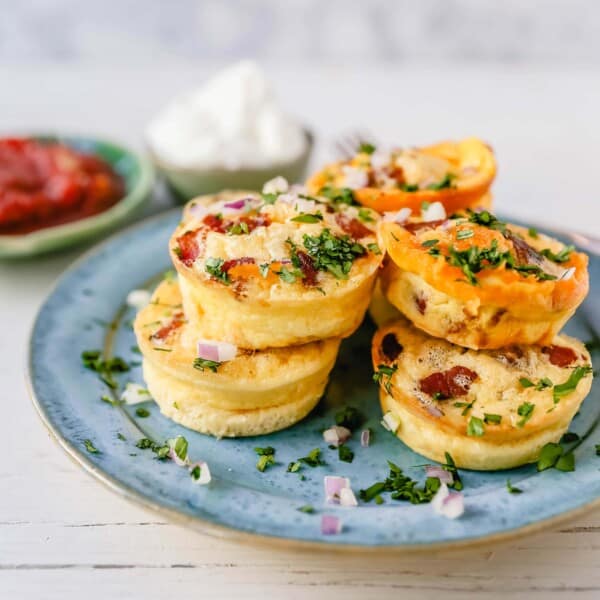
If you love more egg recipes, check out my Egg and Bacon Bites and my Bacon Egg and Cheese Casserole.
High Protein Breakfast Recipes:
Once you try cottage cheese in your scrambled eggs, it’s hard to go back to plain ones. It’s a small change with a big payoff — more protein, a creamier texture, and eggs that stay soft and tender instead of dry. Whether you keep it simple with just salt and pepper or load it up with cheese, veggies, and herbs, this is one of those upgrades that makes an everyday breakfast feel a little more special.
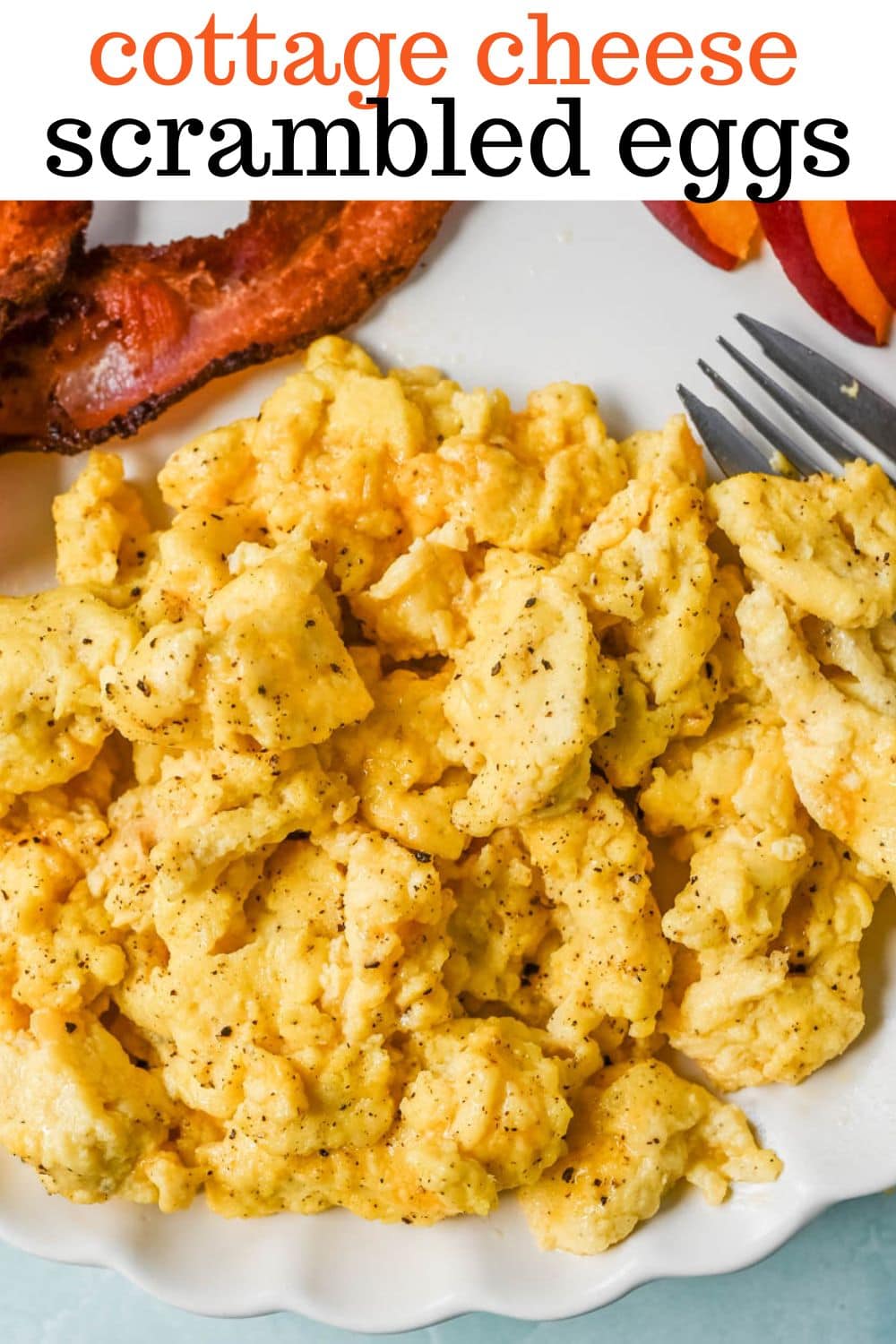
Pin this now to find it later
Pin It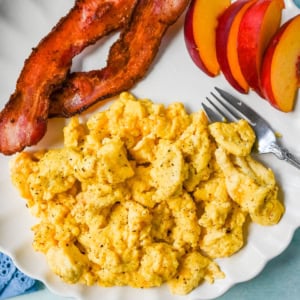
Cottage Cheese Scrambled Eggs
Ingredients
- 6 large Eggs
- 1/2 cup Cottage Cheese
- 1/4 teaspoon Salt (plus more to taste)
- 1/4 teaspoon Pepper
- 1/4 cup Cheddar or Parmesan Cheese (grated)
- Butter or Non-Stick Cooking Spray
Instructions
- Option A: Whisk it in as-is. Add the cottage cheese directly to your mixing bowl with the eggs and whisk together — you'll still see small curds throughout the cooked eggs for extra texture.Option B: Blend it smooth. Add the eggs to a blender or a tall container if using an immersion blender, then add the cottage cheese and blend until completely smooth, about 15–20 seconds. This gives you a fully uniform, custard-like texture with no visible curds.
- If you used Option A, whisk the eggs and cottage cheese together until fully combined with no streaks. If you used Option B, your mixture is already blended — just pour it into a bowl. Either way, stir in a pinch of salt and pepper at this stage. Adding salt to the eggs before they hit the pan (rather than after) gives it time to dissolve and season the eggs evenly, and many cooks find it also helps keep the eggs more tender.
- Use low to medium-low heat. This is the single biggest factor in whether your eggs turn out creamy or rubbery. High heat cooks the outside of the eggs too quickly, leading to tough, dry curds. Low and slow gives you soft, custardy eggs. Add butter to pan or spray with non-stick cooking spray. Pour in egg mixture.
- Don't walk away. Scrambled eggs go from perfect to overcooked in the span of about 30 seconds. Stay at the stove and keep your eyes on the pan the entire time.
- Push, don't stir constantly. Rather than continuously stirring, use a spatula to gently push the eggs from the edges of the pan toward the center as they begin to set, letting the uncooked egg flow into the space you've cleared. This creates soft, large curds instead of small, tight, scrambled bits.
- Add cheese near the end of cooking, once the eggs have mostly set but are still soft and slightly glossy. Adding it too early means the cheese can either fully melt into the eggs and disappear (fine if that's the texture you want) or cause the eggs to stick and cook unevenly as the cheese affects the pan's surface.
- Pull them off the heat early. Eggs continue cooking from residual heat even after you take the pan off the stove. Remove them while they still look slightly underdone and glossy — they'll finish setting on the way to the plate. Taste and add more salt or pepper, if desired.
- Let them rest for a few seconds before serving. This gives the residual heat time to finish the eggs gently without overcooking them directly in the pan.
Notes
Nutrition
Nutrition information is automatically calculated, so should only be used as an approximation.









Oh my gosh wow! This is the best hack ever. This honestly made scrambled eggs taste 100x better and more creamy. I’m never going back!
Best scrambled eggs ever!
Hi Melissa
If making a single serving with only two eggs and reducing the recipe proportionally it doesn’t seem there is really much cottage cheese added to change the dish. Thoughts?
Hi! That is a great question. I have found that even adding a small amount of cottage cheese adds more creaminess to the eggs so even a little bit makes a difference. I hope you love them!
Just wanted to thank you for being such a blessing. I have never seen a better source of incredible recipes, so organized, so perfectly laid out, so full of information as yours. Oh, and so delicious. Thank you.
That is so nice of you to say! I appreciate your kind words so much and I appreciate you making my recipes. Have a great day!
I have to echo your comment. Melissa is amazing and my go-to person for any recipe. I always check her website for what I’m going to make. I get rave reviews every time I make something with her recipe. I hope there will be a book in her future!!
You are so sweet, Jo-Ell! Thank you so very much, I appreciate it!